Quick answer: Learn why dogs object to boots and use gradual, rewards-first practice without forcing them to walk in unfamiliar footwear. Start with the simplest safe step and adapt to your dog’s size, health, experience and comfort. This guide explains what to watch, what to do next and when professional help matters.
Dog owners often look for one fast fix, but the sensible plan begins by understanding why the problem happens. Small adjustments in preparation, environment and expectations can make the experience safer and more comfortable. The goal is progress without forcing a frightened, uncomfortable or unwell dog to continue.
This guide is written for everyday U.S. dog owners. It is educational rather than a substitute for veterinary care. For more background, explore Dogs Daily Care and the trusted resources linked at the end.
Table of Contents
What to know first
Learn why dogs object to boots and use gradual, rewards-first practice without forcing them to walk in unfamiliar footwear. Keep a simple record of what triggers the difficulty and which gentle changes help. If signs are sudden, severe or painful, contact your veterinarian rather than assuming a training or home-care issue.
1. Why boots feel strange
A boot changes the pressure, grip and feedback a dog gets through the paw. Some dogs lift their legs dramatically, freeze or attempt to shake the boots off. That reaction is usually about an unfamiliar sensation, not stubbornness. Start by observing which part of the process makes your dog uncertain: seeing the boot, having a paw handled, fastening a strap or taking the first step.
Do not interpret a stiff, frozen posture as obedience. If your dog is worried, remove the boot and make the next session easier. A calm dog who can choose to approach is more likely to learn than one restrained through the procedure.
2. Check comfort and sizing first
A training plan will not fix footwear that rubs, squeezes the toes or twists around the paw. Compare weight-bearing paw width with the brand-specific chart, checking front and back feet separately. Examine seams, tread, ankle height and closures. A boot should stay on during gentle movement without leaving pressure marks.
If you see redness, licking or a change in gait after the boot comes off, stop and inspect the paw. Consult your veterinarian for persistent irritation, especially when a dog already has painful or injured feet.
3. Let your dog investigate an unworn boot
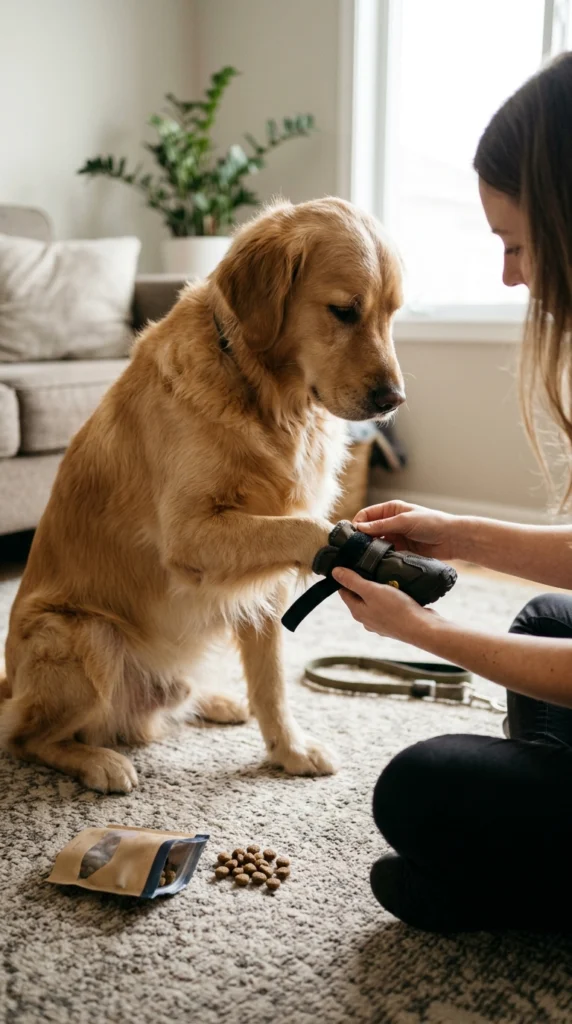
Place a clean boot on the floor several feet away and let your dog sniff or ignore it. Mark and reward relaxed investigation with a small treat. Keep the session under a few minutes; avoid pushing the boot into the dog’s face or creating a struggle.
If your dog will not approach, set the boot farther away and simply reward looking toward it. Progress only when the sight of the boot is unremarkable.
4. Teach voluntary paw handling
Before fastening anything, briefly touch a shoulder, lower leg or paw and reward acceptance. Build toward lifting the paw for a second, then two seconds. Let the dog stand on a nonslip mat and return the foot to the floor between repetitions.
A cooperative-care approach works better than holding a struggling dog still. If the dog pulls back, relax your hands, pause and restart at a smaller step.
5. Try one boot for just a moment
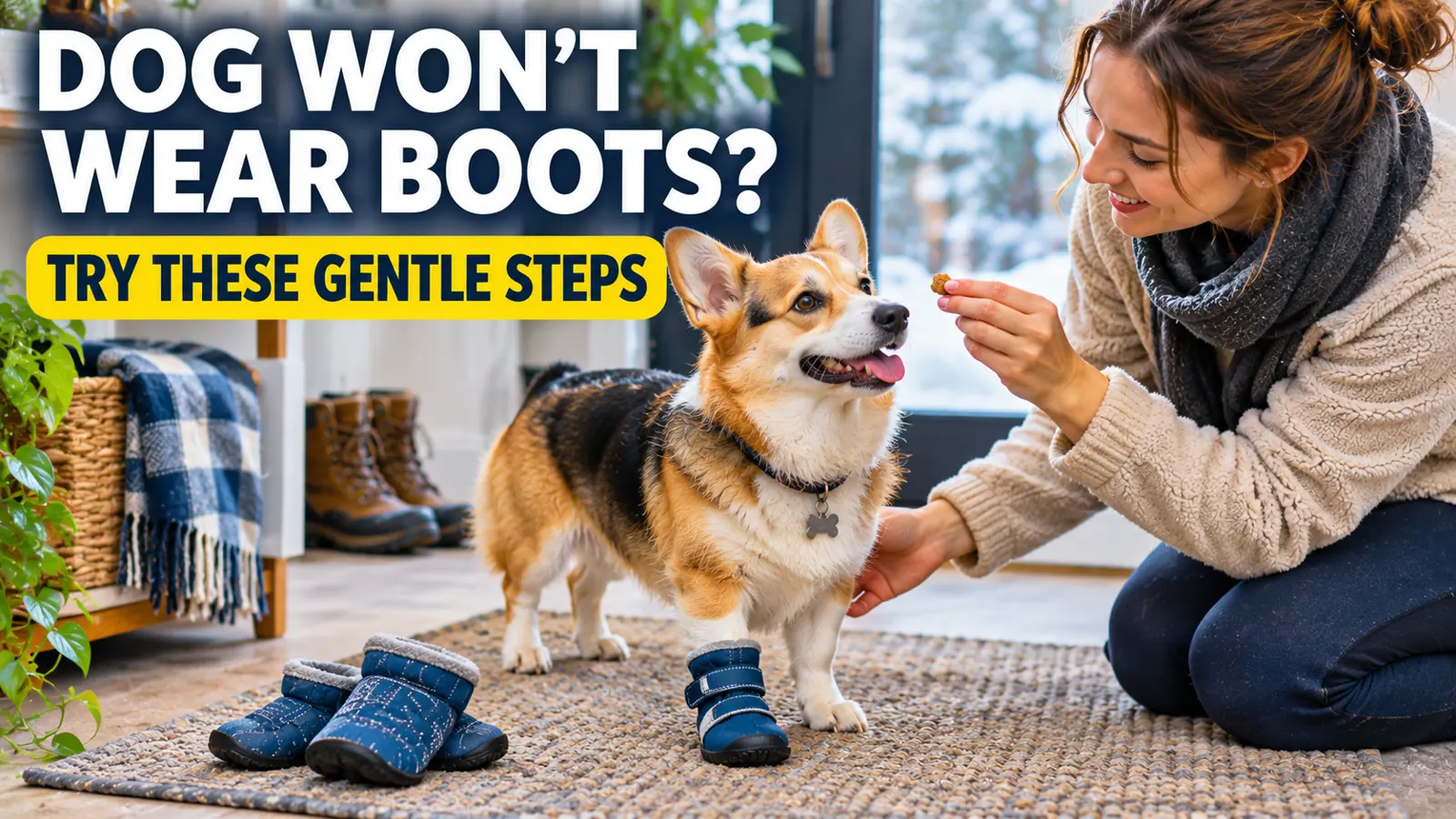
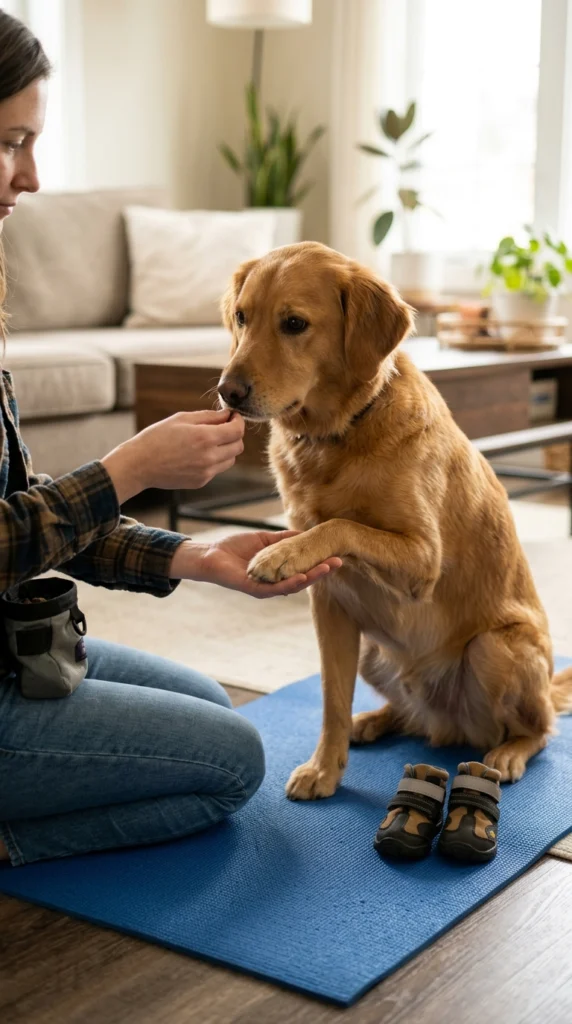
Open the closure fully, slide one correctly sized boot on without twisting the toes and immediately reward. Remove it before the dog becomes frantic. The first success might be a single comfortable second. Repeat on another day rather than rushing to all four paws.
Practice while indoors, away from ice or salt. Never make the first boot lesson happen when you urgently need a bathroom break or a long winter walk.
6. Build movement gradually
Once your dog stands comfortably in one boot, scatter two or three treats on a nonslip floor so the dog can choose to take steps. Add a second boot after that is easy, then the remaining feet. Keep the pace slow and observe whether the gait becomes more natural.
Some dogs need several brief sessions to coordinate their feet. Reward normal movement rather than laughing at exaggerated high-stepping or trying to pull the dog forward.
7. Add the sound and feel of outdoor surfaces
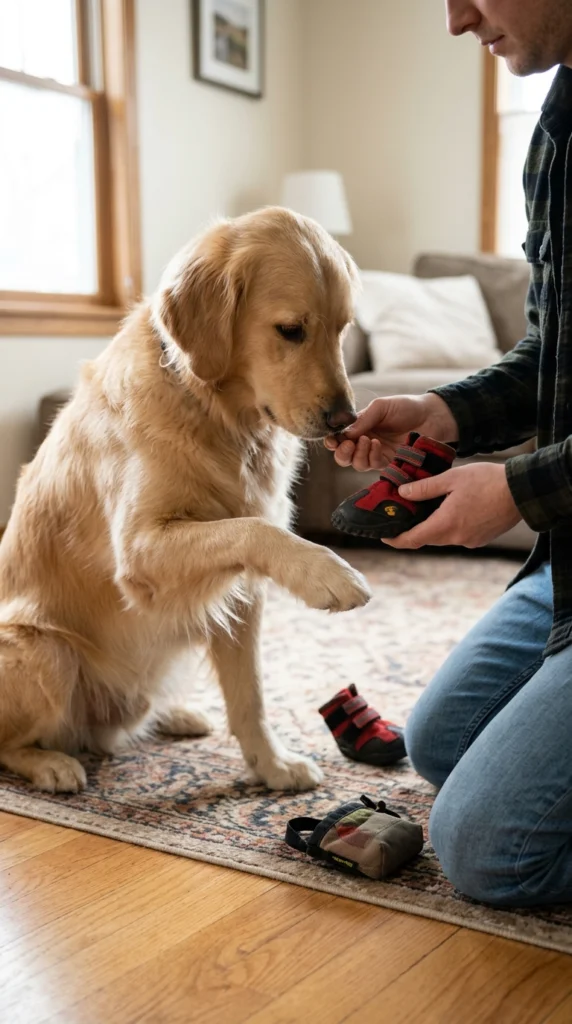
Move from the quiet room to a hallway, then a dry porch or sheltered sidewalk. Walk for only a few steps at a time while checking that each boot stays aligned. Avoid long distances until you know the fit stays comfortable over ordinary movement.
Use a secure harness and leash. If the dog balks, return to the last easy setting; cold surfaces are not the place for lengthy exposure training.
8. Know when to take a break
Stop when your dog hides, stiffens, growls, pants from stress, refuses normally favorite rewards or repeatedly pulls at the boot. Keep notes about what worked: which pair, how many seconds and where the lesson happened.
If your dog is frightened by all paw handling, a certified reward-based trainer or veterinarian can help rule out pain and build a humane plan.
9. Alternatives when boots are not tolerated
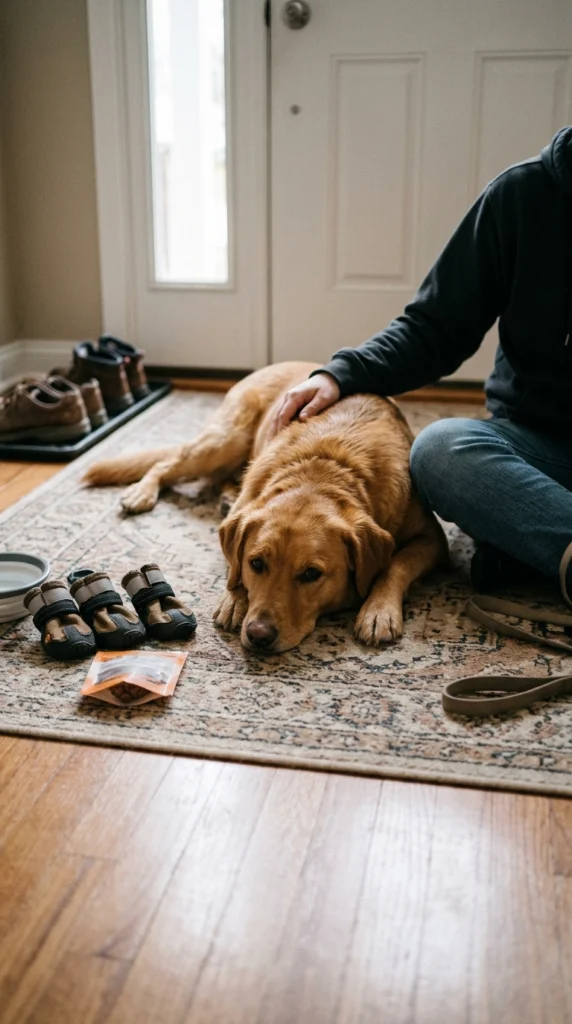
For brief cold-weather needs, choose a cleared route, avoid heavily salted pavement, shorten outdoor time and clean and dry feet after returning. A veterinarian can advise on suitable paw-protection products. These strategies may reduce exposure but do not make extreme cold or dangerous ice safe.
Check the paws after every outing and watch for lifting feet, shivering or reluctance to move. A warm indoor enrichment session can replace part of a walk on unsafe days.
Common mistakes to avoid
- Rushing to the final step before the dog understands the easy version.
- Restraining, dragging or punishing a dog who is worried or uncomfortable.
- Ignoring a poor fit, painful paw, or another physical reason for resistance.
- Training during a stressful outing rather than in a quiet, safe setting.
Helpful resources and optional supplies
For a broader selection of owner-approved gear, visit our Recommended Dog Products page. Readers who prefer detailed learning can browse our Dog Books library. Explore the Dog Care Tools hub for the live breed-matching and age resources. These links are optional and do not replace the steps above.
Winter care is not one-size-fits-all. See senior dog care advice for age-related adjustments, particularly when movement or comfort has changed.
Related on our site: Puppy Socialization Tips.
Affiliate disclosure: As an Amazon Associate, we may earn from qualifying purchases, at no additional cost to you. All products below are optional.
- Paw Lifestyles Dog Treat Training Pouch: A reward pouch is useful for short reward-based lessons, but an ordinary pocket also works. View exact product on Amazon.
A seven-session boot-training example
This practical reference turns the advice above into manageable actions:
- Session 1: Let the dog notice an empty boot and earn a reward for a calm glance or sniff; stop before the boot becomes stressful.
- Session 2: Practice one-second paw touches with the boot nearby, followed by a reward and a break.
- Session 3: Touch the open boot gently to one paw without fastening; let the dog choose to stay.
- Session 4: Slip one boot on briefly and remove it immediately, rewarding relaxed standing.
- Session 5: Practice two or three voluntary steps on a nonslip mat with one boot.
- Session 6: Add another boot only when movement is easy, checking for rubbing every time.
- Session 7: Try a short sheltered outdoor practice, then inspect paws and boots before extending any walk.
Avoid an ambitious schedule if your dog is fearful. Repeat a session for several days if necessary; the number is a planning aid, not a deadline.
Frequently asked questions
How long does boot training take?
Many dogs improve after several brief sessions, but there is no guaranteed number of days. Increase duration only when the dog is relaxed at the current step.
Why does my dog walk strangely in boots?
An exaggerated high-step can be a response to unfamiliar paw sensation. Check sizing and remove the boots if the gait looks painful or does not become more natural.
Should I force boots on when it snows?
No. Protect the dog by shortening outings, choosing a cleared surface, and asking a veterinarian about safe paw care while you work on voluntary boot acceptance.
Can paw balm replace boots?
A paw balm may help some intact pads but offers different protection from well-fitting footwear. Follow veterinary guidance, especially for cracked skin.
Final thoughts
Learn why dogs object to boots and use gradual, rewards-first practice without forcing them to walk in unfamiliar footwear. Keep the routine kind, predictable and appropriate for your dog. A few careful, comfortable steps are usually more useful than a dramatic one-day transformation. If a problem continues or feels medically concerning, your veterinarian or a credentialed reward-based professional can provide individualized help.