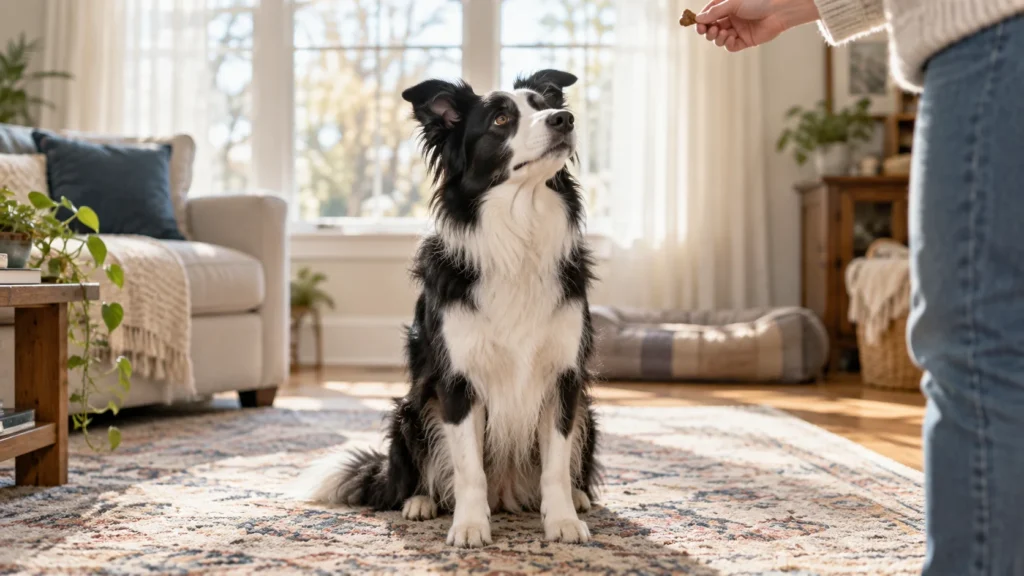
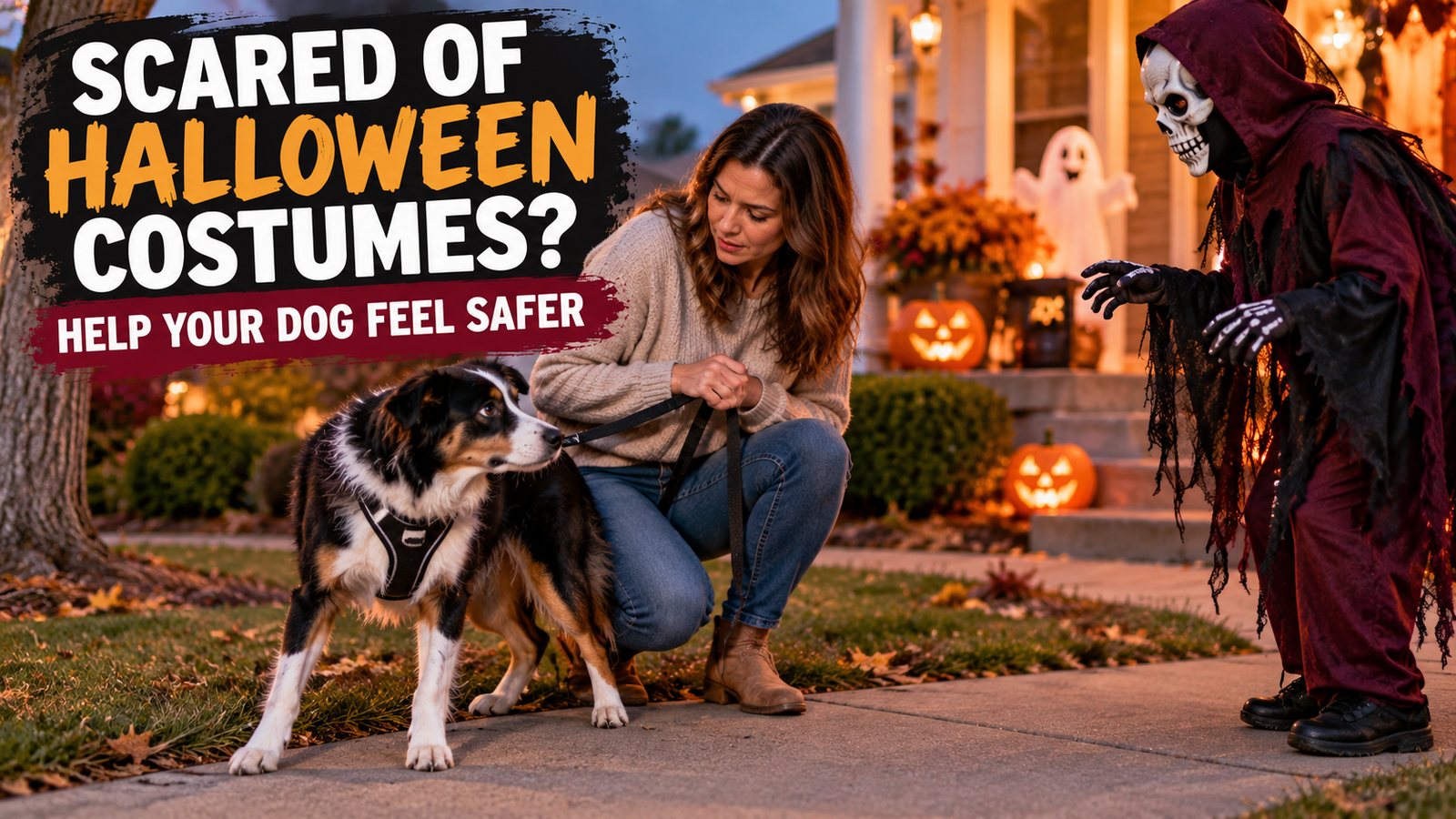
A familiar neighbor walks up wearing a hood and a skeleton mask, and suddenly your easygoing dog backs away or starts barking. If your dog is afraid of Halloween costumes, the problem is not that your dog is being stubborn. A mask, wig, cape, oversized hat, or unfamiliar way of walking can make a normally recognizable person seem strange.
You can help without asking your dog to greet someone who frightens them. The safest approach is to increase distance, watch their body language, use gentle rewards, and keep the choice to walk away. On a busy Halloween night, a quiet room is often more helpful than a last-minute training session.
Table of Contents
Quick Answer: What to Do When Your Dog Is Scared of Costumes
Move your dog away from the costumed person until they can relax. Ask the person not to stare, lean over, reach for, or follow your dog. If your dog can comfortably notice the person at a distance, you can pair that brief sight with a small treat; if your dog is too frightened to eat, do not insist. Go home or use another route if needed. Never pull a scared dog toward a mask or make them sniff it.
This low-pressure approach matches the American Kennel Club’s guidance on fear of strangers, which emphasizes space and pairing a person’s presence with positive experiences.
Why Halloween Costumes Can Frighten Even Friendly Dogs
Dogs learn to recognize people using more than a face. They also notice movement, posture, voice, clothing, scent, and context. A person wearing an enormous hat or face mask may look and move differently enough to cause uncertainty, even if they are a family member.
- Hidden facial cues: A mask removes familiar expressions, and some masks have oversized eyes or teeth.
- Unusual silhouettes: Long capes, wings, bulky foam outfits, stilts, and tall hats change the outline of a person.
- Different voices and movements: A character voice, a dragging cape, or a person jumping out can startle a dog.
- Multiple triggers: Doorbells, candy buckets, excited children, lights, and crowded sidewalks compound the pressure.
- Limited experience: A dog who has never met someone dressed this way may need more time and distance.
The VCA Animal Hospitals Halloween safety guide notes that costumed visitors may frighten dogs and that even normally sociable dogs can react defensively when threatened. Fear is a safety concern, not a failure of obedience.
How to Read Your Dog’s Body Language Around Costumes
A dog may be scared without growling. Some freeze, stare, or quietly stop taking treats. Others bark or lunge because they want the unfamiliar person farther away. Judge several signals together rather than relying on a single ear or tail position.
- Turning their head away, moving behind you, or trying to retreat.
- Stiff posture, freezing, crouching, trembling, or a tucked tail.
- Frequent lip licking, yawning, wide eyes, or panting without exercise or heat.
- Barking, growling, lunging, or staring that increases as the person gets closer.
- Refusing a favorite treat or being unable to turn attention back toward you.
If your dog cannot settle at the current distance, do not wait for a bite or a full panic response. Create more space immediately. A relaxed dog should be able to look away, sniff normally, and move without being trapped.
A Gentle Costume-Confidence Plan You Can Practice at Home
Practice on an ordinary quiet day, not at the front door during peak trick-or-treating. Use a trusted adult helper your dog knows. Keep every step optional and stop as soon as your dog’s body language becomes worried.
Step 1: Start Without a Costume
Have your helper stand at a comfortable distance in everyday clothes. Reward your dog for calmly noticing the person or choosing to look back at you. Your dog does not need to approach or sit perfectly; the goal is an easy baseline.
Step 2: Add One Small Clothing Change
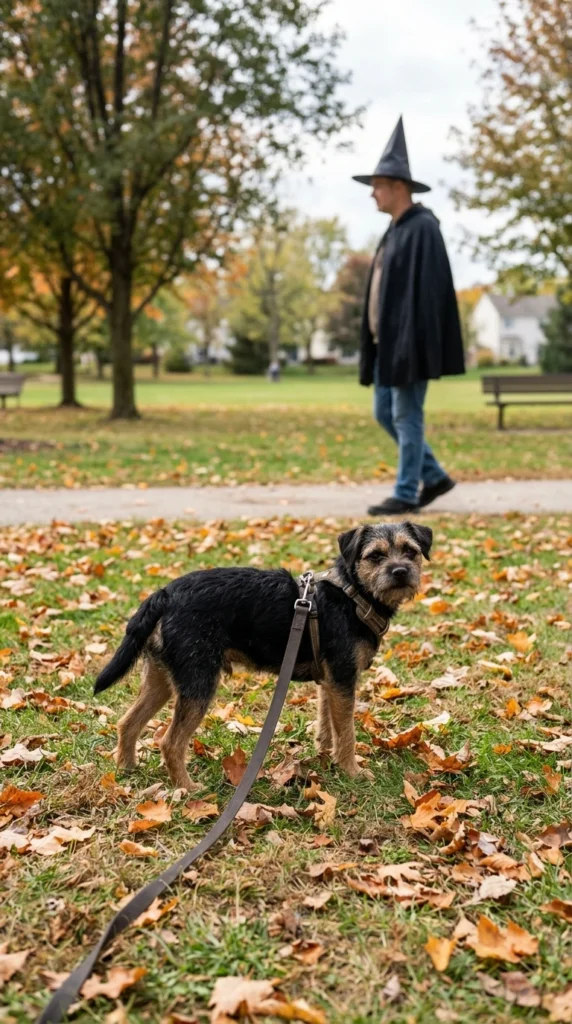
Ask your helper to put on a simple hat or loose jacket while your dog watches from farther away. Keep the helper still and relaxed. No looming, sudden turns, reaching toward the dog, or trying to tempt them closer. Reward comfortable observation and end the practice quickly.
Step 3: Introduce a Mask as an Object First
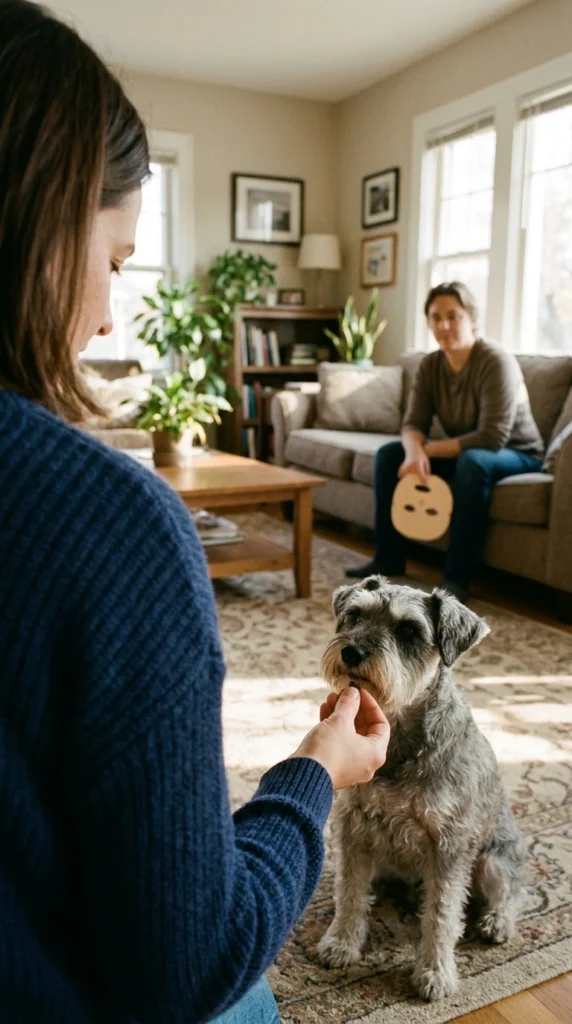
Leave the mask on a shelf or chair where your dog can see it without having to walk past it. If your dog remains relaxed, you may reward a glance toward it. Do not wave the mask at your dog’s face or place it beside their food bowl. On another day, the helper can briefly hold it at their side, still far away.
Step 4: Let the Helper Wear the Mask at a Greater Distance
Only if the previous stages were comfortable should the helper put on a simple mask. Start farther back than you think necessary. They should stand sideways, avoid direct eye contact, and ignore the dog. Reward a quick, relaxed look and give your dog an easy exit. If your dog hesitates or barks, remove the mask and increase distance next time.
Step 5: Change Just One Detail
When your dog is genuinely comfortable across several sessions, you may add a few quiet steps, another hat, or a different outfit. Never add movement, noise, and a closer distance together. Some dogs become comfortable with one familiar costume but remain worried about strangers wearing masks; that is normal.
Step 6: Stop While Your Dog Still Feels Safe
Finish with a break, play, or a familiar activity before your dog becomes overwhelmed. A successful session may involve one calm look from across the room. There is no deadline to reach close contact, and no need for a dog to meet costumed strangers at all. If your dog is a puppy, see our puppy socialization guide for safe, low-pressure introductions to everyday experiences.
What to Do If Your Dog Meets a Masked Person on a Walk
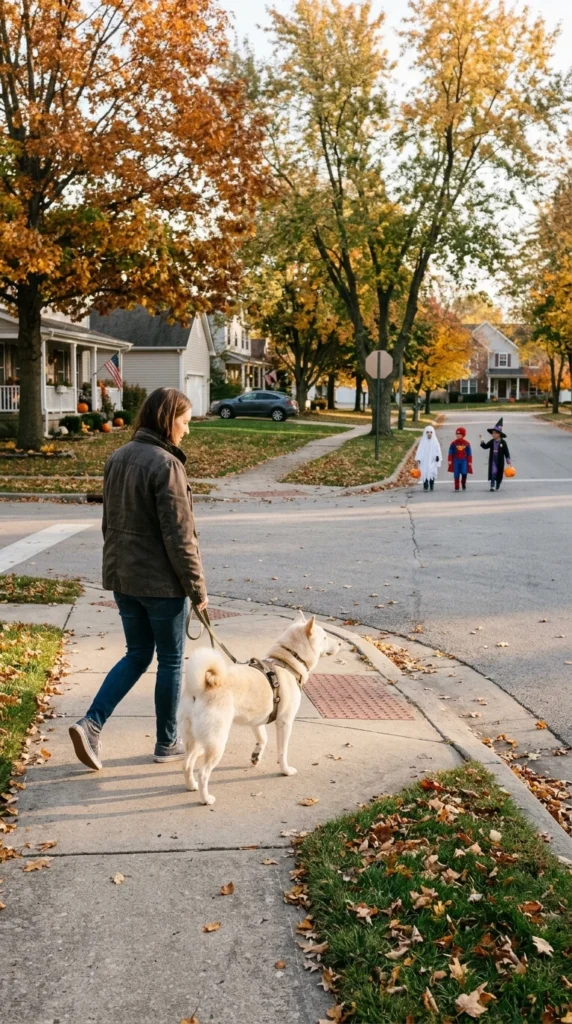
Costumed strangers may approach too quickly to practice a training plan. Instead, concentrate on safety and recovery:
- Turn before the encounter: Cross the street or take a different path if you see a masked group ahead.
- Speak up: Say, “My dog needs space, please don’t approach or pet.” You do not owe anyone an introduction.
- Keep equipment secure: Use a properly fitted harness and a controlled leash; avoid retractable leashes in crowded areas.
- Reward when possible: If your dog can calmly notice a person from far away, offer a treat or gentle praise without luring them closer.
- Leave if needed: If your dog barks, freezes, or tries to escape, move away calmly rather than asking for commands they cannot manage.
Our beginner leash-training guide covers everyday handling and ways to practice walking without pulling. You can choose quieter walking times on Halloween and return home before crowds arrive.
Set Boundaries for Children and Costumed Visitors
Young children may assume every dog wants to be petted, especially when they are excited and holding candy buckets. Let families know that your dog is not greeting visitors. Keep kids from staring, hugging, chasing, cornering, or putting a mask close to the dog’s face. Even if the child takes off a mask, your dog may still be frightened.
If your dog growls, respect the warning and add distance. Never punish a growl or ask a child to hold a treat out to “prove” the dog is friendly. A hand-fed treat can pull a worried dog into a closer interaction than they would choose on their own. Instead, the dog can receive a reward from their owner in a safe location.
For ordinary, non-fearful visitors, our calm greeting and jumping guide offers polite-visitor skills. Those drills should not replace distance and management for a genuinely scared dog.
Halloween Night Plan: A Quiet Room Beats Forced Exposure
If your dog is already anxious around masks or unexpected guests, do not use October 31 as a test. The ASPCA recommends a comfortable room away from the entrance for many pets during busy trick-or-treating hours.
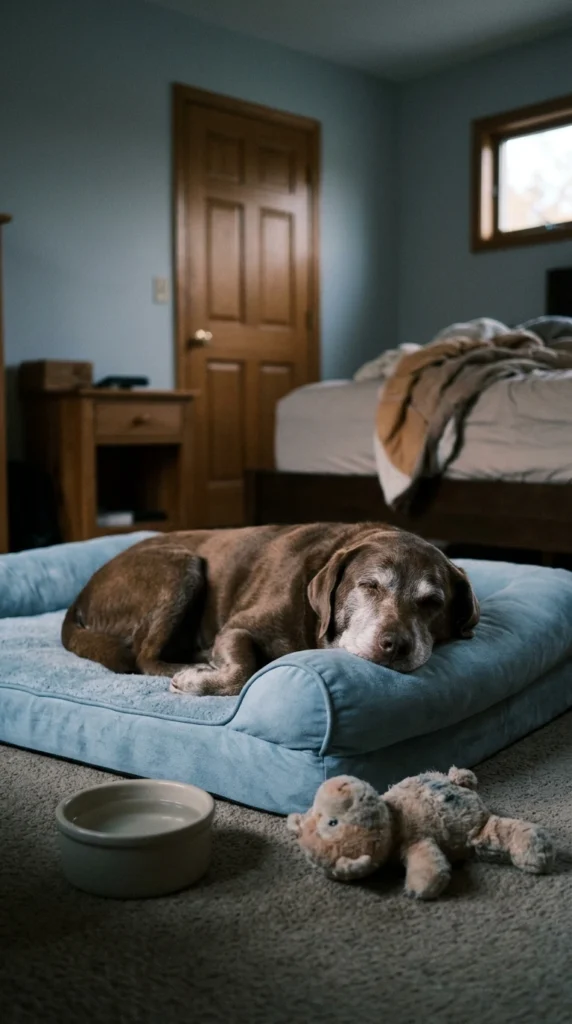
- Pick a familiar room away from the front door and close its door securely.
- Provide water, a familiar bed, and a safe chew or food puzzle only if your dog wants it.
- Close curtains if costumes passing windows upset your dog; use soft background sound if helpful.
- Have an adult check on your dog regularly and make sure children cannot open the door.
- Check your dog’s ID tag and microchip information ahead of the event.
- Do not confine a dog in a crate that causes distress; use a comfortable room or secure alternative.
Training a cue such as “go to your mat” can be useful on ordinary days; our basic dog obedience guide explains the reward-based foundations. If you use a crate, first make sure it is a place of genuine comfort, as explained in our adult dog crate-training guide.
Helpful Supplies for Safe, Low-Pressure Practice
Affiliate disclosure: As an Amazon Associate, we may earn from qualifying purchases at no additional cost to you. Products are optional; distance, safe management, and kind training matter more than equipment.
Paw Lifestyles Dog Treat Training Pouch: A hands-free way to carry small rewards while practicing at a distance. Use it for short, calm practice sessions; do not lure a worried dog toward a scary costume. Find Paw Lifestyles Training Pouch on Amazon.
Carlson Extra Wide Walk-Through Pet Gate: A barrier can help manage some entrances when properly fitted and supervised. Check dimensions, use the correct mounting method, and make sure your dog cannot jump it or pass through its small pet door. A closed, secure room is preferable for dogs likely to bolt. Find Carlson Walk-Through Pet Gate on Amazon.
Mistakes That Can Make Fear of Costumes Worse
- Making your dog sniff a mask: Dogs do not need a close encounter to understand that an object can be ignored.
- Using treats to lure them closer: Rewarding from a safe distance is different from baiting your dog into a frightening interaction.
- Letting visitors insist on petting: Strangers should listen when you ask them to give your dog space.
- Scolding barking or growling: Punishment can worsen fear without resolving the underlying problem.
- Practicing during crowded trick-or-treat hours: Start with a familiar helper on a quiet day; use management during real events.
- Forgetting escape prevention: Secure doors and supervise barriers so a startled dog cannot run outside.
If barking is part of your dog’s reaction, read our guide to fear-related and excessive barking for why the cause matters more than silencing the sound.
When to Ask Your Veterinarian or a Behavior Professional
Contact your veterinarian if fear is sudden, severe, spreading to everyday situations, or paired with panic, escape attempts, defensive snapping, or an inability to recover after the person leaves. Pain, illness, and other medical concerns can contribute to new behavior changes.
For persistent problems, ask for a referral to a qualified, reward-based behavior professional or board-certified veterinary behaviorist. Do not attempt repeated exposure when your dog is panicking, and do not use anxiety medications or supplements without veterinary guidance. A personalized plan can make future events safer, but avoiding costumes entirely is also a reasonable choice.
Frequently Asked Questions
Why does my dog bark at people wearing masks?
Masks change a person’s familiar appearance, and some dogs bark because they feel threatened or need more distance. Look at body language, not barking alone. Move away from the masked person rather than scolding your dog.
Should I take off my Halloween mask so my dog recognizes me?
Yes, if wearing the mask upsets your dog, calmly remove it at a distance and return to normal behavior. For future practice, start with the mask placed somewhere the dog can see comfortably instead of putting it on unexpectedly.
Can I let trick-or-treaters give my dog treats?
It is generally better not to. A frightened dog may feel pressured to approach, and many visitors will be carrying candy that is not safe for dogs. Have the owner deliver dog-safe rewards from a comfortable distance instead.
Do dogs eventually get used to costumes?
Some dogs improve with gradual, safe exposure, while others remain uneasy with certain outfits or masks. There is no fixed timeline or requirement for close greetings. Comfortable body language and recovery matter more than proximity.
What if my dog is scared of Halloween decorations too?
Treat each trigger separately and use distance to prevent overload. A costume plus moving decorations may be too much even if your dog could handle either alone. Choose a quieter route or a peaceful indoor evening.
Is it safe to walk my dog on Halloween night?
It depends on your dog and the local crowds. For sensitive dogs, walk earlier, keep a secure leash and identification, and avoid areas with masked groups. If your dog is highly distressed, a brief quiet potty break may be safer.
Final Thoughts
If your dog is afraid of Halloween costumes, you do not need to turn Halloween into a bravery test. The useful first step is distance, then safe choices, gentle rewards, and predictable surroundings. Practice with a familiar helper only when your dog can stay relaxed, and use a secure quiet room when visitors become overwhelming.
For more everyday dog-care and training resources, explore the Dogs Daily Care homepage. Your dog does not have to enjoy every costume to have a safe Halloween.
Editorial note: This article is general training and safety information, not an individualized veterinary diagnosis or treatment plan.