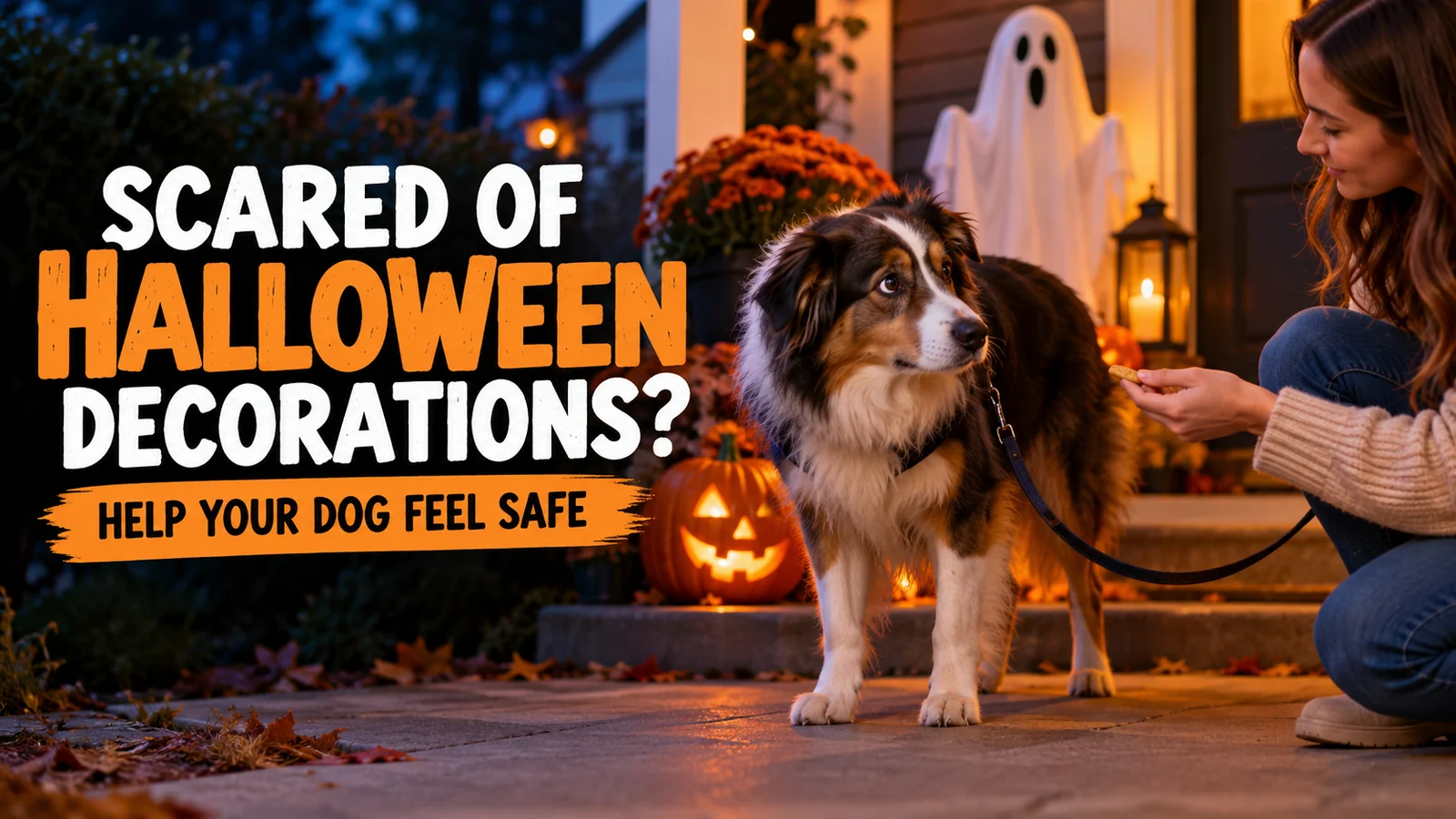
A towering skeleton appears on the neighbor’s lawn. The next day, a motion-activated witch cackles as you walk past. Your dog freezes, barks, backs away, or suddenly refuses to take the usual route. If your dog is afraid of Halloween decorations, you are not alone—and there is no need to push them closer to prove that the decorations are harmless.
For a frightened dog, a fake ghost, a moving figure, or an unfamiliar sound can feel very real. The kindest response is to make the situation easier, give your dog an escape route, and let positive experiences build confidence at their pace.
Table of Contents
Quick Answer: How Do You Help a Dog Scared of Halloween Decorations?
Move farther from the scary display, stop the noise or movement if you control it, and calmly reward your dog when they can notice the decoration without panicking. Start with a still, quiet decoration at a comfortable distance, allow your dog to choose whether to approach, and increase difficulty only if their body language stays relaxed. Skip a display entirely if your dog remains upset. A safe route and a quiet room are successful solutions, not failures.
These steps reflect gradual desensitization and counterconditioning, approaches described by VCA Animal Hospitals and Cornell University College of Veterinary Medicine. They work best when the dog feels safe enough to learn.
Why Halloween Decorations Can Scare Dogs
Dogs experience outdoor changes through sight, sound, scent, and movement. A new decoration can appear where an ordinary trash can stood yesterday, and your dog has no reason to know it is made of plastic or fabric.
- Unpredictable motion: Animatronic characters, inflatables, and moving skeletons can startle a dog when they suddenly activate.
- Unfamiliar shapes: Human-sized figures, masks, silhouettes, and hanging ghosts may look like strange people or animals.
- Flashing lights and noise: Speakers, spooky soundtracks, and unexpected cackles can overwhelm sound-sensitive dogs.
- A changed environment: A familiar porch or sidewalk may no longer look predictable, especially at night.
- Several triggers at once: Excited children, doorbells, costumes, and decorations can create more stress than any one item alone.
The American Kennel Club’s Halloween decoration guidance also recommends using distance and rewards rather than forcing an interaction. Dogs with limited positive exposure to novel sights may need smaller, easier introductions. Our puppy socialization guide explains how early experiences should feel safe, not overwhelming.
Signs Your Dog Is Afraid, Not Just Curious
Fear does not always look like hiding. Some dogs stare, bark, or pull toward a decoration while feeling nervous. Look at the whole dog, the situation, and whether their behavior changes as you move away.
- Freezing or refusing to walk forward, even with gentle encouragement.
- A tucked tail, lowered posture, pinned-back ears, or stiff muscles.
- Lip licking, yawning, trembling, panting, or scanning when it is not explained by exercise or heat.
- Trying to retreat, hide behind you, or escape the area.
- Repeated barking, lunging, or staring that gets stronger as you approach.
- Turning away from food they would normally enjoy.
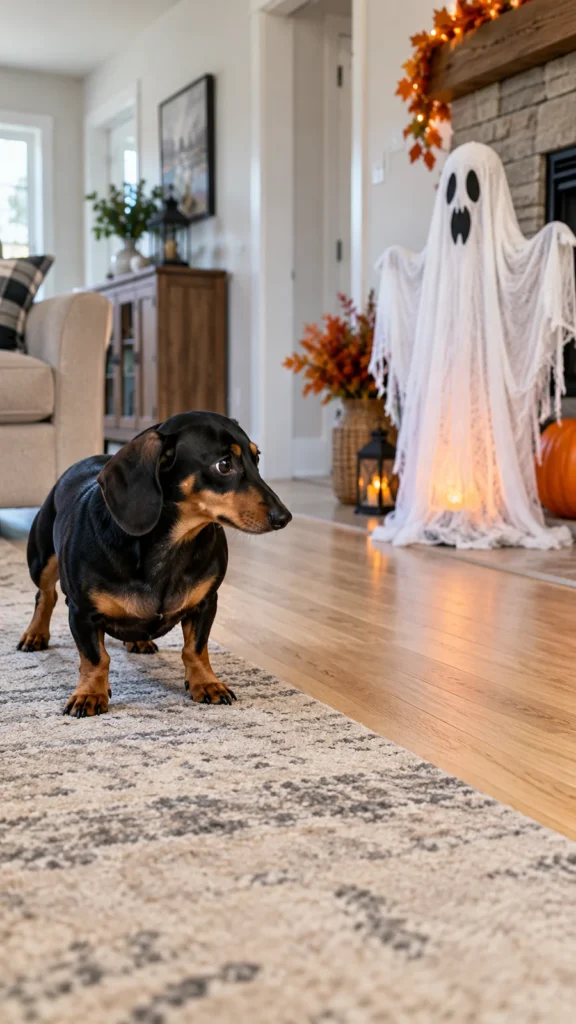
If your dog suddenly refuses treats, cannot disengage from the display, or struggles to recover after leaving, the exercise is too difficult right now. Give them space. A calm exit is more useful than trying to finish a training session.
A Gentle Step-by-Step Plan for Scary Decorations
Step 1: Choose a Safe Distance
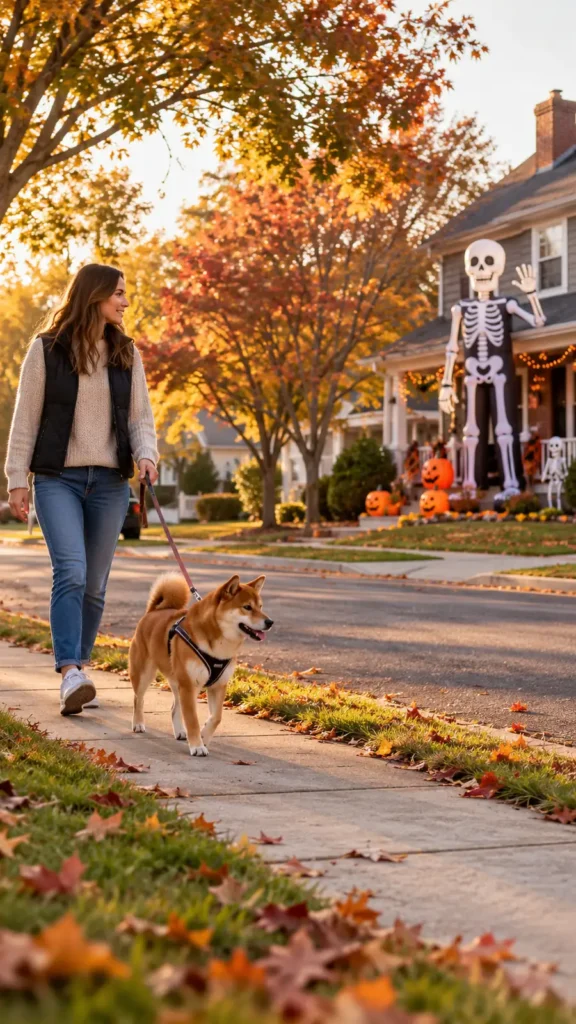
Start far enough away that your dog can see the decoration without immediately becoming tense, barking continuously, or trying to escape. This distance may be across the room, across the street, or farther away. There is no correct number of feet; your dog’s behavior tells you where to begin.
Keep your dog on a comfortable, secure harness and leash outdoors. Give them enough freedom to turn away, and avoid pulling them toward a display. If the only route passes close to a loud decoration, cross the street or take another walk. For everyday leash handling, see our beginner leash-training guide.
Step 2: Begin With a Still, Quiet Decoration
If you have decorations at home, switch off moving parts, lights, and sound effects before beginning. Put one small, stable item where your dog can notice it without being cornered. A plain pumpkin is usually a more manageable starting point than a shrieking animatronic figure.
Let your dog decide whether to look, sniff the air, or move closer. Never carry, drag, or restrain a frightened dog so they must face the object. If they leave, allow them to leave.
Step 3: Pair a Calm Look With Something Good
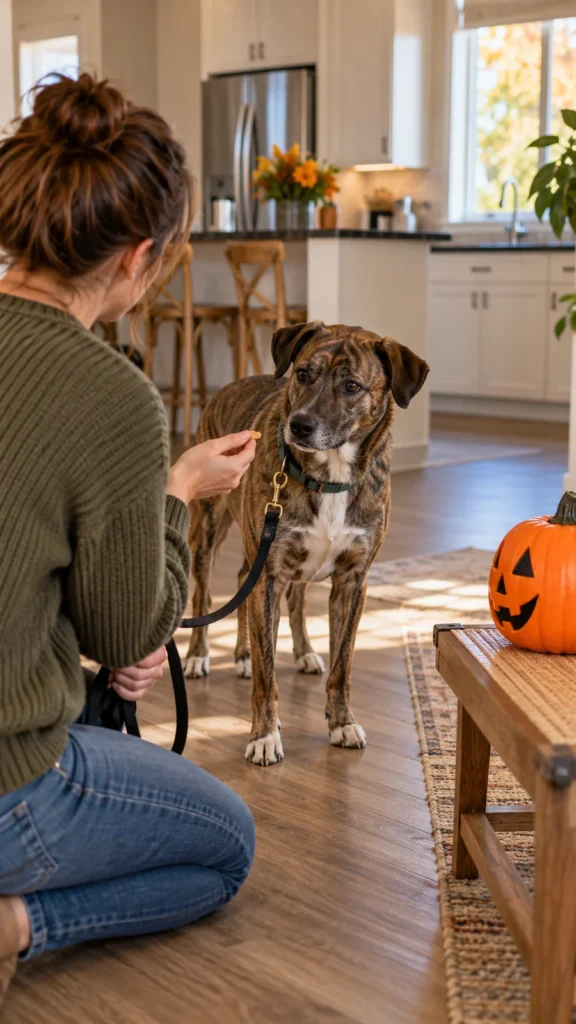
When your dog notices the decoration while staying comfortable, mark the moment with a quiet “yes” and offer a small favorite treat, a toy, or gentle praise. Deliver the reward in a way that lets your dog stay at their chosen distance, rather than using food to lure them toward something frightening.
This teaches an association: seeing the unusual object can predict something pleasant. It is not a test of courage. For dogs uncomfortable around sharp clicker sounds, a soft verbal marker may be kinder than a clicker.
Step 4: Practice Briefly and Stop on a Good Note
Offer one or two easy opportunities, then leave while your dog is still comfortable. Some dogs will be ready for a few brief repetitions, while others need time to settle after just one look. There is no reason to keep practicing until the dog is exhausted.
If your dog seems worried, increase the distance or make the decoration less noticeable. A training plan should become easier when the dog struggles—not harder. The reward-based foundations in our basic dog obedience guide can help with timing and consistency.
Step 5: Add One Change at a Time
Only after several comfortable experiences with a still object should you consider a slightly closer position or a new shape. If a decoration moves or makes sounds, begin with that feature off. Later, introduce the mildest possible version at a much greater distance, if you can control it safely. Change distance, sound, or movement one at a time.
Skip any sound or movement that startles your dog. Many dogs do not need to learn to tolerate motion-activated displays. Managing your environment is a perfectly reasonable long-term choice.
Step 6: Let Your Dog Set the Pace
Progress is not a straight line. Your dog may handle a small pumpkin one day and still dislike a towering skeleton the next. Some dogs may choose to approach; others will prefer not to. Reward recovery, voluntary curiosity, and calm choices, and stop whenever fear increases.
If you are not seeing comfortable progress, or your dog remains highly distressed, seek help rather than escalating exposure. VCA cautions that continuing exposure when a dog is frightened can make the response worse.
What to Do When a Decoration Suddenly Moves or Makes Noise
Unexpected animatronics cannot always be controlled. If your dog startles on a walk:
- Turn away calmly. Increase distance without jerking the leash or blocking your dog’s escape route.
- Choose a quiet direction. Move behind a parked car or around a corner only if it is safe and you can maintain awareness of traffic.
- Allow recovery. Pause where there are fewer sights and sounds; do not demand a sit if your dog is too frightened to respond.
- Offer comfort and an optional reward. If your dog wants gentle reassurance, give it. If they can take food, reward a calm glance or attention back to you.
- Change your route. Do not immediately return for another attempt just to see whether your dog can handle it.
Barking can be a fear signal rather than deliberate disobedience. Our guide to excessive barking explains why training should address the cause instead of punishing the noise.
Set Up a Halloween Safe Space at Home
For some dogs, the best plan is not training around every decoration. Create a quiet room or resting area away from the front entrance, especially on October 31 when doors open frequently and unfamiliar people pass by.
- Choose a familiar spot with water, a comfortable resting surface, and good ventilation.
- Keep alarming decorations, cords, candles, and guests outside the space.
- Use soft background music or white noise if your dog finds it helpful; keep the volume gentle.
- Offer a familiar food puzzle or supervised chew if your dog is relaxed enough to enjoy it.
- Keep your dog securely separated from opening exterior doors. Check collar ID information and microchip details ahead of time.
- Do not lock a dog in a crate if the crate itself causes fear or if they have not been introduced to it positively.
The ASPCA recommends a separate comfortable room for dogs who may feel stressed by trick-or-treaters. If young dogs investigate everything, also review our home puppy-proofing checklist for loose cords and household hazards.
Helpful Training Supplies (Optional)
Affiliate disclosure: As an Amazon Associate, we may earn from qualifying purchases. This does not change the price you pay. Products are optional; safe distance, calm management, and rewards matter more than buying equipment.
- Paw Lifestyles Dog Treat Training Pouch: A hands-free pouch for carrying small rewards on neighborhood walks, useful when a calm glance needs an immediate reward. See the Paw Lifestyles training pouch on Amazon.
- Carlson Extra Wide Walk-Through Pet Gate: May help separate a resting area from visitor traffic if it fits the opening and your dog cannot jump, squeeze through, or operate the small pet door. Do not depend on a pressure-mounted gate at the top of stairs. See the Carlson pet gate on Amazon.
Choose any gate based on your dog’s size, strength, and the installation instructions. A secure closed room may be a better option for dogs who are frightened or likely to bolt.
Halloween Decoration Safety Beyond Fear
Even if your dog looks curious or calm, decorative items can create physical hazards. Keep powered cords, batteries, small loose pieces, hanging string, and glow products out of reach. Avoid lit candles where a dog could knock them over, and supervise pets around unfamiliar objects. If your dog chews or swallows part of a decoration, or gets an electric shock, contact your veterinarian or emergency veterinary hospital promptly. Do not try to make the dog vomit unless a veterinary professional instructs you to do so.
Keep Halloween candy well away from pets: chocolate and xylitol-containing products are particular concerns. The American Animal Hospital Association’s Halloween safety advice also highlights decoration, cord, and noise hazards. The safest arrangement lets your dog avoid potentially dangerous objects completely.
Common Mistakes That Can Make Fear Worse
- Pulling a dog toward a scary prop: Being forced to approach can make the location feel less safe.
- Using treats as bait: Food should not lure a worried dog into a situation they are trying to escape.
- Turning on all the effects at once: Sound, light, and motion together can overwhelm even a dog that tolerated the still decoration.
- Scolding, barking or growling: Punishment does not remove fear and can discourage communication.
- Ignoring recovery time: A dog that is still shaking or scanning cannot learn much from another encounter.
- Waiting until Halloween night: If there is no time for a gradual plan, prioritize a calm, secure indoor setup.
When guests arrive, keep greetings predictable and avoid asking your dog to mingle with costumed visitors. Our calm greeting training guide offers general skills for ordinary situations, but an anxious dog should never be required to greet strangers.
When to Ask Your Veterinarian or a Qualified Behavior Professional
Seek professional help if your dog panics, cannot recover after triggers, refuses routine walks, attempts to escape, shows defensive behavior, or becomes fearful in multiple everyday situations. A sudden or major behavior change also deserves a veterinary check because pain and illness can affect reactions.
For continuing fear, ask your veterinarian about a qualified reward-based trainer, certified applied animal behaviorist, or board-certified veterinary behaviorist. Serious anxiety sometimes needs an individualized behavior plan and veterinary treatment. Never give human sedatives, over-the-counter anxiety products, or prescription medication without veterinary guidance.
Frequently Asked Questions
Should I make my dog sniff a scary Halloween decoration?
No. Let your dog decide whether to investigate. They can learn that an object is safe from a distance, and walking away may be the best option.
Is it normal for a dog to bark at an inflatable skeleton?
Yes. Some dogs bark at unfamiliar shapes, movement, or noise because they feel uncertain. Look for other signs of stress and increase distance rather than automatically correcting the barking.
Can I train my dog to ignore motion-activated decorations?
You may help some dogs feel more comfortable with gradual, controlled introductions, but motion-activated surprises are hard to predict. Avoiding them is often safer and kinder than trying to train through fear.
How long will it take for my dog to get used to Halloween decorations?
There is no guaranteed timeline. A dog might become comfortable with a simple still item quickly and remain uneasy around loud displays. Judge progress by relaxed behavior and quick recovery, not by how close your dog gets.
Should my dog stay inside on Halloween night?
If doorbells, costumes, or displays cause stress, a secure, quiet indoor space is a sensible choice. Plan bathroom breaks for quieter times, keep ID details up to date, and prevent escapes when doors open.
Final Thoughts
When your dog is scared of Halloween decorations, your goal is not to make them confront everything. Start with distance, remove startling effects when possible, reward calm choices, and let your dog opt out. A different walking route or a quiet evening indoors can be exactly the right solution.
With patience and a plan that respects your dog’s signals, many everyday encounters can become less stressful. And if fear remains intense, support from your veterinarian or a qualified behavior professional is a worthwhile next step.
Editorial note: This guide provides general dog behavior and safety information. It is not a substitute for a veterinarian’s individual assessment.