
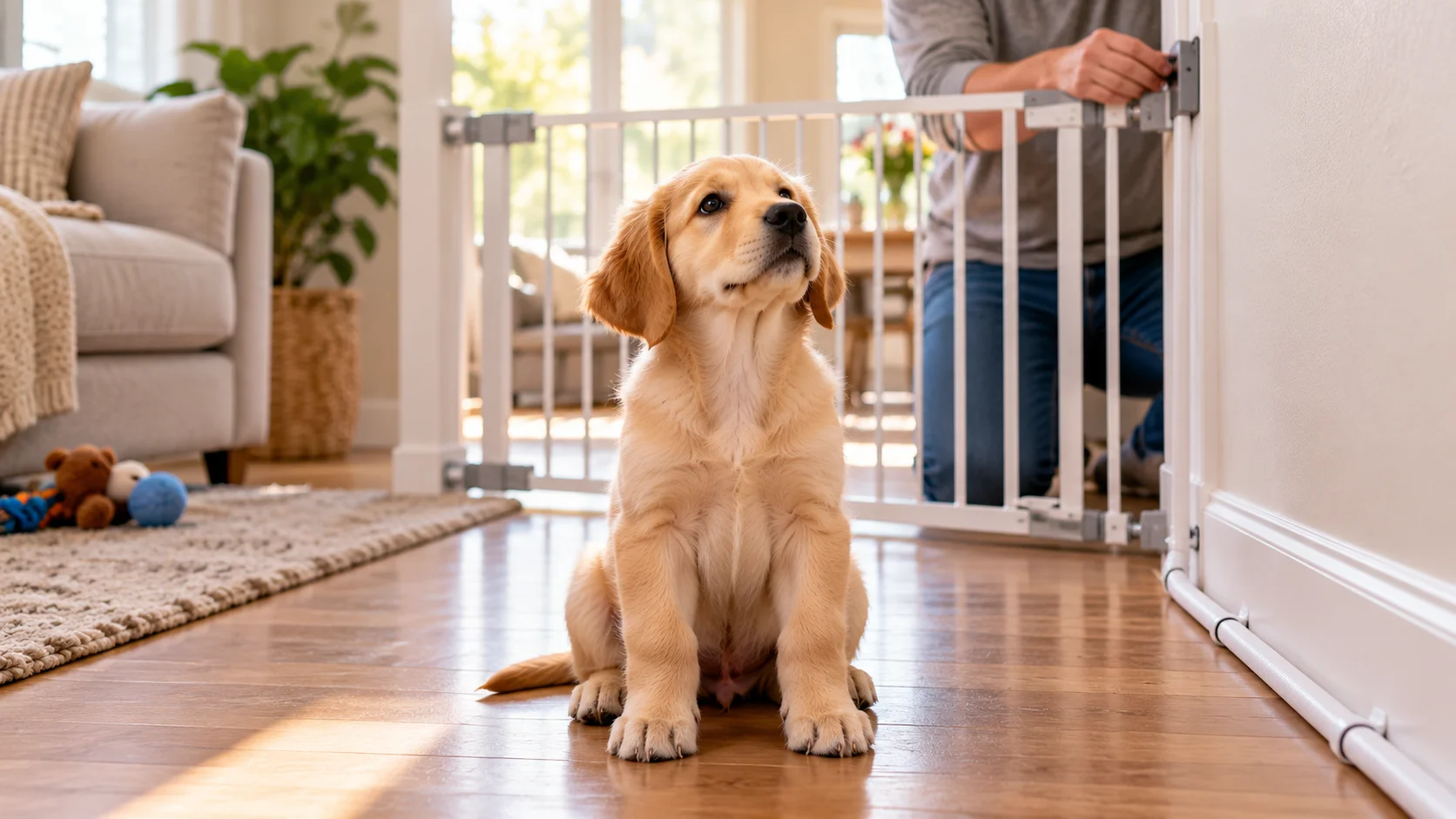
A new puppy sees your home as one big playground, and everything within reach is a potential toy, snack, or chew. That curiosity is part of what makes puppies so lovable, and also what makes them so vulnerable. Puppy proofing your home before the big day is one of the most useful things you can do to prevent accidents, poisonings, and expensive emergency visits.
This guide walks through your home room by room, starting with the highest-risk hazards. It also covers how to set up a safe puppy zone and what to do if something goes wrong. You do not need to be perfect, and no home is risk-free, but a few hours of preparation goes a long way.
Table of Contents
Quick Answer: How Do You Puppy-Proof a Home?
Get down to puppy height and remove or secure anything chewable, swallowable, or toxic. Cover or hide electrical cords, lock away medications, cleaners, and human foods, remove poisonous plants, close off stairs and escape routes, and set up a small safe area for your puppy. Do this before your puppy comes home.
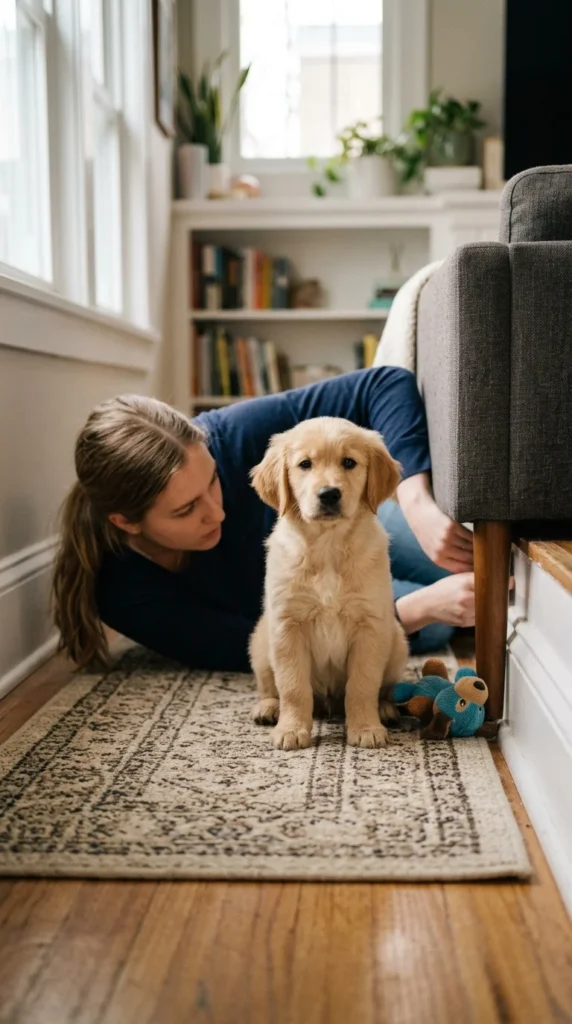
Start by Seeing Your Home Like a Puppy
The easiest way to find hazards is to get down on your hands and knees and look around at puppy eye level. Notice what dangles, what sits at the edge of a table, and what rolls under furniture. Puppies explore with their mouths, so anything they can reach is fair game.
You do not have to proof every square foot right away. If your puppy will be confined to one or two rooms while they settle in, focus on those spaces first. A few hazards, though, should be secured everywhere in the house: poisons, plants, and electrical cords.
Puppy Proofing Room by Room
Kitchen
The kitchen is full of tempting smells and real dangers. Many ordinary foods are harmful to dogs, so keep them stored out of reach.
- Store food in closed cabinets or the pantry. Chocolate, grapes and raisins, onions, and xylitol are among the foods that can be dangerous to dogs.
- Check for xylitol. This sugar substitute appears in sugar-free gum, some baked goods, and other products, so read labels.
- Use a trash can with a latching lid or keep it behind a closed door. Garbage can cause vomiting, diarrhea, blockages, or toxin exposure.
- Lock away cleaning products and anything stored under the sink.
- Keep counters clear of knives, scissors, and food scraps that a tall or jumping puppy might reach.
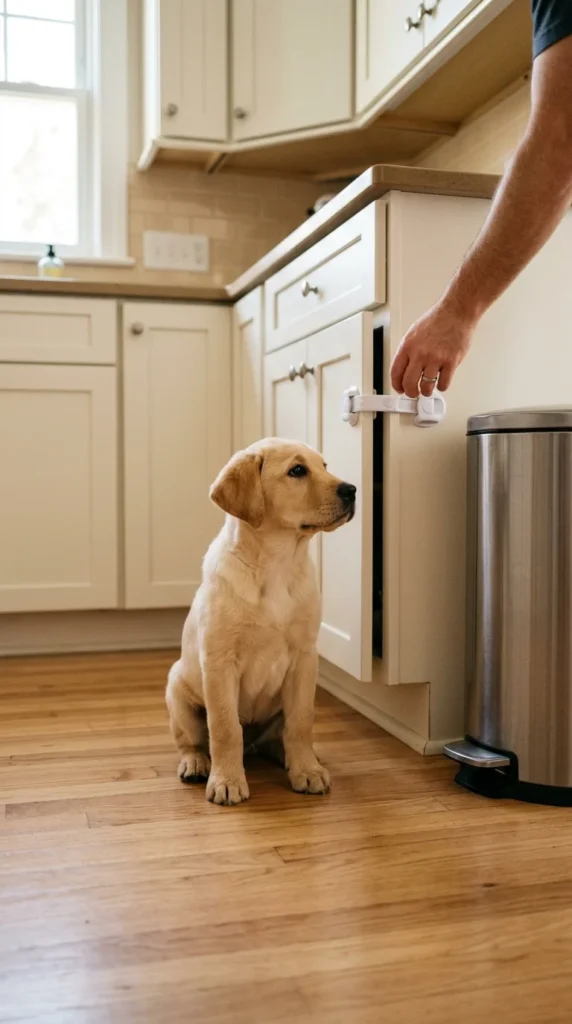
Living Room and Bedroom
- Cover or hide electrical cords. Chewing a live cord can cause mouth burns, shock, and breathing problems. Use cord covers, route wires behind furniture, and unplug chargers when not in use.
- Secure blind and curtain cords. Dangling cords can be a strangulation hazard, so tie them up out of reach.
- Put away small items. Coins, hair ties, jewelry, remote batteries, and socks can be swallowed. Button batteries are especially dangerous.
- Move shoes and bags. Pockets and purses often contain gum, medication, or tobacco products.
- Move or elevate plants. Many common houseplants are toxic to dogs.
- Protect valuables. Put away anything breakable or sentimental that you would not want chewed.
Bathroom and Laundry Room
- Store medications securely. Many human medications are toxic to dogs, including over-the-counter ones. Do not leave pill bottles on low counters or nightstands.
- Keep toilet lids closed. Small puppies can fall in, and some toilet cleaning products are hazardous.
- Close the washer and dryer doors. Check inside before using them.
- Lock up detergents and laundry pods.
- Use a covered trash can for razors, dental floss, and cotton swabs.
Garage, Basement, and Storage Areas
- Keep antifreeze, pesticides, rodent poison, paint, and chemicals on high shelves or in latched cabinets.
- Store tools and sharp objects out of reach.
- Consider keeping the puppy out of these areas altogether.
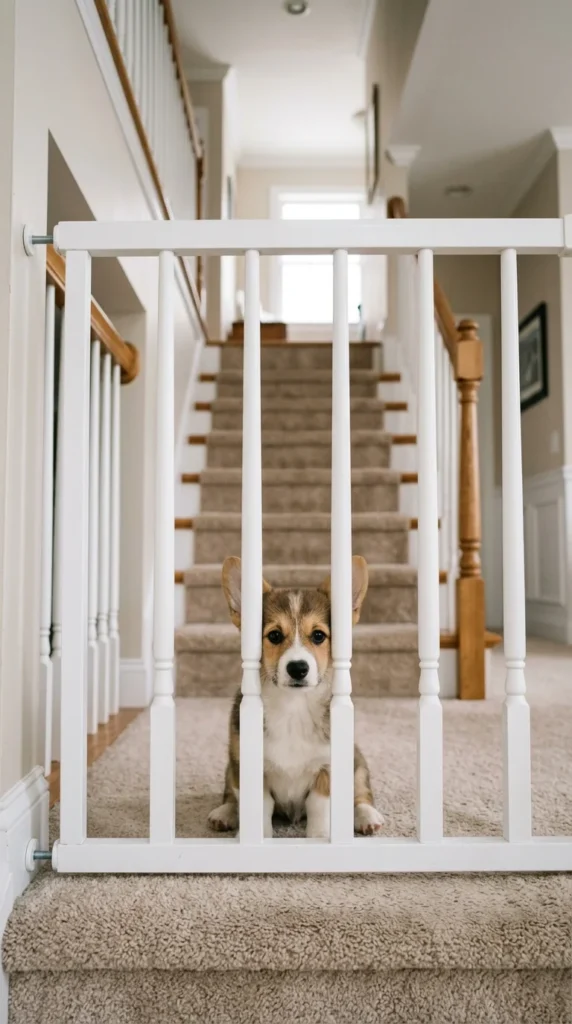
Stairs, Doors, and Windows
- Use baby gates at the top and bottom of stairs.
- Keep windows closed or secure screens so a puppy cannot fall or escape.
- Teach everyone in the household to close doors and gates behind them.
Check Your Plants
Many popular plants are poisonous to dogs, and in some cases the bulbs, soil, or mulch can be a concern too. Azaleas, rhododendrons, sago palms, and spring bulbs such as tulips and daffodils are among the plants often listed as hazards.
The simplest approach is to check every plant in your home and yard against the ASPCA’s toxic and non-toxic plant database, since toxicity and severity vary. Remove any plant that is dangerous, or place it somewhere your puppy truly cannot reach.
Puppy Proofing Your Yard
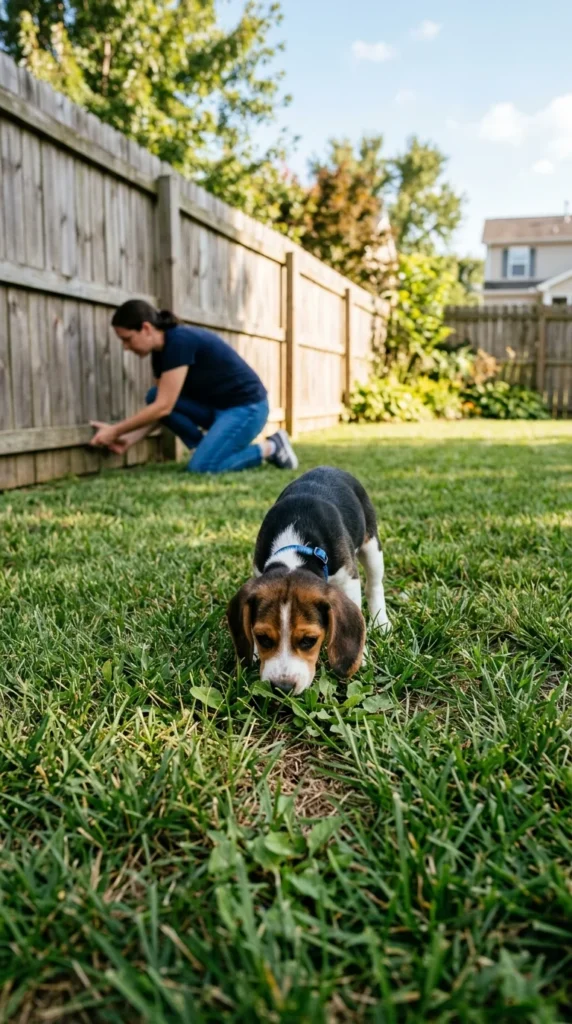
If your puppy will spend time outside, walk the yard before they do.
- Check the fence. Look for gaps, holes, or loose boards a small puppy could squeeze through, and dig-under spots.
- Make sure gates latch securely.
- Remove toxic plants and use pet-safe alternatives.
- Store lawn and garden products such as fertilizer, pesticide, and slug bait out of reach.
- Cover or fence off pools, ponds, and hot tubs. Puppies can fall in and struggle to climb out.
- Secure compost bins with tight lids.
- Provide shade and fresh water.
Never leave a young puppy outside unsupervised.
Create a Safe Puppy Zone
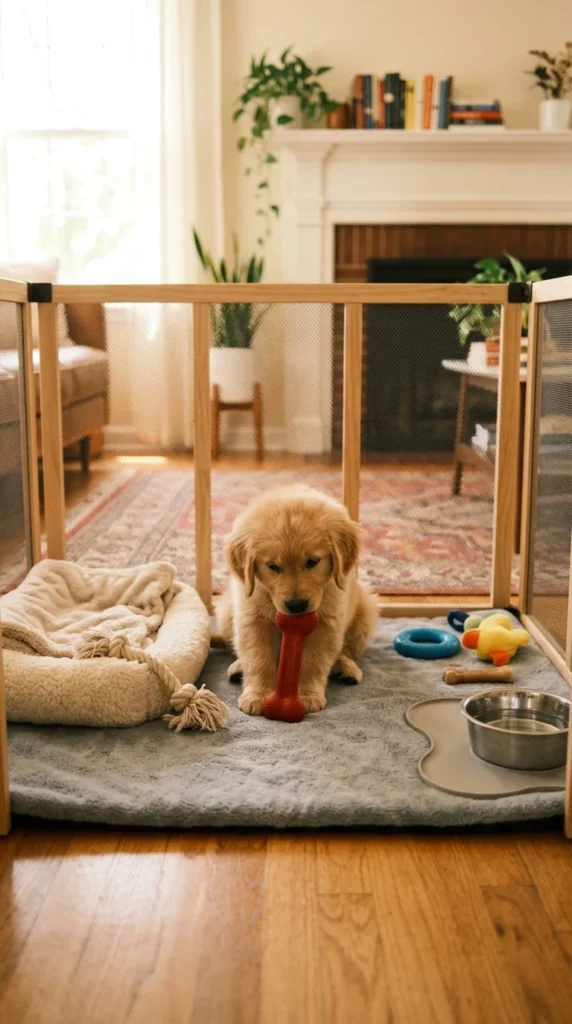
Even a well-proofed house has surprises, so give your puppy a defined area where they are safe when you cannot supervise. A playpen, a gated section of a room, or a crate with a comfortable bed can all work.
Stock the area with:
- A comfortable bed or crate
- Safe chew toys sized for your puppy
- A water bowl that does not tip easily
- Puppy pads or access to a bathroom spot, if you use them
Choose durable toys that are too big to swallow, and replace any that start to break apart. Giving puppies appropriate things to chew helps redirect them away from cords and furniture.
What to Do If Your Puppy Eats Something Dangerous
Even careful owners face accidents, so decide on your plan now. Save these numbers in your phone and post them somewhere visible:
- Your regular veterinarian
- The nearest 24-hour emergency animal hospital
- ASPCA Animal Poison Control Center: (888) 426-4435
- Pet Poison Helpline: (855) 764-7661
Both poison helplines may charge a consultation fee, so check current details ahead of time.
If you think your puppy swallowed something harmful, act quickly:
- Remove your puppy from the source and secure the area.
- Gather the product, package, or plant so you can describe exactly what was eaten and how much.
- Call your vet, an emergency clinic, or a poison helpline right away.
- Follow their instructions. Do not try to make your puppy vomit or give home remedies unless a professional tells you to.
Seek emergency care immediately for collapse, trouble breathing, seizures, repeated vomiting, or if you think your puppy swallowed something sharp, a battery, or a large object.
American Kennel Club, Puppy-Proofing Tips for Your Home and Yard: https://akc.org/expert-advice/puppy-information/puppy-proofing-tips-for-your-home-and-yard
Common Puppy-Proofing Mistakes
- Proofing at adult eye level. Check from the floor.
- Forgetting unplugged chargers and loose cords.
- Trusting a closed cabinet. Clever puppies open some latches, so use child-safety locks where needed.
- Skipping the yard.
- Waiting until the puppy arrives. Do the work in advance.
- Assuming “natural” means safe. Some plants and foods are dangerous.
- Relying on proofing alone. Supervision and a safe puppy zone matter too.
Frequently Asked Questions
When should I start puppy proofing?
Ideally a week or more before your puppy comes home, so you have time to fix problems and buy supplies. If your puppy is already home, start with cords, poisons, and the areas where they spend time today.
Do I need to puppy-proof the entire house?
Not necessarily. If your puppy is confined to certain rooms, focus there. Secure poisons, plants, and cords throughout the house, though, since accidents can happen when a puppy slips out of their area.
What are the most dangerous things for a puppy at home?
Common high-risk items include medications, xylitol, chocolate, grapes and raisins, toxic plants, cleaning products, rodent poison, batteries, and electrical cords. Small objects that can cause choking or blockages are also a major concern.
How do I keep my puppy from chewing cords?
Use cord covers, route wires out of sight, unplug devices when not in use, and give your puppy appropriate chew toys. Supervise closely and redirect chewing to a toy.
Are baby gates enough to block stairs?
A secure, properly fitted gate is a good start. Choose one with gaps too small for a puppy’s head and body, and make sure it cannot be pushed over.
How long will I need to puppy-proof?
Most people stay extra cautious through the chewing and exploring stages, often the first year or longer. Adjust as your puppy matures, learns house rules, and earns more freedom.
Final Thoughts
Puppy proofing your home is mostly about preparation: look from your puppy’s point of view, secure the biggest dangers first, set up a safe space, and know who to call in an emergency. A little planning now means a safer, calmer start for both of you. Your next step is to walk through one room today, from the floor up, and fix what you find.
This article is for general education and is not a substitute for veterinary advice. If you suspect your puppy has eaten something harmful, contact a veterinarian or poison helpline right away.