
Pumpkin appears in many dog treats, but pumpkin pie filling and plain pumpkin puree are not the same thing. Most healthy dogs can try a little plain cooked pumpkin, yet the right amount and purpose depend on the dog. Here is a practical guide to safe types, sensible serving ideas, common mistakes, and symptoms that call for veterinary advice.
Quick answer: Many healthy dogs can eat a small amount of plain cooked pumpkin or 100% pumpkin puree, but not pumpkin pie filling or seasoned pumpkin products. Begin with a tiny serving; contact your veterinarian for ongoing digestive symptoms or if your dog has dietary restrictions.
Helpful references for this topic include AKC pumpkin and digestion guidance, AKC fruits and vegetables guide, AKC pumpkin spice safety. This article offers general education, not a diagnosis or individualized veterinary or training plan.
Table of Contents
Which forms of pumpkin are suitable for dogs?
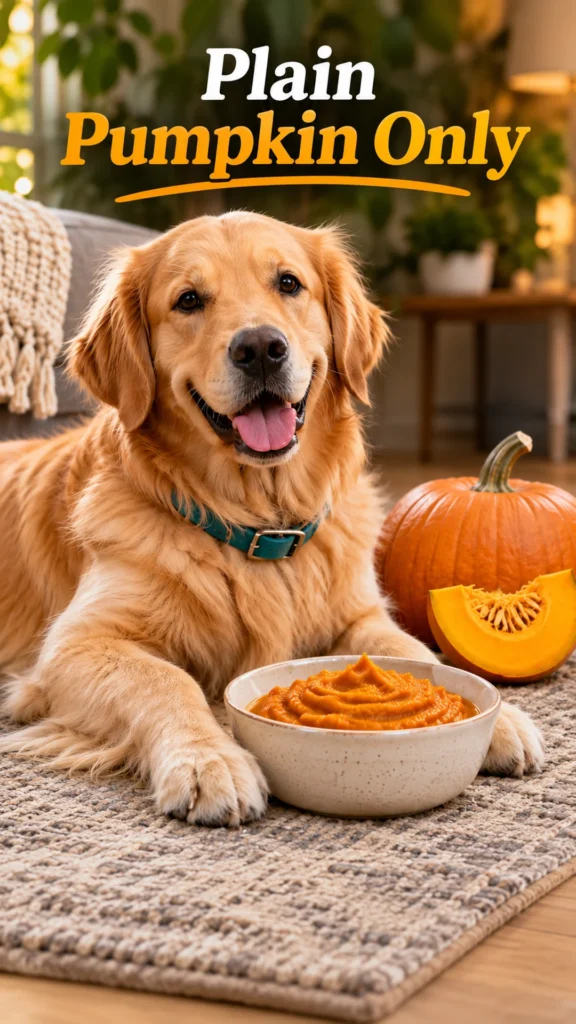
Plain cooked pumpkin flesh or plain 100% pumpkin puree can be offered in small amounts to many healthy dogs. Choose a product with pumpkin as the only ingredient. Remove tough rind, stem, and seeds when preparing fresh pumpkin, and cook it thoroughly without salt, sugar, oils, or seasonings.
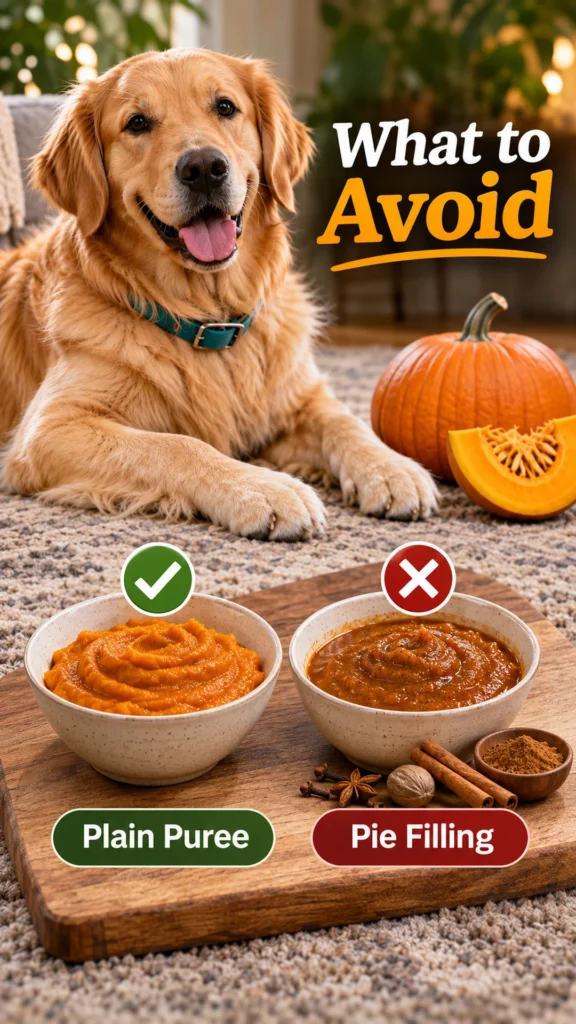
Do not confuse plain pumpkin puree with pumpkin pie filling. Pie filling can contain added sugars, fat, spices, and potentially unsafe sweeteners. Sweetened pumpkin drinks, desserts, and flavored spreads are not appropriate dog treats. Always read the full ingredient list rather than trusting the picture of a pumpkin on the can.
Why owners give dogs pumpkin
Pumpkin contains fiber and water, which may influence stool consistency in some dogs. It also provides nutrients such as beta-carotene. However, it is not a universal treatment for diarrhea or constipation, and too much fiber can make digestive upset worse. Different causes of diarrhea require different care.
The American Kennel Club describes plain pumpkin as one possible dietary addition while emphasizing that persistent digestive problems call for veterinary advice. If your dog has a chronic condition, uses a therapeutic diet, or takes medication, ask your veterinarian before making regular dietary changes.
How much pumpkin should you offer?
Start with only a small taste and observe how your dog responds. There is no single universal tablespoon prescription appropriate for every dog. Portion needs depend on body size, diet, medical history, and whether a veterinarian is using pumpkin as part of a specific feeding recommendation. For a tiny dog, even a modest-looking spoonful can be a substantial extra.
Treat foods should be a small minority of daily calorie intake. Offer plain pumpkin alongside the normal balanced diet rather than replacing a full meal. Discontinue it if vomiting, loose stool, discomfort, or unusual changes appear, and ask your veterinarian when those symptoms warrant evaluation.
Step-by-step: prepare fresh pumpkin safely
- Select edible pumpkin intended for cooking, not an old decorative pumpkin that has been outdoors for weeks.
- Wash the exterior before cutting.
- Remove the stem, stringy center, seeds, and tough rind.
- Bake or steam the flesh until soft with no seasoning.
- Let it cool fully before mashing or offering a small taste.
- Refrigerate leftovers promptly in a clean container and follow ordinary food-safety guidelines.
Do not hand your dog large raw chunks of pumpkin. Pieces can be difficult to digest or pose a choking hazard, depending on the dog’s size and chewing behavior.
Pumpkin seeds, skins, and pumpkin-spice products
Pumpkin seeds are not a necessary addition to a dog’s diet. Large quantities, hard shells, or salt and seasoning can create problems. Avoid routinely feeding raw seeds, whole decorative pumpkin pieces, or fibrous rind. Skip pumpkin pie, pumpkin bread, sweet pumpkin latte drinks, and products labeled sugar-free unless a veterinarian has checked the full ingredient list.
Xylitol—also called birch sugar in some product labeling—is dangerous for dogs. If a dog eats a product that might contain xylitol, contact a veterinarian or animal poison service immediately rather than waiting for symptoms.

Does pumpkin cure diarrhea or constipation?
No. Pumpkin may be useful in selected mild digestive cases under appropriate guidance, but it does not diagnose infections, parasites, dietary intolerance, intestinal blockage, pancreatitis, or other causes. A dog repeatedly straining to pass stool or vomiting may need urgent assessment, not another spoonful of puree.
Call your veterinarian for prolonged diarrhea or constipation, repeated vomiting, blood in stool, severe pain, weakness, dehydration concerns, or if your dog is a young puppy or has a medical condition. Sudden or severe symptoms deserve prompt attention.
Pumpkin serving ideas without turning it into a meal
- Stir a very small amount of plain puree into regular food.
- Freeze a thin layer of plain puree in a supervised, dog-safe enrichment toy if it suits your dog.
- Offer a tiny spoonful by itself as an occasional treat.
- Use a little plain cooked pumpkin as one ingredient in a veterinarian-approved recipe.
Never rely on the pumpkin itself to provide complete nutrition. Avoid adding spices, butter, sugar substitutes, or salty broths.

Frequently asked questions
Can puppies eat pumpkin? Some puppies can have a small amount of plain pumpkin, but age and digestive symptoms matter. Ask your vet before using it for a young puppy’s diarrhea.
Is canned pumpkin the same as pie filling? No. Use plain puree with no extra ingredients, not sweetened or seasoned pie mix.
Can I give pumpkin every day? Regular use should fit your dog’s total diet and veterinary recommendations; routine daily supplementation is not needed for every dog.
What if my dog won’t eat pumpkin? Do not force it. A balanced dog food can meet nutritional needs without pumpkin.
How to read a pumpkin product label
On a supermarket shelf, packages can look confusingly similar. A plain puree should identify pumpkin as its ingredient without added sweeteners, spices, or dessert fillings. Do not assume a product is safe because it is labeled “natural,” “organic,” or “pumpkin-flavored.” Check the ingredient list every time because formulations can change. If you are purchasing a blended dog treat, review all other ingredients and portion directions rather than treating it as equivalent to plain pumpkin. When in doubt, a tiny amount of unseasoned cooked pumpkin is simpler than a highly processed seasonal snack.
How to introduce pumpkin without upsetting a routine
Pick a time when your dog is otherwise well and eating normally. Add a very small amount to one regular meal rather than offering several new treats together. Watch for changes in stool, appetite, itching, gas, or behavior over the next day. If everything stays normal, pumpkin can remain an occasional extra, but there is no need to increase the amount simply because your dog enjoys it. If you are trying to address a digestive symptom, discuss the cause and appropriate amount with your veterinarian first; a dietary addition should not delay examination of a sick dog.
Pumpkin and special diets
Dogs with diabetes, food allergies, pancreatitis histories, kidney conditions, or therapeutic diets need individualized feeding advice. Even a simple vegetable contributes fiber and calories, and the right amount is not identical across pets. Puppies and seniors can become dehydrated more quickly during serious gastrointestinal illness. If a veterinarian has prescribed a particular diet, do not modify it with daily pumpkin without asking. Owners should also distinguish mild, short-lived stool changes from emergencies such as abdominal pain, repeated vomiting, bloody diarrhea, lethargy, or possible blockage. The latter signs call for prompt care.
Related Dogs Daily Care guides
If your dog has dietary sensitivities, consider our sensitive-stomach food transition guide. For young dogs, puppy feeding schedule helps keep extras in perspective.
Sources and further reading
Editorial note: This guide is for educational purposes and is not a substitute for advice from your veterinarian or qualified professional.