Thanksgiving brings wonderful smells, busy kitchens, and tempting leftovers. But a holiday dish that is safe for people may be risky for dogs because of its seasoning, fat, bones, or hidden ingredients. If you want to include your dog in the celebration, keep their regular balanced food as the main meal and offer only a small amount of an appropriate plain food, if their veterinarian has not advised dietary restrictions.
Table of Contents
Quick Answer: What Thanksgiving Foods Can Dogs Eat?
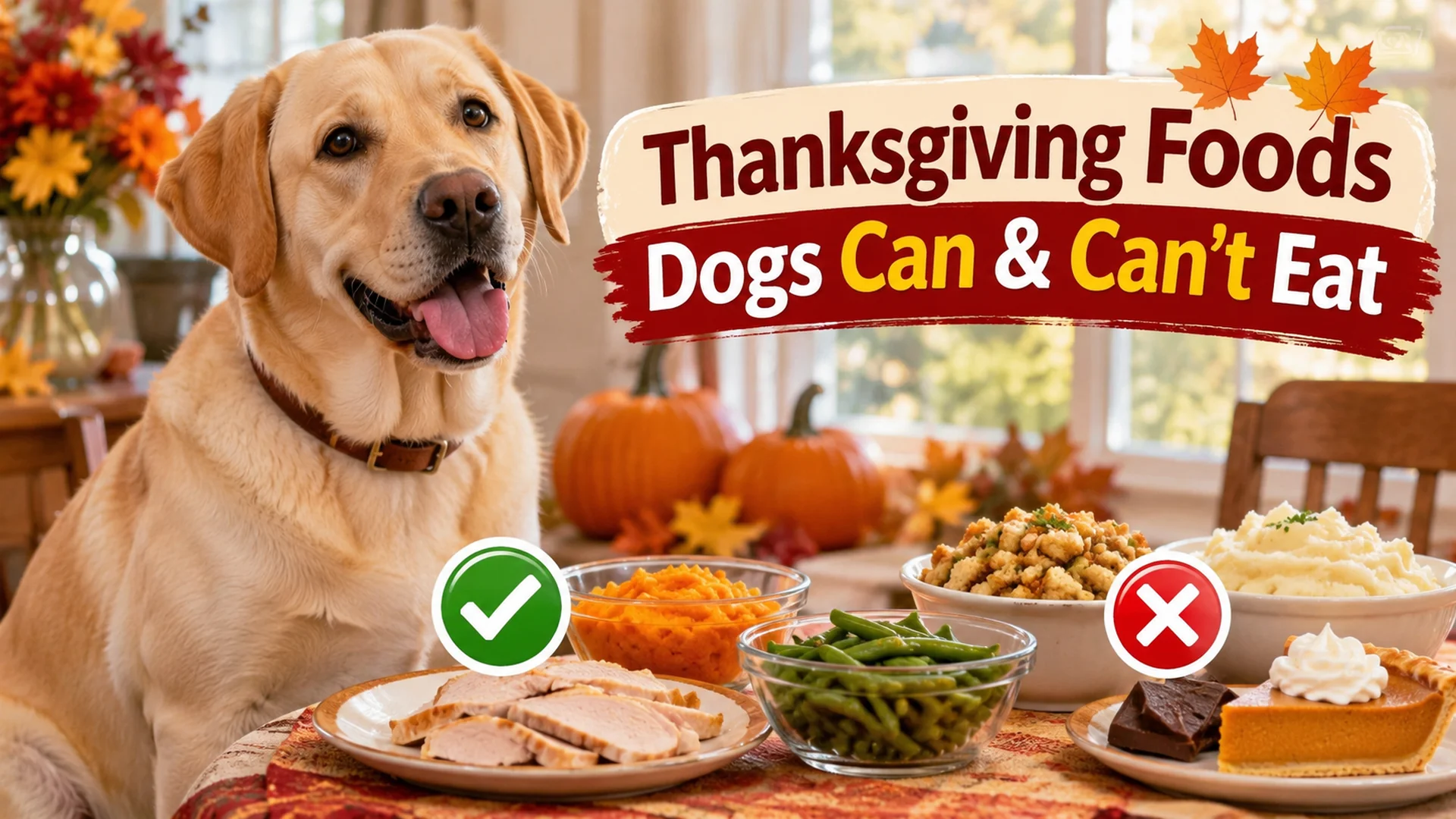
Dogs can generally have small amounts of fully cooked, plain, boneless, skinless turkey, plain green beans, plain cooked sweet potato, and plain pumpkin without added ingredients. Avoid turkey bones, skin and drippings; gravy and stuffing; onions and garlic; grapes and raisins; chocolate; desserts with xylitol (sometimes called birch sugar); and alcohol. Rich or fatty leftovers can trigger digestive problems and may contribute to pancreatitis. A dog with a prescription diet, a history of pancreatitis, diabetes, or food allergies may need to skip all table food. The AVMA’s Thanksgiving guidance recommends simple, small portions and caution with table scraps.
A tiny sample is not a substitute for dinner. Introduce only one new food at a time, and skip anything if you cannot confidently identify every ingredient.
Thanksgiving Food Safety Chart for Dogs
| Thanksgiving food | General guidance | What to check |
| Cooked turkey breast | Small plain portion may be appropriate | Remove skin, bones, seasonings, and sauces |
| Green beans | Plain cooked or unseasoned can be suitable | No butter, onion, garlic, or casserole sauce |
| Sweet potatoes | Plain cooked flesh in small amounts | No marshmallows, sugar, butter, or spices |
| Pumpkin | Plain cooked or 100% pumpkin puree | Not sweetened pie filling |
| Carrots | Plain, appropriately sized pieces | Avoid sugary glaze and choking-size chunks |
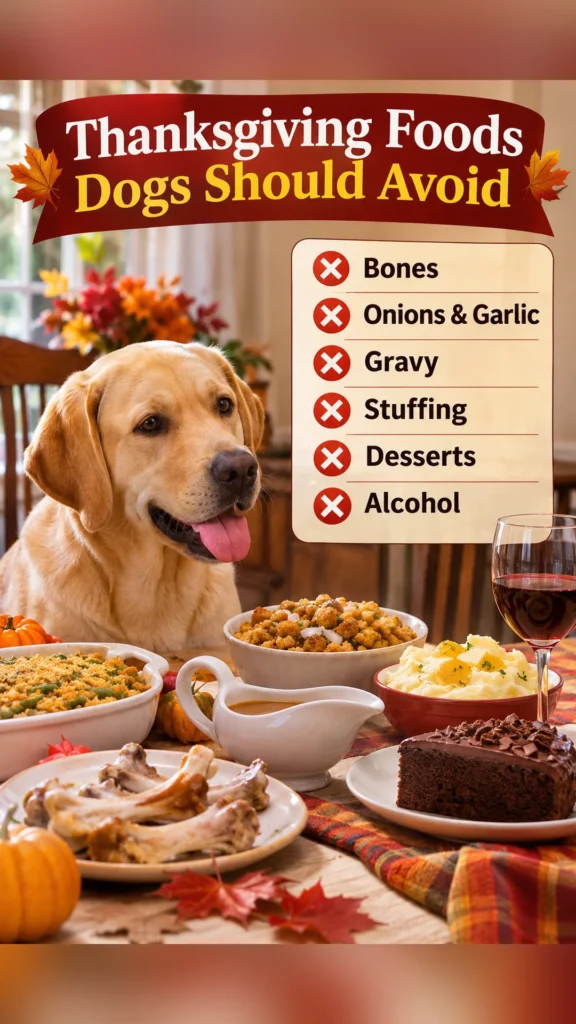
| Stuffing or dressing | Avoid | Often contains onion, garlic, fat, or raisins |
| Gravy and turkey skin | Avoid | High fat, salt, and possible onion or garlic |
| Turkey bones and carcass | Never offer | Choking, injury, or intestinal obstruction |
| Raisin desserts and grape dishes | Urgent poisoning concern | Do not wait for symptoms if eaten |
| Chocolate desserts or xylitol sweets | Urgent poisoning concern | Ingredients, amount, and timing matter |
| Alcohol or alcoholic desserts | Never offer | Even small exposures can be dangerous |
This is a general screening guide, not an individualized feeding prescription. When a dish has several ingredients, assess the whole recipe rather than its main ingredient.
Thanksgiving Foods Dogs Can Eat in Small Portions
Plain, Fully Cooked Turkey
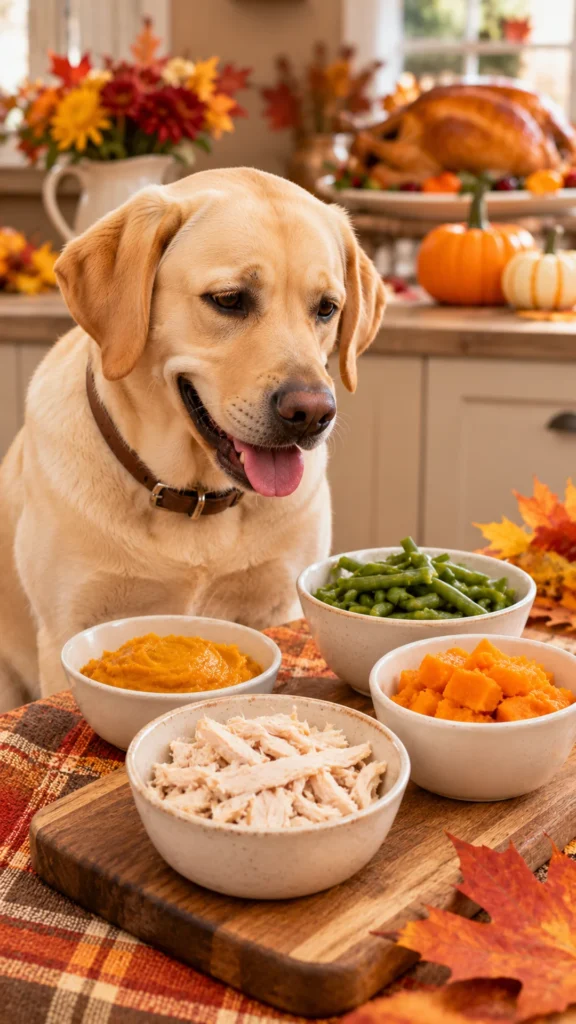
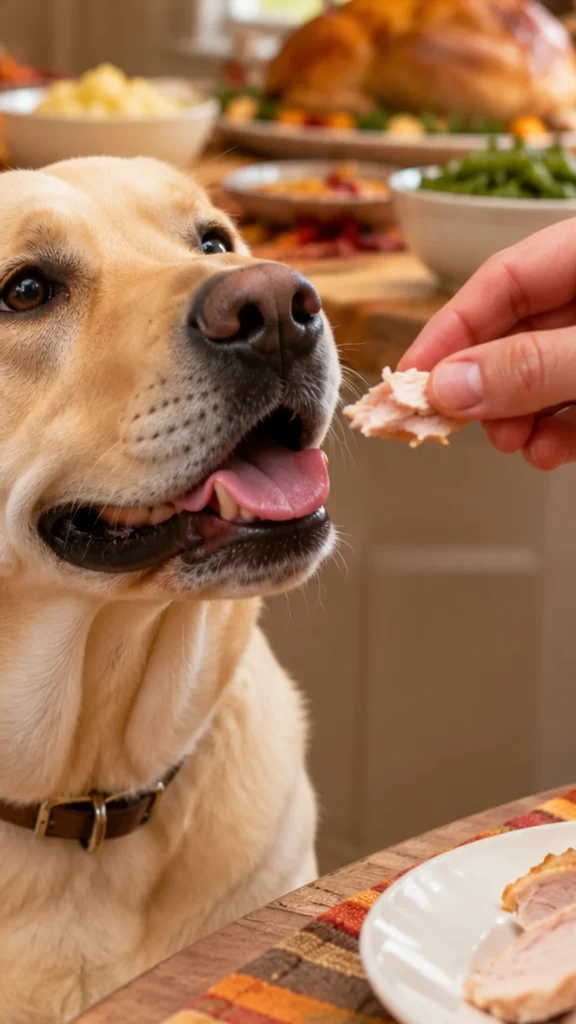
A few bites of plain turkey breast can make a festive topper for a healthy adult dog. Choose meat that is fully cooked and has no bones, skin, gravy, butter, garlic, onions, marinade, or seasoning rub. Turkey prepared in a seasoned roasting pan may have absorbed ingredients that make it unsuitable for the dog, even if you remove the skin afterward.
Set aside your dog’s portion before seasoning or serving the family’s bird if possible. Cut it into small, easy-to-chew pieces. Do not give bones, including cooked bones, and do not let your dog scavenge the carcass. The FDA warns that bones can lodge in the digestive tract or cause injury.
Green Beans and Carrots
Unseasoned green beans and plain carrots are useful options for dogs that tolerate vegetables. Serve green beans without butter, cream sauce, fried onions, or salty canned seasoning. Carrots can be served cooked and softened or in appropriately sized pieces; supervise eating, especially for dogs that gulp food.
Green bean casserole is not the same as plain green beans. The casserole often includes rich sauces and onion toppings. If you are preparing a dog-safe side, portion the plain vegetables into a separate bowl before the toppings go on.
Plain Sweet Potato or Pumpkin
Cooked sweet potato without skin that is tough to chew, or plain pumpkin puree, can be offered in small spoonfuls. Use 100% pumpkin, not sweetened pumpkin pie filling. Skip sweet potato casserole with marshmallows, sugar, butter, and seasonings. Food that is naturally safe can become unsuitable once it is transformed into a holiday dessert.
Pumpkin and sweet potato contain fiber, so a large serving or sudden change may cause loose stools. A little mixed into the usual food is more reasonable than a second holiday plate.
A Small Amount of Plain Rice
Plain cooked rice, with no gravy, butter, or seasonings, may be tolerated by some dogs. But it offers no particular Thanksgiving benefit, and it should not replace a complete and balanced diet. Do not assume that a dog with vomiting or diarrhea needs rice; ask a veterinarian about ongoing digestive symptoms and appropriate feeding.
Thanksgiving Foods Dogs Should Never Be Given
Onions, Garlic, Chives, and Leeks
Onion and garlic are common in stuffing, gravy, broth, roasted vegetables, and seasoning blends. They belong to the allium family and can damage dogs’ red blood cells. Powdered or cooked forms are not automatically safe. Do not feed a dish just because the onion pieces have been removed; the seasoning may be distributed through the food. See the ASPCA’s people-food toxicity guide.
Grapes, Raisins, and Currants
Raisins may appear in stuffing, salads, bread, desserts, or snack mixes. Grapes and raisins can cause serious kidney injury in dogs, and it is not possible to predict which dog will become ill from a given amount. Call a veterinarian or animal poison-control professional immediately if your dog eats grapes or raisins, even if they seem normal. Do not wait for vomiting or changes in urination.
Chocolate and Sugar-Free Desserts
Chocolate can cause potentially serious poisoning; darker chocolate and cocoa powder can be especially concerning. Brownies, pies, chocolate chips, and baking ingredients must stay out of reach. Some sugar-free desserts, gum, candies, and certain nut butters contain xylitol, sometimes labeled birch sugar, which can cause a rapid, dangerous blood-sugar drop and liver injury in dogs. Check ingredient lists rather than trusting a product’s marketing description.
Turkey Bones, Corn Cobs, and Food Packaging
Bones, corn cobs, skewers, foil, cooking string, and plastic wrap are not treats. They can cause choking, cuts, or intestinal obstruction. A turkey carcass in an open trash bag is a particular hazard when the kitchen becomes busy. Keep food scraps inside a secured, lidded trash can and move the carcass to a location pets cannot access.
Alcohol, Raw Dough, and Rich Desserts
Alcoholic drinks and foods containing alcohol can poison pets. Unbaked yeast dough can expand in the stomach and produce alcohol as it ferments. Cookies, pies, and festive baked goods may also contain chocolate, raisins, xylitol, or excessive fat. A plain-looking slice of bread or pastry is not safe to share without checking the ingredients.
Foods That Aren’t Necessarily Poisonous but Are Still Risky
Gravy, Fatty Meat, Skin, and Drippings
Fatty leftovers often lead to an upset stomach; in some dogs, they can be associated with pancreatitis, a potentially serious inflammation of the pancreas. Signs may include repeated vomiting, poor appetite, belly pain, and lethargy. Avoid sharing turkey skin, butter-rich mashed potatoes, sausage stuffing, or pan drippings, particularly with a dog that has had pancreatitis before.
Mashed Potatoes, Cranberry Sauce, and Casseroles
Plain cooked potato may not be inherently toxic, but typical mashed potatoes contain butter, dairy, salt, and perhaps onion or garlic. Cranberry sauce is often heavily sweetened and may have other ingredients, so do not use it as a dog treat. Green bean and sweet potato casseroles can combine otherwise suitable vegetables with ingredients that make the finished dish inappropriate.
The safest approach is to keep a separate plain portion only when you know exactly what went into it. If you didn’t cook the dish yourself and cannot confirm ingredients, politely decline the offer for your dog.
Too Many Treats at Once
Even safe foods can cause problems when given in excess. Dogs are different in size, tolerance, and medical needs. Keep extras very small and account for them within the day’s food intake; veterinary nutrition guidance commonly limits treats to a small fraction of daily calories. If your dog is on a weight-loss plan or a therapeutic diet, ask your veterinarian before changing anything.
How to Make a Simple Dog-Safe Thanksgiving Plate
- Start with the usual meal. Prepare your dog’s normal food at the normal time instead of saving up their appetite for people food.
- Choose one or two plain extras. Consider a few tiny pieces of cooked, boneless, skinless turkey and a little unseasoned green bean or sweet potato only if tolerated.
- Check every ingredient. Verify that no onion, garlic, bones, butter, sauce, artificial sweetener, or seasoning was added.
- Serve separately. Put the dog-safe portion in their regular food bowl away from the holiday table and visitors who may be tempted to offer more.
- Watch for changes. If a new ingredient causes vomiting, diarrhea, itching, or unusual behavior, stop offering it and contact your veterinarian for guidance.
You do not have to give a holiday treat at all. A favorite dog toy, a calm sniff walk, or a portion of their regular food in an enrichment toy can be just as satisfying for a dog who does not tolerate dietary changes.
Prevent Food Accidents During Thanksgiving Dinner
Create a No-Feeding Rule for Guests
Before guests arrive, explain that your dog cannot have food from plates or the table. This matters when children visit or when several people might each offer a small bite without realizing the total. Keep a container of approved dog treats available if you want guests to participate, but control portions yourself.
Separate the Dog From the Kitchen During Cooking
Hot pans, open ovens, dropped ingredients, and crowded floors create risks beyond food poisoning. Use a baby gate or a quiet room when cooking and carving. Give the dog water, familiar bedding, and an appropriate chew or toy. Avoid leaving them with an unfamiliar chew that could present a choking hazard.
Control the Trash and Leftovers
Discard bones, strings, food-soiled foil, and wrapping promptly. Choose a lidded bin that cannot be opened by a curious dog, and do not leave trash bags on the floor. Put leftovers away before guests move to another room. The ASPCA’s Thanksgiving advice specifically emphasizes trash management during busy celebrations.
Keep Feeding Predictable
Holiday visitors can change walks, nap times, and meal schedules. Feed your dog on time and provide a quiet resting place where visitors do not disturb them. For a dog that becomes anxious, it may be easier to plan an enrichment activity away from the table than to repeatedly correct begging behavior.
What to Do if Your Dog Eats a Dangerous Thanksgiving Food
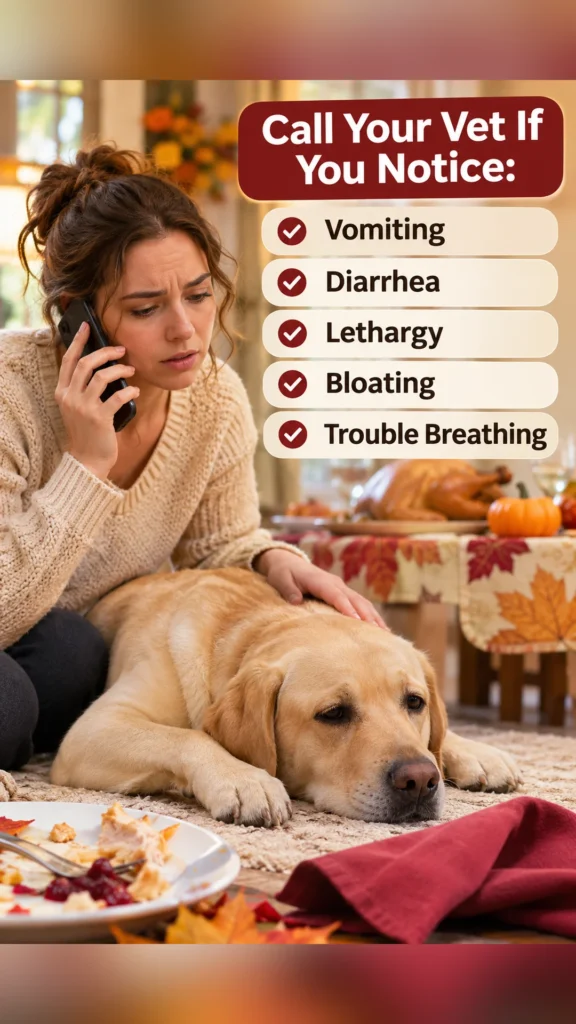
Treat possible poisoning or swallowed bones or foreign objects as urgent. Move remaining food out of reach. Identify what was eaten, the approximate amount, the time, and the dog’s weight, and keep packaging or a photo of the ingredient label. Call your veterinarian, an emergency veterinary hospital, ASPCA Animal Poison Control Center (888-426-4435), or Pet Poison Helpline (855-764-7661). Consultation fees may apply.
Do not induce vomiting or give salt, oil, hydrogen peroxide, milk, medication, or activated charcoal unless a veterinarian or animal poison specialist tells you to. Vomiting is not safe for every toxin or swallowed object. Seek emergency veterinary care immediately for trouble breathing, collapse, seizures, a swollen painful belly, repeated unproductive retching, or suspected obstruction.
Keep in mind that a dog may initially appear well after eating a hazardous ingredient. Early advice is particularly important for grape/raisin, xylitol, or potentially significant chocolate exposures. If your dog only ate a small amount of an ordinary rich food, call your veterinarian for guidance based on symptoms and health history rather than assuming there is no risk.
Common Thanksgiving Feeding Mistakes
- Assuming homemade means dog-safe. Family recipes may contain onion powder, garlic, or rich sauces even when the main ingredient sounds healthy.
- Offering turkey skin or bones. Meat is not the same as bones, skin, or pan drippings; keep them out of the bowl.
- Believing a small raisin exposure is harmless. Suspected grape or raisin ingestion warrants prompt professional advice.
- Letting every guest offer a treat. Multiple little bites can add up and upset your dog’s stomach.
- Waiting for symptoms before calling about a toxin. Some dangerous exposures need help before a dog looks sick.
- Using dinner leftovers as a full dog meal. A one-off holiday plate does not supply the balance of nutrients provided by a complete dog food.
Frequently Asked Questions
Can dogs eat Thanksgiving turkey?
Yes, many healthy dogs can eat a small serving of fully cooked, plain turkey meat with no skin or bones. Avoid seasoned, buttered, or gravy-coated turkey, and skip extra food if your dog is on a restricted diet.
Can dogs eat mashed potatoes or stuffing?
Typical mashed potatoes are often rich in butter, dairy, or seasoning; stuffing commonly contains onion, garlic, fat, and sometimes raisins. Neither is a good food to share. A separate tiny portion of plain cooked potato may be tolerated, but there is no need to offer it.
Is pumpkin pie safe for dogs?
No. Pumpkin pie contains added sugar, fat, spices, and sometimes other ingredients that can cause problems. If a treat is appropriate, choose a little plain cooked pumpkin or 100% unsweetened pumpkin puree instead.
My dog stole a turkey bone. What should I do?
Call a veterinarian promptly for case-specific advice, even if your dog appears comfortable. Do not try to make your dog vomit; bone fragments can cause choking, injury, or a blockage. Go to an emergency clinic for breathing difficulty, persistent gagging, repeated vomiting, or marked pain.
How much Thanksgiving food can I give my dog?
There is no single portion that is appropriate for every dog. The safest default is to keep the normal diet unchanged. If your veterinarian has no objection, a few small bites of an appropriate plain food may be enough, particularly for a small dog. Avoid extras for dogs with dietary restrictions unless the veterinarian approves them.
Final Thoughts
Thanksgiving foods dogs can eat are usually the plainest foods on the table: fully cooked unseasoned turkey, a little plain vegetable, or unsweetened pumpkin. The dishes that cause trouble are often holiday combinations—stuffing, casseroles, gravy, desserts, and leftovers with hidden ingredients. Keep dangerous foods and trash secured, establish clear rules with guests, and know whom to call if your dog eats something concerning.
For a different holiday, see our Christmas foods dogs can’t eat guide. For broader holiday decorating risks, read our Christmas plants poisonous to dogs guide. The goal is a relaxed celebration where your dog can safely enjoy being part of the household—not the entire feast.
This article offers general educational information and is not a substitute for veterinary care. It has not been veterinarian-reviewed.