
By Emma Vensley | Dog Care & Lifestyle Writer
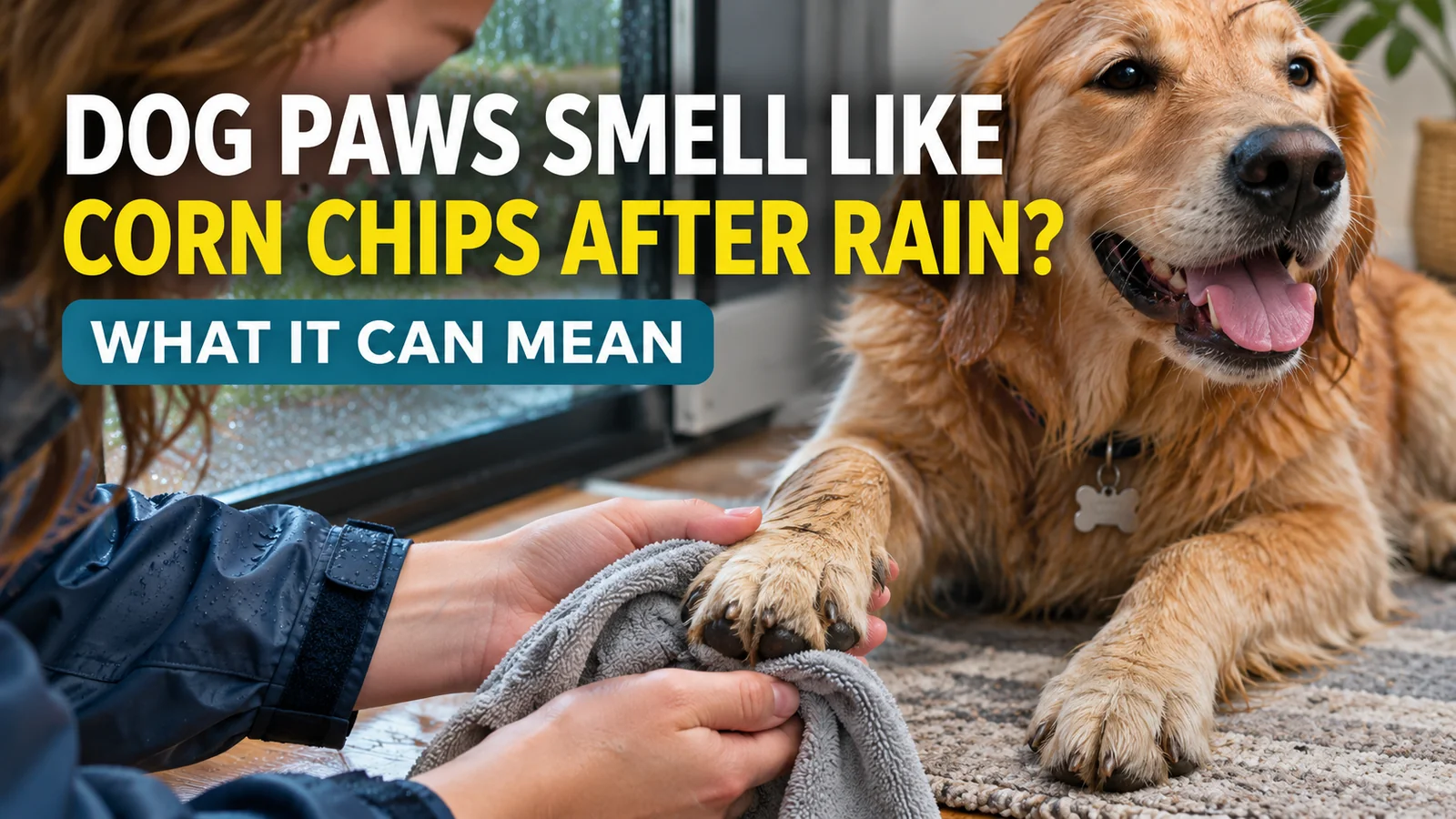
Quick answer: A mild corn-chip or “Frito feet” smell can be normal, particularly after paws get warm or damp.
Table of Contents
Quick Answer: Is a Corn-Chip Paw Smell Normal?
A mild corn-chip or “Frito feet” smell can be normal, particularly after paws get warm or damp. Normal skin bacteria and yeast can contribute to this odor. The smell by itself does not prove an infection. What matters is whether the paws are comfortable and healthy-looking and whether the odor returns to its usual level after gentle cleaning and drying.
If the smell suddenly becomes strong or is accompanied by redness, swelling, discharge, pain, excessive licking or limping, contact your veterinarian. Do not assume a home remedy will fix the cause. For broader skin concerns, see our dog dry skin article.
Why Rain Makes Paw Odor More Noticeable
Moisture can make odor-producing compounds easier to smell, and the spaces between toes are naturally warm and often remain damp longer than the top of the foot. Dogs carry microorganisms on their skin even when they are healthy; not every odor signals poor hygiene. Rain, wet grass and mud may intensify the usual paw scent temporarily.
A recent veterinarian-authored PetMD guide explains that a mild “Frito feet” odor is often normal, while a persistent strong odor plus skin changes can signal inflammation or infection. The smell cannot tell you exactly which organism, if any, is causing trouble.
Look at the Paws Before Trying to Treat Them
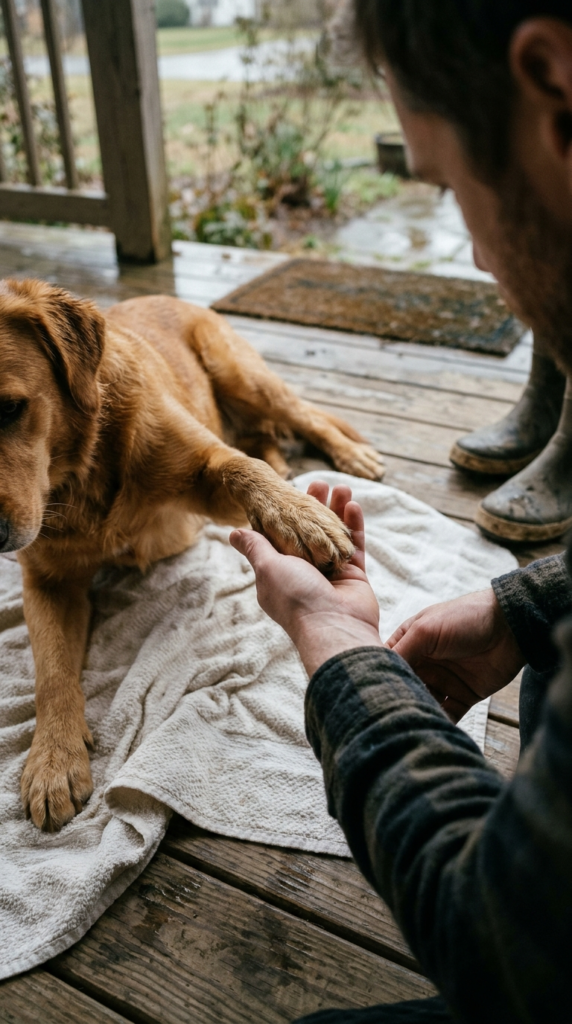
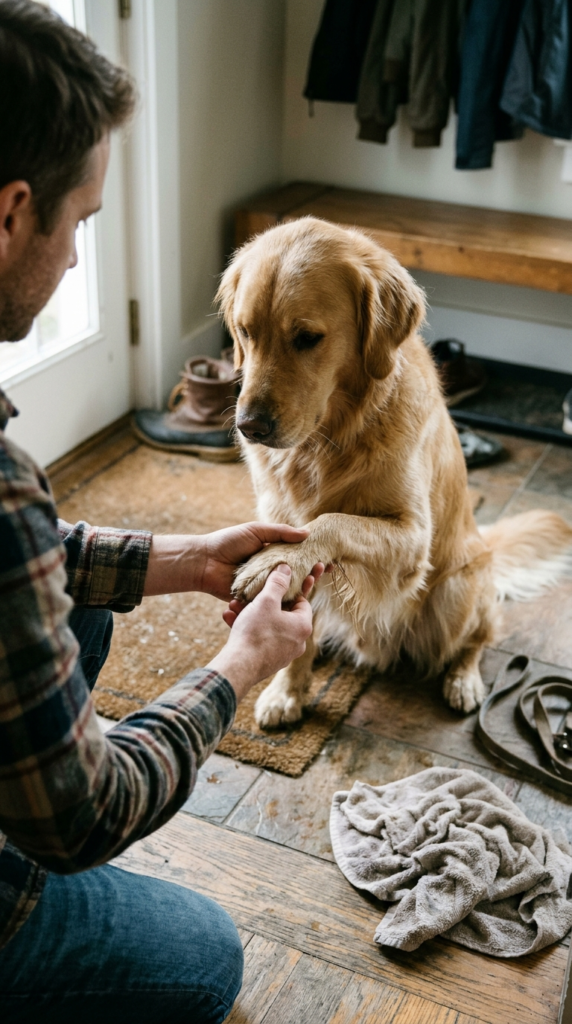
In a well-lit room, look at both sides of each paw and between toes if your dog allows it. Compare the feet: is one more red or swollen than another? Is there a cut, trapped burr, visible discharge, cracked pad or excessive hair matting? Does your dog flinch when a particular spot is touched?
If the skin looks healthy and your dog walks normally, gentle drying is a reasonable first step. If there is pain, bleeding, a strong unusual smell, swelling or marked licking, book a veterinary exam. Do not probe deeply, squeeze the toes hard or trim a suspected problem area yourself.
A Safe Paw-Cleaning Routine After Rain
- Place your dog on a stable, non-slip mat.
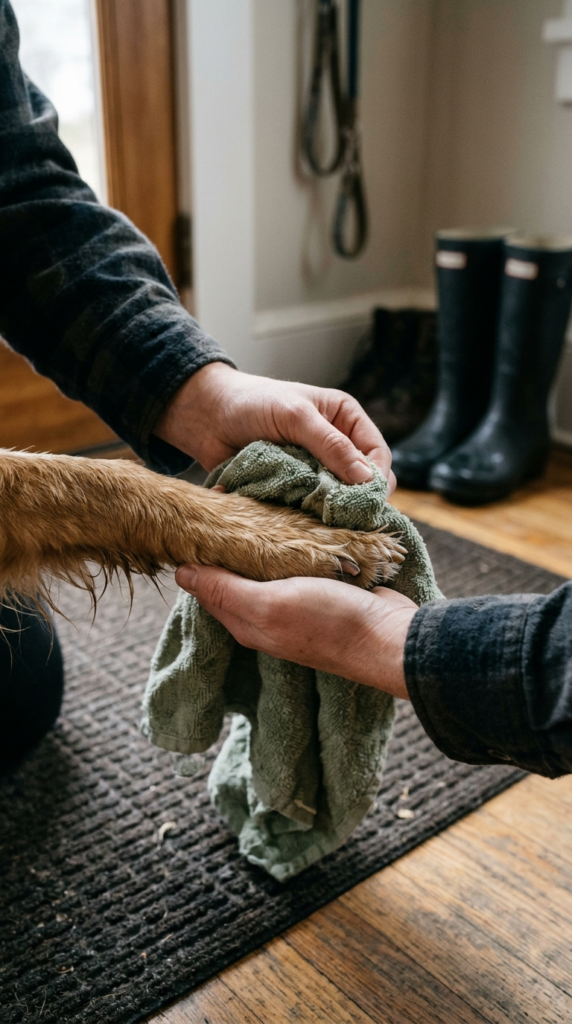
- Use a soft cloth dampened with lukewarm water to lift ordinary mud and surface debris.
- Gently separate toes only as much as your dog comfortably allows.
- Blot pads and the spaces between toes with a dry towel.
- Check for irritation and let the paws air-dry in a clean, warm room.
Do not scrub raw skin or use harsh household disinfectants. Unscented dog grooming wipes may be convenient for routine dirt removal, but they do not diagnose or treat fungal or bacterial infections.
When to Call the Veterinarian
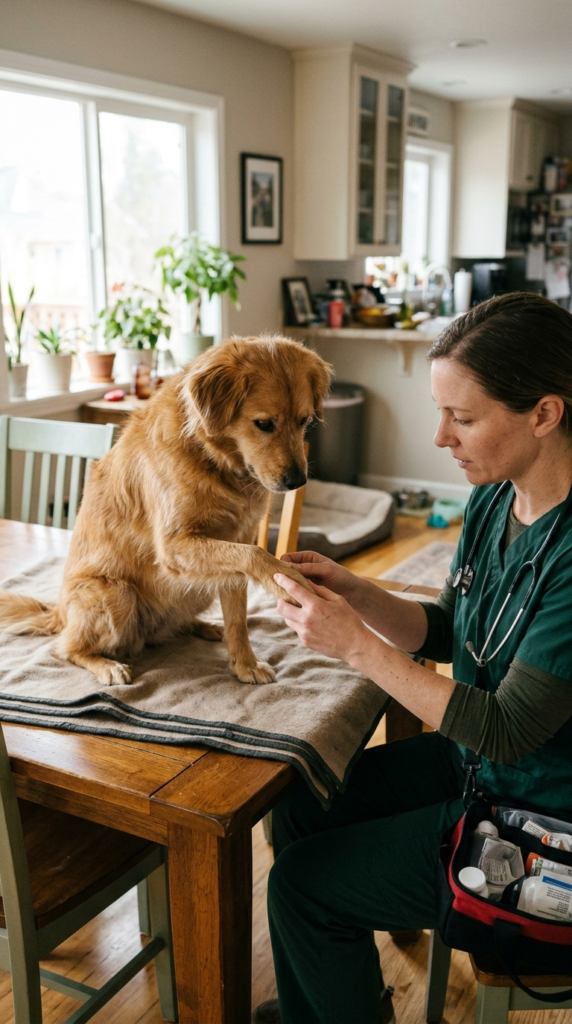
Contact your veterinarian if you notice persistent or worsening odor, redness, swelling, soreness, brown staining from continual licking, sores, hair loss, discharge, changes in walking or repeated chewing of the feet. Paw infections, allergies, contact irritation, foreign bodies and other conditions can look similar. Proper diagnosis may require a physical exam and testing.
Prompt care matters more if your dog is limping, has a deep wound or cannot bear weight. Do not start medicated shampoos, antibiotic creams, human antifungals or essential oils without veterinary instructions. These can irritate tissue or interfere with the correct treatment.
Could Allergies Be Part of the Problem?
Some dogs lick or chew their paws because of allergies or another itchy skin condition. Repeated licking keeps the area damp and may contribute to an unpleasant odor. Yet licking can also reflect injury, pain or something stuck between the toes. A veterinarian can help differentiate these possibilities.
Our dog allergy signs guide is useful background, but its current permalink should be confirmed before publication because it was provided by the keyword sheet rather than directly fetched. Do not use an allergy diet, medication or supplement as a substitute for diagnosis.
What Not to Put on Smelly Paws
- Undiluted essential oils or perfumed cleaning products.
- Bleach, alcohol or household disinfectants.
- Vinegar or hydrogen peroxide on irritated or broken skin without veterinary guidance.
- Human antifungal or antibiotic products without a vet’s direction.
- Powders or fragrances intended only to hide odor.
Gentle plain-water cleanup and drying is enough for most ordinary dirt. Recurrent strong odor deserves veterinary examination rather than repeated experimentation.
Optional Gear for This Routine
Affiliate disclosure: As an Amazon Associate, we may earn from qualifying purchases at no additional cost to you. No purchase is required to follow this guide.
- Earth Rated unscented dog grooming wipes: Optional for ordinary dirt on healthy paw skin only. Not a treatment for infection or open sores. See this exact product on Amazon (ASIN: B07NHL31CC).
Always check the manufacturer’s fit, instructions and product ingredients. Products are not a substitute for medical advice.
Prevent Trapped Moisture on Future Walks
Keep a separate towel for paws near the entrance. After wet walks, wipe away salt and dirt, carefully blot between toes, and let paws dry before your dog settles on damp bedding. Keep nails and paw hair maintained safely, but avoid cutting close to sensitive skin. Ask a groomer or vet to help if fur is heavily matted.
For more everyday ideas, browse our grooming guides and dog-care tools. These are educational resources, not medical diagnostic tools.
Frequently Asked Questions
Does corn-chip odor mean my dog has a yeast infection?
No. Mild odor can occur on normal paws. A diagnosis requires clinical evaluation, especially when symptoms appear.
Can I wipe my dog’s paws every rainy day?
Gentle water cleanup and thorough drying are usually reasonable, but avoid frequent irritating scrubbing and stop if skin becomes sore.
Can one paw smell worse than the others?
Yes, but a strong one-sided change, especially with licking, pain or swelling, is a reason to seek veterinary advice.
How to Describe Paw Odor to Your Veterinarian
If you schedule a visit, make a short note of when the odor started, whether rain or bathing makes it more noticeable, whether the dog licks one foot or all four, and any recent changes in walking surfaces or grooming products. If you can safely photograph a red patch or swelling without causing stress, that may help show how the appearance changed over time.
Do not begin several new home remedies right before the appointment unless your veterinarian directs you to. That can complicate the examination or irritate already-sensitive skin. Ask what signs would require a more urgent assessment and what daily hygiene is appropriate after the underlying cause is identified.
What a Paw Check Cannot Tell You
Appearance and odor alone cannot distinguish all causes of paw discomfort. A paw can smell unusual because it is damp while still looking healthy, or because an underlying skin disorder needs testing and treatment. Even a corn-chip smell that people describe as familiar can coexist with allergies, a small foreign body or a sore between the toes. This is why persistent licking, swelling, pain or abnormal discharge matters more than the label used to describe the smell.
If your dog resists handling, do not pin them down for an inspection. Calmly offer a reward for briefly showing a paw, and stop if there is pain. A veterinarian or trained staff member can examine the foot safely when home handling is difficult.
Final Thoughts
A slight corn-chip smell after rain can be a normal part of a dog’s skin chemistry. Look at the paws, clean and dry them gently, and watch for discomfort or visible changes. Persistent odor plus symptoms deserves veterinary care; do not try to diagnose it by smell alone.
More Dogs Daily Care resources: Explore our recommended dog products for practical gear, browse our dog books for learning resources, and visit the free dog-care tools to explore breed and age resources. You can always return to the Dogs Daily Care homepage for the latest guides.
Sources and Further Reading
Medical editorial note: This article explains general information and has not been individually reviewed by a veterinarian for this package. Obtain veterinary editorial review before publishing health claims.