
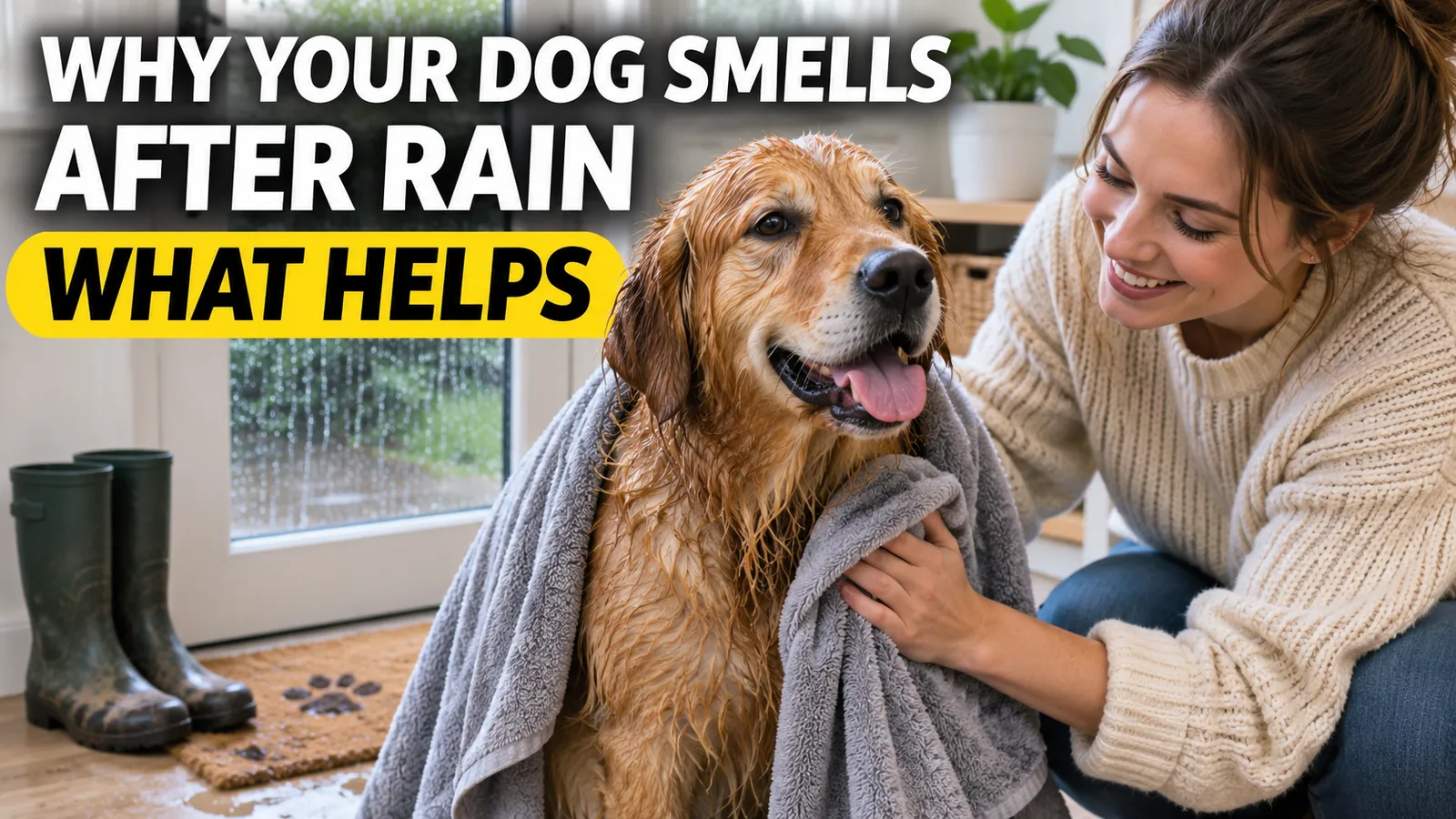
By Emma Vensley | Dog Care & Lifestyle Writer
Quick answer: First, dry your dog’s coat and skin thoroughly.
Table of Contents
Quick Answer: How Do You Get Rid of Wet Dog Smell?
First, dry your dog’s coat and skin thoroughly. Towel the fur, especially the undercoat and damp areas around ears, legs and belly. Let collars and harnesses dry separately, and wash any wet bedding or towels. A gentle bath with dog-safe shampoo may help if the coat is dirty, but bathing is not the answer to every smell.
A strong or persistent odor accompanied by itching, redness, greasy skin or ear discharge warrants veterinary attention. Our skin-care guide explains why visible skin symptoms should not be dismissed as normal dog smell.
Why Dogs Smell Stronger When Their Coats Get Wet
A dog’s skin and coat naturally carry microorganisms and organic compounds. When the fur becomes damp, some odor-producing compounds are released into the air and become easier for humans to smell. That does not automatically mean a dog is dirty or infected. The familiar “wet dog” odor is often most noticeable immediately after a rainy walk or bath.
The AKC notes that moisture and incomplete drying contribute to lingering odor. Dense fur, collars and bedding can hold on to dampness even after the coat surface looks dry. A clean dog may still have a temporary odor during drying; what matters is whether it resolves and whether the skin looks comfortable.
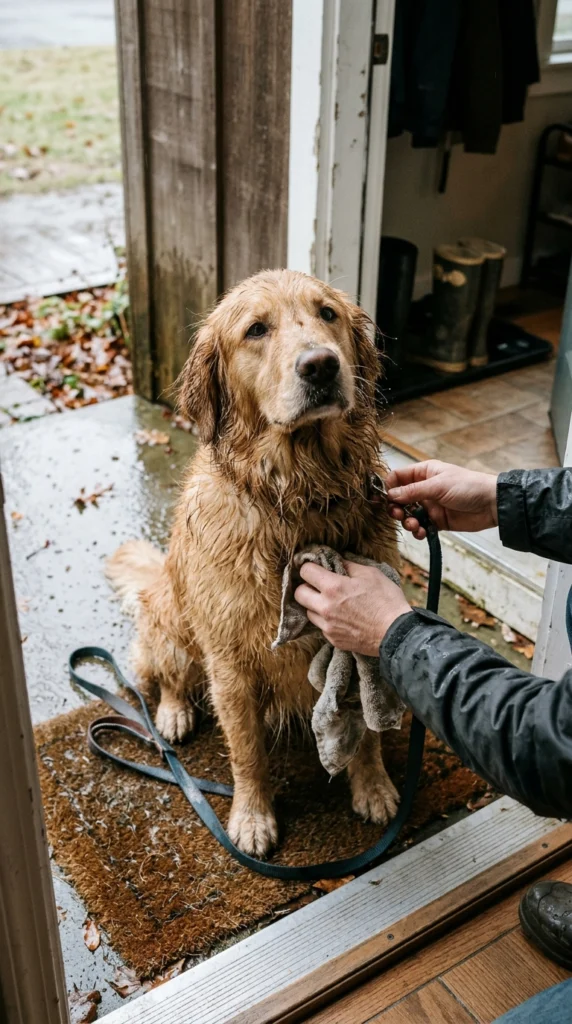
Step 1: Start a Drying Routine at the Door
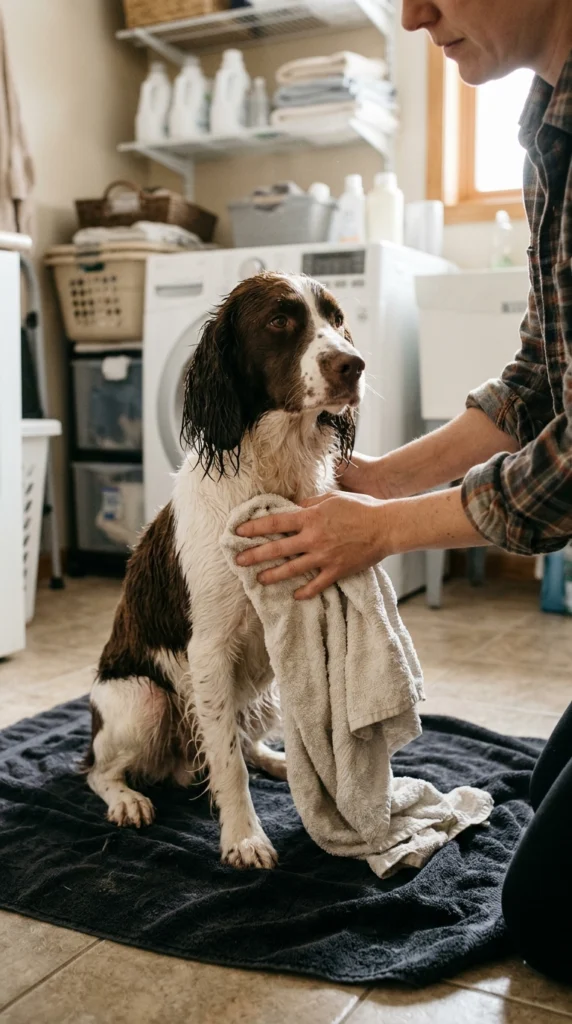
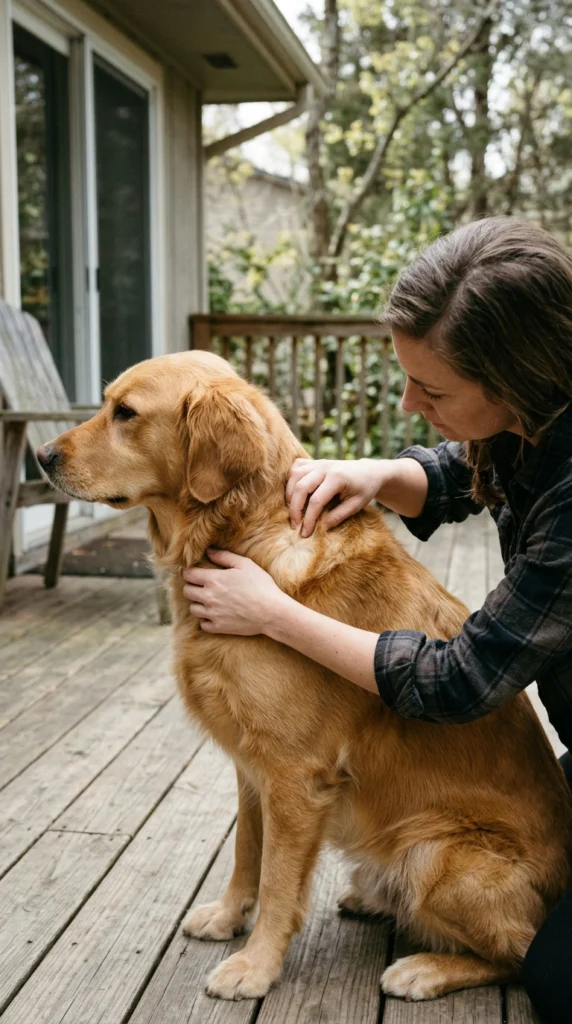
Prepare an absorbent mat and two clean towels before leaving for a wet walk. On return, gently blot the paws, chest and lower legs, then use a separate dry towel for the back and sides. Avoid rough rubbing, especially on long hair that tangles easily. Work in short sections and reward calm cooperation.
Keep the dog on a non-slip surface so they feel secure. If the dog is trembling after cold rain, move into a warm, dry room before continuing. Our cold-weather dog care article covers additional comfort concerns.
Step 2: Reach the Undercoat, Not Just the Surface
On double-coated or long-coated breeds, the outer coat may feel dry while moisture remains deeper down. Lift small sections gently and blot near the base of the coat without tugging. A pet dryer on a low-heat or cool setting may help if your dog is comfortable with it and you can keep the airflow moving, but never use hot air close to the skin.
Check folds, around the collar, between toes and underneath the chest. The goal is dry skin and comfortable fur, not forced blow-drying. Our brush-by-coat guide can help you work through tangles after drying.
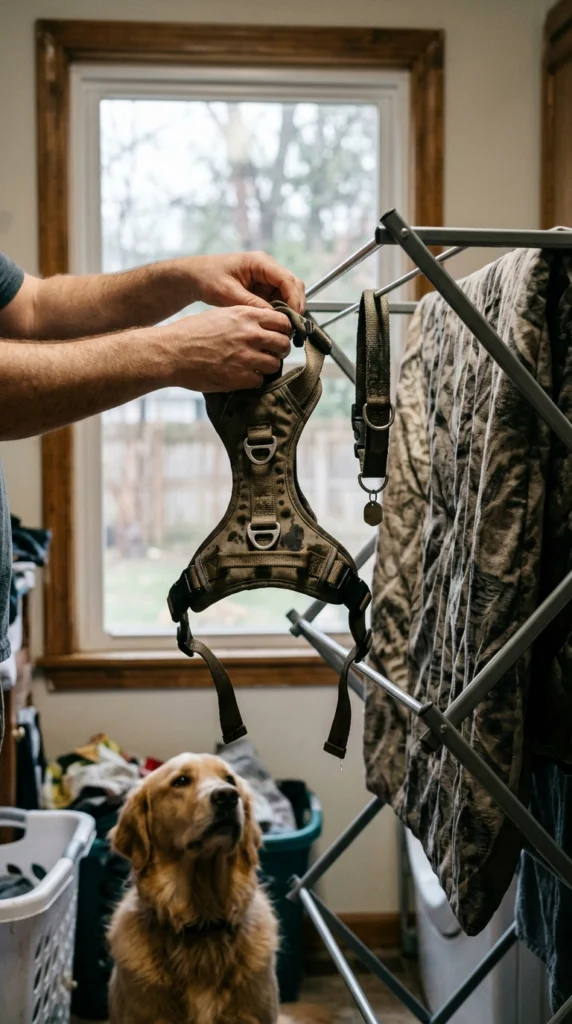
Step 3: Clean the Things That Hold Odor
Harness straps, fabric collars, soft toys, crate liners and blankets can continue to smell even after the dog is dry. Wash washable items according to the label and allow everything to dry fully before reuse. For leather or specialty materials, follow the manufacturer’s care instructions instead of tossing them into the washer.
Keep a spare dry leash or harness if rainy walks are frequent. Washing bedding regularly and letting the dog rest on a dry surface often does more to improve a room’s smell than spraying perfume over damp fur.
Should You Bathe a Dog After Every Rainy Walk?
Usually no. Frequent bathing can irritate some dogs and may strip protective natural oils. If your dog simply got wet and is not visibly dirty, thorough drying may be enough. If the dog rolled in mud or a strong-smelling substance, a proper bath may be reasonable. Pick a dog-formulated shampoo, rinse well and dry thoroughly.
See our dog shampoo selection guide before trying a new wash. Avoid human perfume, deodorant, harsh vinegar mixtures or essential oils on the coat to cover a persistent odor.
When Wet-Dog Odor Is Not Normal
Book a veterinary appointment if odor is new and unusually strong, persists after normal cleaning and drying, or comes with red skin, greasy or flaky patches, obsessive licking, sores, scratching, hair loss or an unpleasant smell from one ear. Yeast, bacterial skin problems, allergies and other health issues can cause odor, but these cannot be diagnosed from smell alone.
Seek prompt care for pain, swelling, discharge or marked discomfort. Do not use medicated shampoos or ear products without guidance, because the correct treatment depends on the cause.
Optional Gear for This Routine
Affiliate disclosure: As an Amazon Associate, we may earn from qualifying purchases at no additional cost to you. No purchase is required to follow this guide.
- Earth Rated unscented grooming wipes: For occasional surface dirt, not as a treatment for persistent skin odor. See this exact product on Amazon (ASIN: B07NHL31CC).
- Muddy Mat absorbent entry mat: Helps catch moisture near the door as part of a drying station. See this exact product on Amazon (ASIN: B08N6VLJKV).
- Wahl oatmeal dog shampoo: An example of a dog shampoo for baths when needed; not a substitute for a veterinary skin diagnosis. See this exact product on Amazon (ASIN: B005CUTWDE).
Always check the manufacturer’s fit, instructions and product ingredients. Products are not a substitute for medical advice.
A Simple Five-Minute Post-Rain Checklist
- Place your dog on a non-slip mat.
- Blot paws, legs and belly with one clean towel.
- Dry the coat in small sections with another towel.
- Remove and air-dry wet collars and harnesses.
- Check skin and ears for irritation, then wash used towels.
Give your dog a comfortable dry place to settle. For occasional paws and dirt, spot-cleaning can be easier than a full bath.
Common Mistakes to Avoid
- Masking odor with fragrance instead of drying the coat.
- Leaving a wet collar against skin for hours.
- Using a high-heat hair dryer close to the dog.
- Bathing repeatedly when a skin condition may be the cause.
- Ignoring repeated head shaking or ear odor.
Frequently Asked Questions
Is wet dog smell caused by bacteria?
Normal skin microorganisms and compounds contribute to the odor, but a smell alone does not diagnose an infection.
Will grooming wipes remove the smell?
They can help with small surface dirt patches; they do not replace proper drying or treatment for a skin problem.
Why does my dog smell worse after a bath?
Moisture trapped in a dense coat, insufficient rinsing or an underlying skin issue may contribute. Dry thoroughly and ask a vet if it persists.
Why Covering Up the Smell Often Backfires
Perfumed sprays may make a room smell nicer for a short time without removing dampness from the coat, collar or bedding. Some products can irritate a dog’s nose or skin, especially when applied near the face. A dog that rubs against furniture immediately after a walk may transfer damp odor to upholstery even when the dog itself is otherwise clean.
Start by cleaning the moisture source: wash the towels, air out the harness and let the dog dry in a warm ventilated area. If a particular blanket continues to smell musty after washing, replace it rather than repeatedly adding stronger fragrance. For persistent skin odor, the correct next step is an exam, not more grooming products.
A Coat-Type Drying Plan
Short-haired dogs: Blot their belly, chest and legs, then dry along the direction of coat growth. Long-haired dogs: Separate sections and pat gently so tangles do not tighten. Double-coated dogs: Check the deeper fur near the skin, particularly behind the ears and under the harness. Dogs with folds: Carefully dry skin folds without rubbing.
If your dog dislikes airflow, do not force a loud dryer. Practice with the dryer switched off, then at a distance with low airflow only if the dog remains relaxed. A professional groomer can teach safe drying for very dense coats. If any part of the skin becomes red, smelly and painful, stop handling the area and contact your veterinarian.
Final Thoughts
The best first response to wet-dog smell is usually simple: dry your dog, dry the gear and clean the bedding. If smell lingers or skin looks inflamed, stop guessing and ask your veterinarian for an exam. Consistent gentle care works better than heavy fragrances.
More Dogs Daily Care resources: Explore our recommended dog products for practical gear, browse our dog books for learning resources, and visit the free dog-care tools to explore breed and age resources. You can always return to the Dogs Daily Care homepage for the latest guides.