By Emma Vensley | Dog Care & Lifestyle Writer
Quick answer: For a little mud on healthy fur, you usually do not need to put your dog through a full bath.
Table of Contents
Quick Answer: Cleaning Mud Without a Bath
Start by keeping your dog on an easy-to-clean mat. Blot damp grime with a soft towel, use lukewarm water on stubborn patches, and dry the coat thoroughly. When mud is already dry, carefully loosen surface dirt with a brush suitable for the coat. Avoid scrubbing irritated skin.
Heavy, sticky mud mixed with oil, unknown chemicals or feces is different. Those cases may require a proper bath or veterinary advice rather than a simple wipe. For a bigger grooming routine, see the Dog Grooming collection.
Set Up a Simple Mud-Removal Station
Keep a washable towel, a shallow bowl of lukewarm water, a soft cloth, an appropriate brush, treats and a non-slip mat near the door. Use one towel for wiping and a second for drying. A gentle approach is easier if your dog is already familiar with paw and body handling.
Start with calm praise and a short sniffing break. Muddy dogs sometimes want to shake, roll or sprint inside, so close the outdoor door and give them a safe place to stand. If your dog is nervous around wipes, reward tiny handling steps and never grip a paw forcefully.
Step 1: Decide Whether the Mud Should Dry First
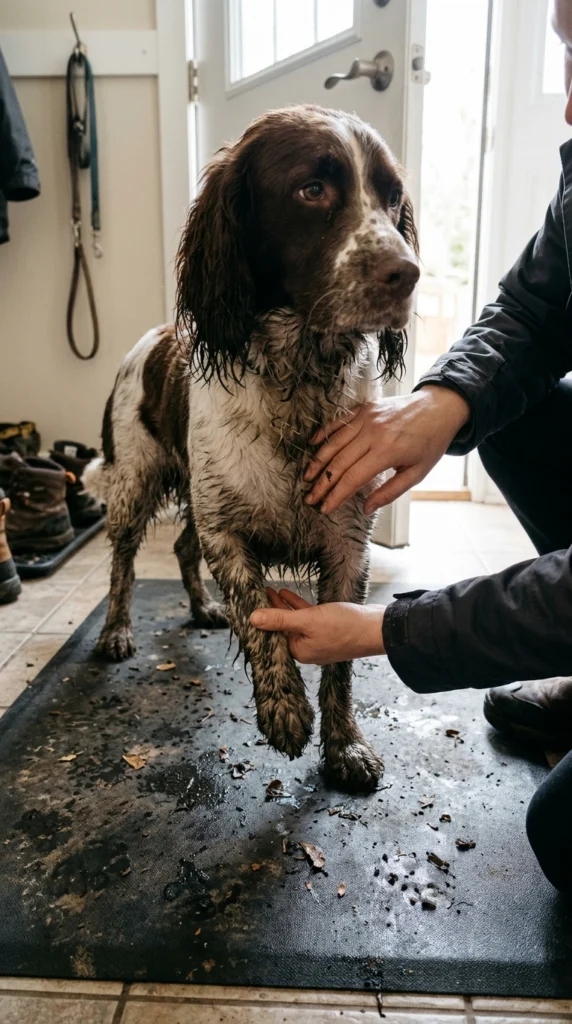
Wet clay can smear when aggressively brushed. If the mud is a light, harmless surface layer and your dog is warm and comfortable, you may find it easier to blot first and gently brush loose residue once dry. However, do not leave a dog soaking wet or chilled just to wait for mud to dry.
For mud against the skin or packed into a long coat, dampen it with lukewarm water and work gently from the edges. Never pull a dry clump that is attached to fur. If the clump will not separate comfortably, seek help from a groomer rather than cutting close to the skin with scissors.
Step 2: Blot and Wipe Small Dirty Areas
Use a soft damp washcloth to loosen dirt on the lower legs, belly and chest. Work in the direction of hair growth and check the cloth often; rinse it instead of rubbing grit back over the coat. For short coats, a few passes may be enough. For long coats, separate small sections with your fingers and use clean water to avoid dragging mud through tangles.
Never use household disinfectants, harsh soaps, essential oils or products not labeled for pets. Pet grooming wipes may help with light grime, but plain water is frequently all you need. For more sensitive skin, ask your veterinarian before trying a new product.
Step 3: Brush With the Right Tool
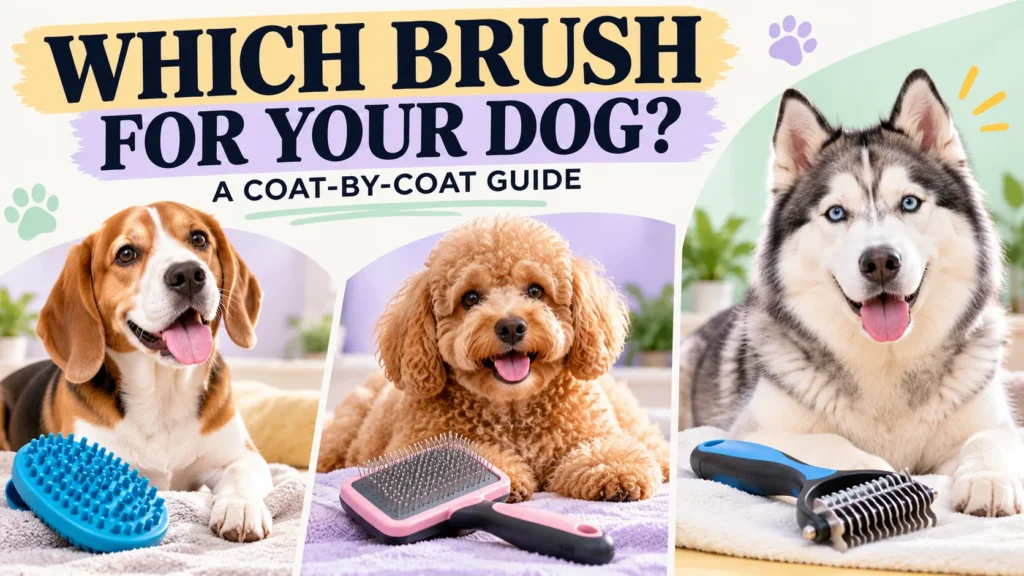
Once the coat is largely free of wet grit, use the correct brush. A rubber grooming mitt can help with short, smooth fur; a slicker or pin brush and comb may suit longer coats when used carefully. For double coats, brush the outer layer first and do not dig aggressively into the undercoat. Our detailed dog brushing guide explains when to use different tools.
Keep sessions short and check for redness, burrs, cuts or tightly matted areas. Do not brush over painful skin. A groomer can help remove mats safely without nicking delicate skin.
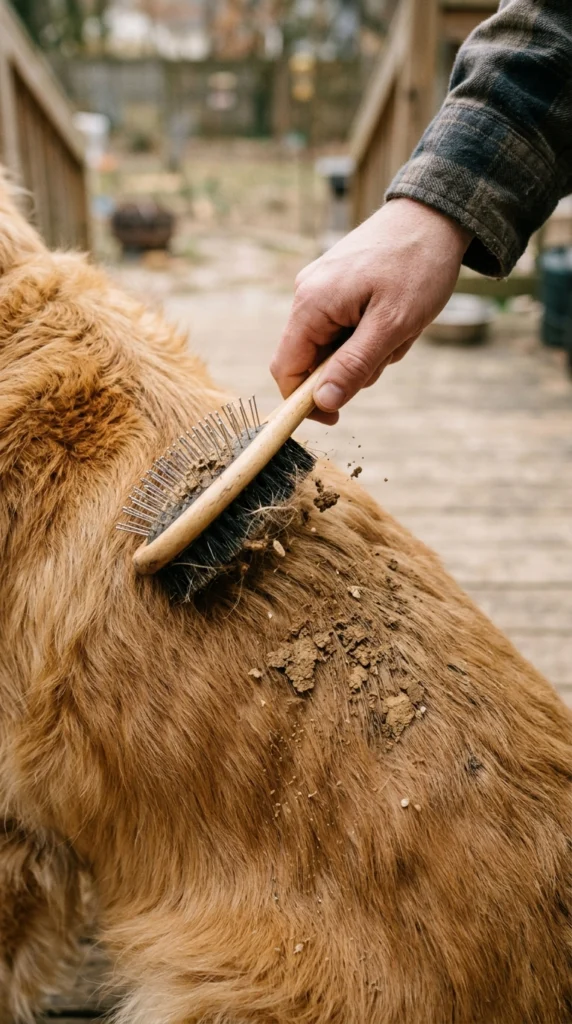
Step 4: Pay Attention to Feet, Tail and Belly
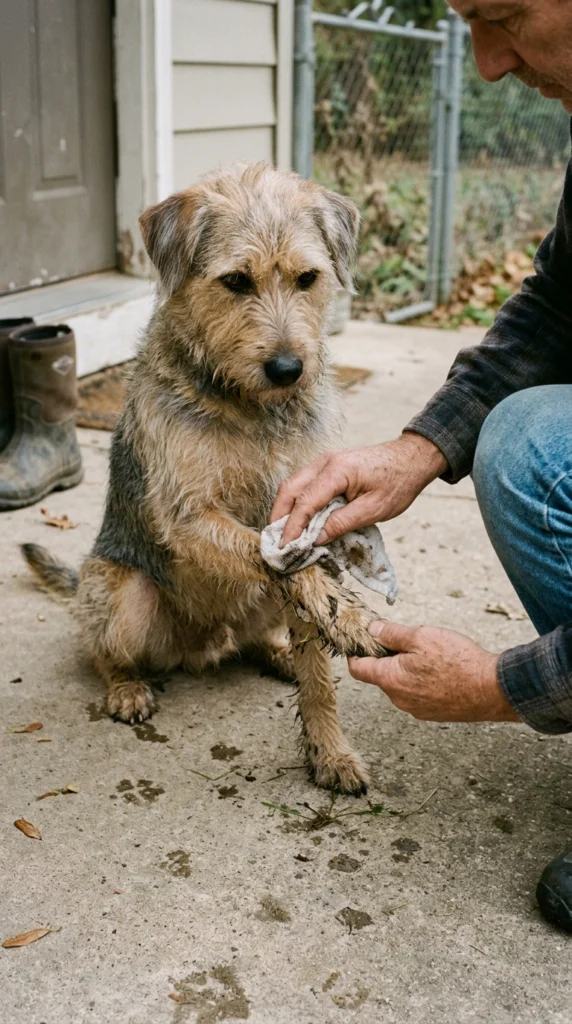
Feet and feathering gather mud even when the back stays clean. Wipe from the paw toward the ankle and check between toes without probing deeply. Carefully clean the underside of the body, especially in low-to-the-ground breeds. Around the tail and rear, use a separate cloth and wash hands afterward.
If a dog strongly resists paw handling, slow down and use short rewards. Practice one calm paw touch at a time rather than forcing the full cleanup.
Step 5: Dry Fur, Skin Folds and Gear
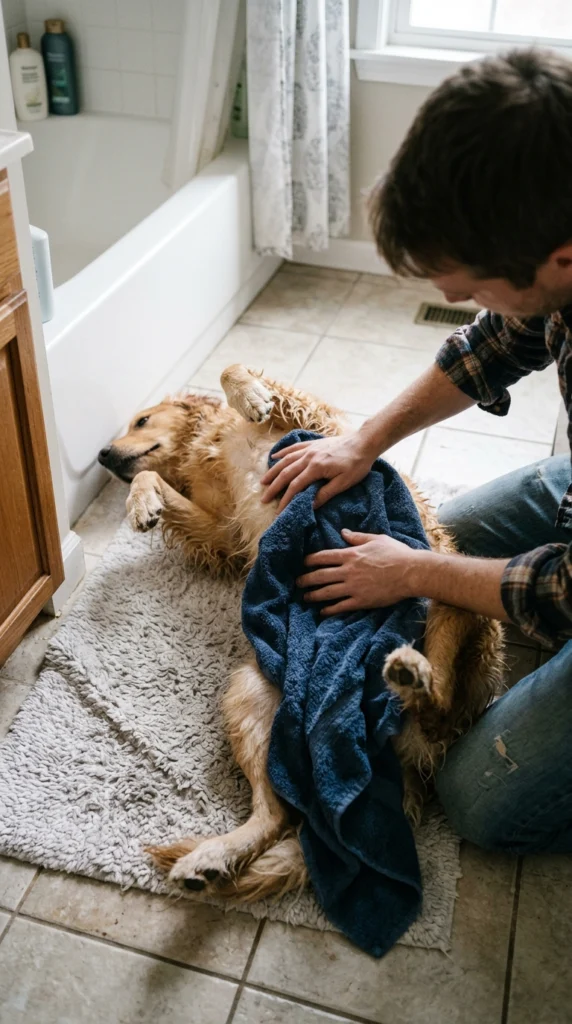
Blot until the coat is no longer dripping. Pay attention to under the collar, behind ears, along the belly and around skin folds, where retained moisture can cause trouble. A towel is a good first step. If your dog tolerates a dryer, use a pet-safe low-heat or cool setting at a comfortable distance, and stop if the dog seems anxious or too warm.
Hang wet collars, harnesses and towels to dry completely. The AKC advises thorough drying to reduce lingering odor, tangles and skin problems. If the coat stays damp under dense hair, check with a groomer about a safe technique for that coat type.
Optional Gear for This Routine
Affiliate disclosure: As an Amazon Associate, we may earn from qualifying purchases at no additional cost to you. No purchase is required to follow this guide.
- Earth Rated unscented grooming wipes: An optional convenient choice for small surface messes on healthy skin; avoid eyes and injured skin. See this exact product on Amazon (ASIN: B07NHL31CC).
- OLANLY absorbent dog door mat: An entryway dirt-trapping mat that can make cleanup more manageable. See this exact product on Amazon (ASIN: B0BWT84GZ7).
Always check the manufacturer’s fit, instructions and product ingredients. Products are not a substitute for medical advice.
When a Full Bath Is the Better Choice
Use a proper dog bath when the dog is covered in grime, has rolled in feces or a bad-smelling substance, or cannot be cleaned without rubbing the skin repeatedly. Unknown chemical exposure warrants a call to your veterinarian or poison control before applying products. Follow any decontamination instructions you receive.
When bathing is appropriate, select a mild dog shampoo suited to the coat rather than human shampoo. Read our dog bathing guide for more detail, and avoid bathing too often when it leaves the skin dry.
Mistakes That Make Mud Cleanup Harder
- Scrubbing sharp grit over the skin.
- Pulling tangled hair or cutting mats with scissors against the body.
- Using scented cleaning sprays as a shortcut.
- Leaving damp harnesses or dense fur against the skin.
- Turning every small muddy walk into a long stressful bath.
For recurring dry or itchy skin, visit our dog dry skin care guide and talk to your veterinarian if symptoms persist.
Frequently Asked Questions
Can I use baby wipes on my dog?
It is better to use a dog-appropriate wipe or plain water. Human products may contain fragrances or ingredients that irritate some dogs.
Can I let mud dry and brush it off?
For light harmless dirt, sometimes. Do not wait if your dog is cold, soaked, uncomfortable or contaminated with a potentially hazardous substance.
Should I use a dryer?
Only if your dog is comfortable with the sound and airflow and you can use a cool or low-heat setting safely.
Five-Minute Cleanup Versus Full Grooming: A Decision Guide
Light mud on healthy legs: Blot with a damp cloth, dry and inspect. Loose dried dirt on the surface: Brush gently if your dog is warm and comfortable. Clumps near the skin: Soften carefully with lukewarm water and separate only if they release without pulling. Strong smell or significant contamination: Choose a proper dog bath or professional advice. Painful skin or unknown chemical exposure: Pause and seek veterinary guidance instead of using household products.
For dogs with long feathering, check the belly, rear and feet rather than focusing only on the back. If cleanup has become a regular struggle, spend a few minutes on cooperative handling at a time when your dog is clean. Calmly touching one leg, rewarding, and ending the session can help make the next muddy walk less stressful.
Coat-Specific Spot Cleaning Notes
Short smooth coats: A damp cloth followed by a dry towel may remove most surface dirt without special products. Curly or woolly coats: Mud can tangle in curls; gently blot and separate clumps with your fingers before brushing dry sections. Long silky coats: Work in small areas and support the hair with one hand to avoid pulling. Double coats: Be especially diligent about removing moisture that may linger under the surface.
No routine works equally well for every dog. Senior dogs with arthritis may prefer a comfortable seated grooming position, while a young energetic dog may need several short cleanup breaks. Always check the dog’s comfort, because a few seconds of calm, successful cooperation often produce a better result than a rushed ten-minute struggle.
Final Thoughts
Small muddy patches call for simple, calm spot-cleaning—not automatically a full bath. Rinse or blot, gently brush when appropriate, dry completely, and watch your dog’s skin. A few well-organized towels can make rainy walks much easier to manage.
More Dogs Daily Care resources: Explore our recommended dog products for practical gear, browse our dog books for learning resources, and visit the free dog-care tools to explore breed and age resources. You can always return to the Dogs Daily Care homepage for the latest guides.