
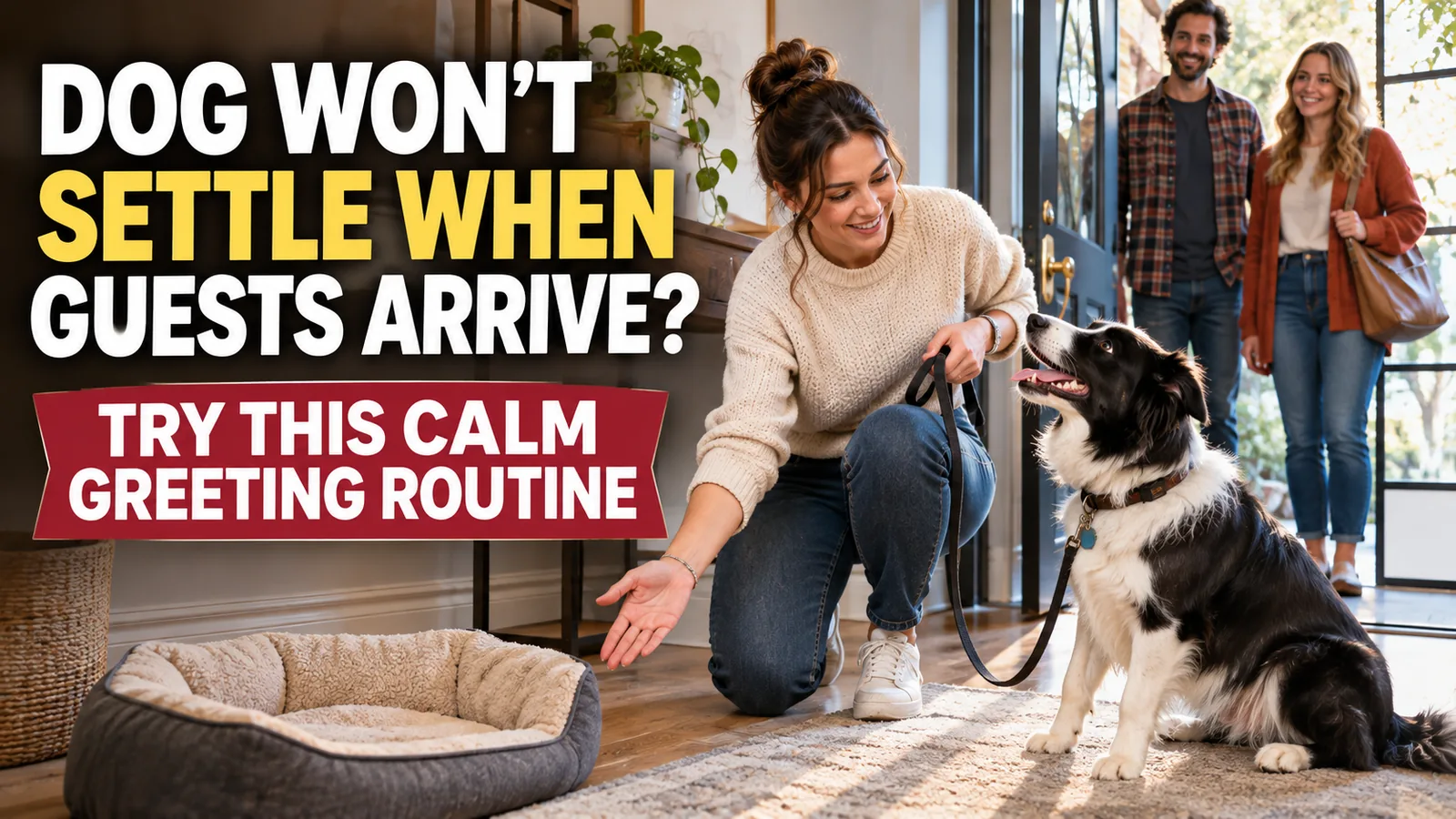
Someone knocks, your dog races to the door, and the entire visit begins with barking, jumping, or frantic pacing. Even after everyone sits down, your dog may keep circling the room, demanding attention, or struggling to relax. If your dog won’t settle when guests arrive, you need more than a repeated “sit” command: you need an arrival routine that makes the exciting parts of a visit easier to manage.
The goal isn’t to make your dog love every visitor or become silent on command. It’s to keep everyone safe, give your dog a predictable job, and reward small moments of calm. The same foundation can help during family visits, deliveries, and ordinary weekday company. For more everyday training ideas, explore the Dogs Daily Care homepage.
Table of Contents
Quick Answer: How Do You Help a Dog Settle When Guests Arrive?
Before opening the door, place your dog behind a secure barrier or on a comfortable mat away from the entrance. Have treats ready, ask guests to ignore the dog at first, and reward quiet attention, four paws on the floor, or relaxing on the mat. Let visitors enter and sit before considering a short greeting. If your dog stays overwhelmed, skip greetings and give them a quiet room instead.
Practice the steps when no visitors are expected. Once your dog can settle in a calm setting, add a soft knock, a familiar helper, and a longer visit one manageable change at a time. These methods reflect positive-reinforcement “go to place” guidance from the American Kennel Club (AKC) and gradual behavior modification principles outlined by VCA Animal Hospitals.
Why Your Dog Gets So Excited When Visitors Come Over
Dogs don’t all react to visitors for the same reason. One dog may love attention and have learned that jumping gets a greeting. Another may bark because the front door is unpredictable. A third may feel worried about strangers or the sudden noise. Watch your dog rather than assuming every busy greeting is just enthusiasm.
- Anticipation: Doorbells, footsteps, and familiar voices predict an exciting event.
- Rehearsed habits: Rushing and jumping may have earned attention in the past.
- Uncertainty or fear: New smells, people, or movements can create stress.
- Overstimulation: Multiple guests, excited voices, and children moving around can be too much at once.
- No clear resting routine: Your dog may never have practiced settling while people talk nearby.
Look for loose muscles, a soft expression, easy recovery, and the ability to take a treat. Watch for freezing, a tucked tail, lip licking, attempts to hide, growling, or an inability to disengage. Fearful dogs need more space and less social pressure, not a more demanding greeting exercise. Our guide to excessive barking explains why the reason behind the noise matters.
Before the Doorbell: Set Up a Calm Arrival Station
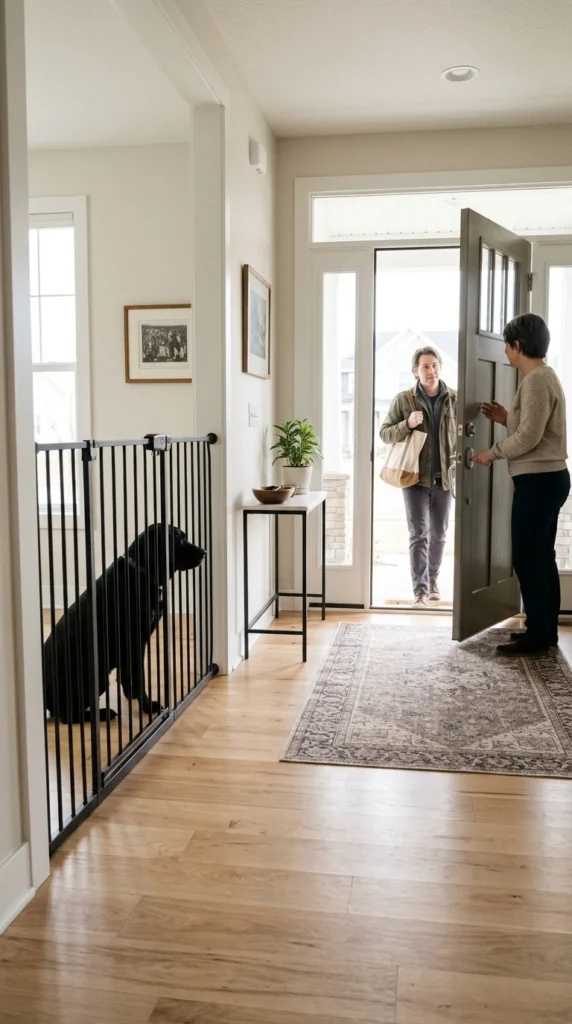
The easiest time to prevent an overexcited greeting is before anyone comes through the door. Choose an area where your dog can see or hear normal household activity without having direct access to the entrance. Depending on your dog, that might be a mat a few steps into the living room, a securely gated hallway, or a familiar quiet room.
- Put a nonslip mat or bed in the chosen spot, away from the door’s swing.
- Keep a few small, high-value dog-safe treats accessible to the adult handling the dog.
- Choose a secure harness and ordinary leash if you need extra control; never tether a dog and leave them unattended.
- Check that gates are correctly fitted and latched. A small pet door must be closed if your dog could pass through it.
- Give visitors a simple instruction before entry: “Please come in and ignore the dog until I say we’re ready.”
For a dog with a history of slipping outside, set up a second closed door or a secure gate. A leash alone should not be your only escape-prevention plan if the door will open repeatedly. Read our beginner leash-training guide for comfortable, low-pressure handling basics.
A Calm Greeting Routine: Seven Practical Steps
Step 1: Give Your Dog a Simple Job Before Guests Enter
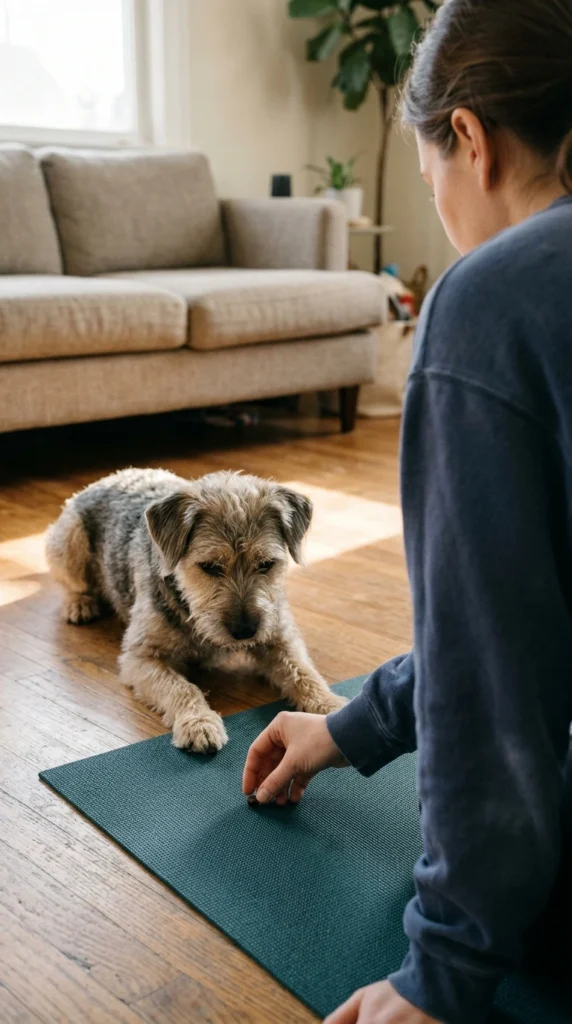
As you hear a car arrive or receive a text from your visitor, guide your dog to the mat or secure resting area. You can say “place,” “bed,” or another cue they already understand. If the cue is unfamiliar, quietly lead them with a treat and reward them once they reach the spot. Do not begin teaching a complicated new command while a guest is already at the door.
If your dog is worried, a closed room with water and a familiar bed may be more appropriate than a visible mat. Management is not a setback; it prevents your dog from rehearsing frantic greetings while you teach new skills.
Step 2: Let the Visitor Come Inside Without Approaching the Dog
Open the door only after your dog is safely managed. Ask the visitor to avoid direct staring, excited speech, reaching over the dog’s head, or calling their name. The guest can remove their coat, put down bags, and take a seat while you keep your dog’s environment quiet.
The first minute or two doesn’t have to involve the dog at all. If your dog can lie down or sniff calmly, reward that choice. If they are still barking intensely or trying to reach the guest, increase distance or close the door to their retreat.
Step 3: Reward the Behavior You Actually Want
Place a treat on the mat when your dog returns to it, softens their posture, briefly looks toward you, or chooses to settle. Keep rewards small and easy to chew. Don’t use food to lure a frightened dog closer to someone they are trying to avoid. Instead, reward them in the space where they feel safe.
For excited jumpers, calm attention is the reward: guests can briefly greet when all four paws are on the floor, then pause attention if jumping resumes. Our guide to stopping jumping on people covers those greeting rules in greater detail.
Step 4: Keep the First Greeting Short and Optional
If your dog is relaxed, the guest is comfortable, and there is no history of snapping or aggressive behavior, you may allow a brief voluntary greeting. Keep a relaxed leash if appropriate. Ask the visitor to stand sideways or remain seated, let the dog choose whether to approach, and avoid leaning or reaching. After a few seconds, gently guide your dog back to their mat for another reward.
Some dogs are happier without meeting visitors. Never insist that a nervous dog “say hello,” especially when children are present. Children should not be responsible for handling a stressed dog or giving treats directly unless a qualified adult has confirmed the interaction is safe.
Step 5: Offer a Calm Activity After Everyone Sits Down
Some dogs settle better with a familiar, supervised food toy, a safe chew they already tolerate, or a small scatter of their normal food on the mat. Choose options that fit your dog’s dietary needs and chewing habits; avoid high-risk hard chews and anything likely to cause guarding around guests. Separate the dog from visitors and other pets during food-based enrichment if there is any tension.
Don’t overload your dog with treats or expect a food toy to fix fear. If your dog is too stressed to eat, use distance and quiet instead. A calm activity supports the routine; it does not replace a comfortable environment.
Step 6: Allow Breaks During Longer Visits
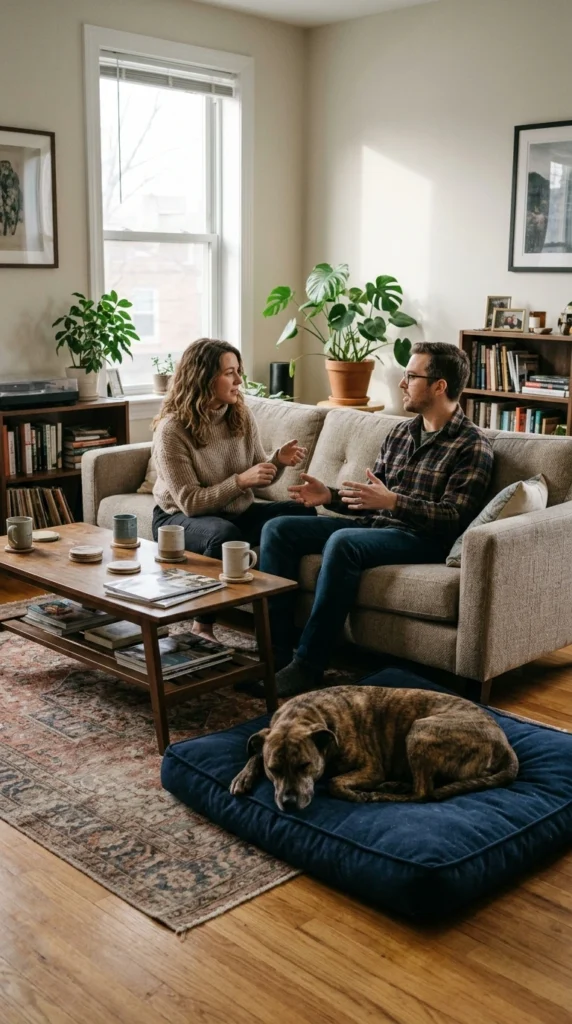
A dog might manage the first few minutes and then become unsettled as people talk, stand up, or move between rooms. Schedule occasional breaks in a familiar quiet area. Watch whether your dog can rest, drink water, and recover from activity. If pacing or barking starts again, help them return to a quieter space before the behavior escalates.
Consider the length of the visit and the dog’s individual needs. Puppies, senior dogs, and dogs recovering from illness may need more rest than healthy adult dogs. Your goal is a successful, comfortable visit, not uninterrupted participation in every conversation.
Step 7: End With the Same Predictable Routine
When guests get up to leave, secure your dog before the front door opens again. Offer a calm cue, guide them back to the mat or behind the gate, reward, and then let visitors exit. The departure matters as much as the arrival because the movement can restart excitement.
Afterward, let your dog rest. You don’t need a victory lap, an extra training drill, or enthusiastic praise that winds them up again. The best ending is an ordinary, peaceful home.
Practice on Quiet Days, Not Just When Company Arrives
Begin when your home is calm. Set a mat down, reward your dog for stepping onto it, and gradually shape a relaxed down or rest. Keep early sessions short and successful. Add a release cue so the dog knows when they are free to move. Only when the mat is familiar should you introduce real distractions.
- No visitors: Practice walking to the mat, relaxing, and being released.
- A quiet sound: Have a family member tap lightly on an interior door while the dog remains comfortable.
- Controlled doorbell: Use a low-volume recording or an agreed single ring, followed by a reward on the mat.
- One familiar helper: Ask a friend to stand outside, come in quietly, and sit without greeting the dog.
- More realistic visits: Add longer duration or guest movement only after earlier steps are easy.
Change one element at a time. If barking, pacing, or fear increases, make the next repetition easier: lower the sound, increase distance, shorten the visit, or go back to the earlier step. The AKC doorbell-manners tutorial provides a similar progression. You can reinforce the basics with our essential obedience-commands guide.
When Your Dog Is Anxious Rather Than Just Excited
Do not treat a fearful dog as though they are simply being rude. Growling, hiding, rigid posture, repeated retreating, lunging, and frantic attempts to escape can mean the situation is unsafe or overwhelming. Increase distance immediately, use a closed quiet room or other secure separation, and tell guests not to approach. Never punish growling or force exposure; those actions can worsen the underlying fear.
For persistent fear, bites, threats to bite, or sudden behavior changes, consult your veterinarian. They can evaluate possible medical causes and help you find a qualified reward-based behavior professional or a board-certified veterinary behaviorist. A dog with bite history should not practice guest greetings as a DIY exercise.
For young dogs, gentle exposure should always be controlled and positive. Our puppy socialization guide explains why allowing choice is more valuable than making every stranger interact with your dog.
Helpful Supplies for Training Calm Visitor Greetings
Affiliate disclosure: As an Amazon Associate, we may earn from qualifying purchases through eligible links, at no additional cost to you. These products are optional; calm management and consistent training matter more than equipment.
- Paw Lifestyles Dog Treat Training Pouch: A wearable pouch can keep tiny training rewards accessible when practicing the mat cue. The specific model is listed as ASIN
B01DN07JUM. View the Paw Lifestyles treat pouch on Amazon. - Carlson Extra Wide Walk-Through Pet Gate: An option for creating a barrier away from the front entrance, provided the opening and dog size are suitable. Check the latch, pressure-mount instructions, and small-pet-door setting before use. The model is listed as ASIN
B000JJDI0G. View the Carlson gate on Amazon.
No gate should be assumed escape-proof for every dog. Measure the opening, consider whether your dog could climb or jump over it, and follow the manufacturer’s installation guidance. A secure closed room is sometimes safer, particularly for a dog who reacts strongly to visitors.
Common Mistakes That Keep a Dog Too Excited to Settle
- Opening the door while the dog is loose and highly aroused: This gives them another chance to rehearse rushing and jumping.
- Having guests repeatedly call or pet the dog: Excited attention can reward behavior you hoped would stop.
- Waiting until the first real party to train: New cues are harder when many distractions arrive together.
- Using a punishment-based correction: Punishment may add stress, especially when fear is part of the reaction.
- Confusing stillness with relaxation: A dog who freezes or stares stiffly may be worried, not calm.
- Removing all breaks: Some dogs need to leave the social area and rest during longer visits.
Frequently Asked Questions
How long does it take for a dog to calm down after guests arrive?
There is no fixed timeline. A dog who loves visitors may relax after a short, familiar routine, while a fearful or highly excitable dog may need several visits or weeks of gentle practice. Focus on quicker recovery and more relaxed body language rather than a particular number of minutes.
Should I let my dog greet everyone at the door?
No. Doorway greetings are optional, and for some dogs they’re the hardest part of the visit. A guest can come inside and sit while your dog remains behind a barrier. A calm dog may be offered a brief greeting later, but a nervous dog should never be required to interact.
Will ignoring my dog stop jumping on guests?
Not on its own. Ask guests not to reward jumping, but also teach your dog a clear alternative such as four paws on the floor or resting on a mat. Use barriers or a leash to prevent accidental jumping while the skill is still developing.
Is a crate a good place for a dog when visitors come over?
Only when your dog already experiences the crate as a comfortable, safe place. Never force a frightened or untrained dog into a crate to manage a visit. For an introduction to positive crate habits, see our puppy crate-training guide.
What if my dog growls at visitors?
Increase separation and do not punish the growl or ask the guest to approach. Growling can communicate discomfort and is a sign that your dog needs more space. Contact your veterinarian and an appropriately qualified behavior professional for an individualized safety plan.
Final Thoughts
When your dog won’t settle when guests arrive, plan the first moments of the visit instead of hoping they will work it out. Set up a safe resting spot, keep the front door controlled, make greetings optional, and reward the calm behavior you want to see. Practice when the house is quiet and gradually make the routine more realistic. For some dogs, success is lying on a mat while the family chats. For others, success is enjoying a peaceful room away from company. Both are worthwhile outcomes when your dog’s comfort and everyone’s safety come first.
Editorial note: This article offers general training information, not an individualized veterinary or behavioral diagnosis. Seek veterinary and qualified behavior support for significant fear, aggression, or sudden changes.