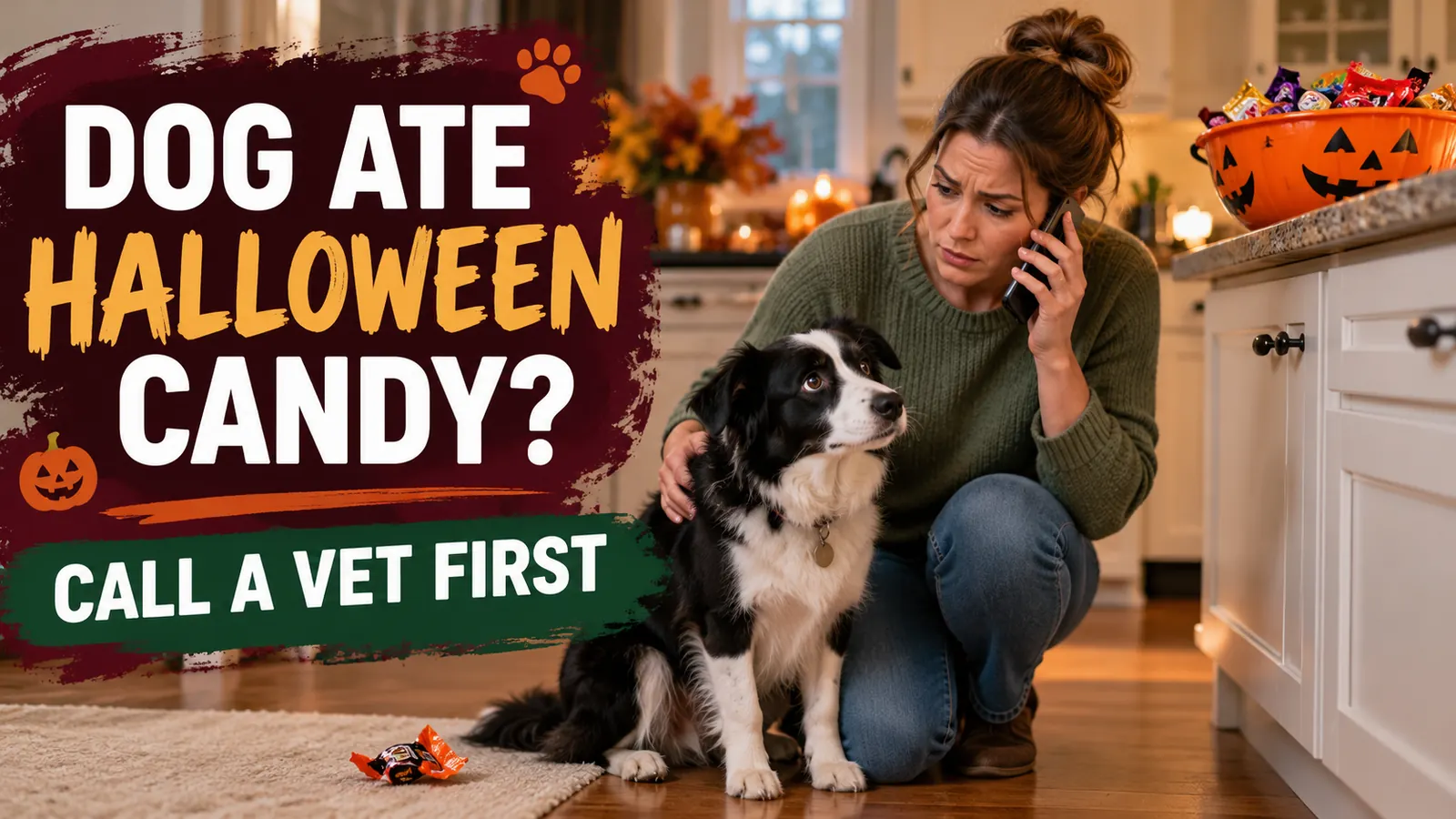
A torn Halloween candy bag on the floor can turn an ordinary evening into an emergency. Maybe your dog grabbed a chocolate bar, chewed a pack of sugar-free gum, or swallowed several wrapped treats while you were answering the door. The safest next step is not to guess which candy is harmless. It is to identify what may have been eaten and contact a veterinarian or animal poison control right away.
Some Halloween candy ingredients can cause serious poisoning in dogs, even before obvious symptoms appear. Others may cause stomach upset or create a choking or intestinal blockage risk. This guide explains what to do immediately, what information to collect, and what questions to ask the veterinary team.
Table of Contents
Quick Answer: What to Do If Your Dog Ate Halloween Candy
Remove the remaining candy, save the wrappers, and call your veterinarian, an emergency animal hospital, or a pet poison control service now. Tell them your dog’s approximate weight, the candy’s exact name and ingredients, the amount missing, when it happened, and whether your dog has symptoms. Do not wait for vomiting, weakness, or tremors before seeking guidance.
In the United States, ASPCA Animal Poison Control is available at 888-426-4435 and Pet Poison Helpline at 855-764-7661, both 24/7. Consultation fees may apply. If your dog is collapsing, having seizures, struggling to breathe, or becoming severely weak, go to the nearest emergency veterinary hospital immediately; call ahead if possible.
Important: Never induce vomiting or give hydrogen peroxide, activated charcoal, salt, milk, oil, human medicine, or another home remedy unless a veterinary professional specifically instructs you to do so.
First 5 Steps to Take Right Away
1. Stop Your Dog From Eating More
Move remaining candy, treat bags, wrappers, and accessible trash to a secure location. Keep other pets away as well. If you can safely remove something loose from your dog’s mouth without risking a bite, do so; otherwise, do not force the mouth open or reach blindly into the throat. A dog who is choking or cannot breathe needs immediate emergency veterinary care.
2. Check Your Dog Without Delaying the Call
Notice whether your dog is alert, walking normally, breathing comfortably, or already vomiting. Tremors, weakness, collapse, seizures, or unusual agitation are urgent warning signs. Even a dog who looks completely normal can still be at risk because different ingredients cause symptoms at different times.
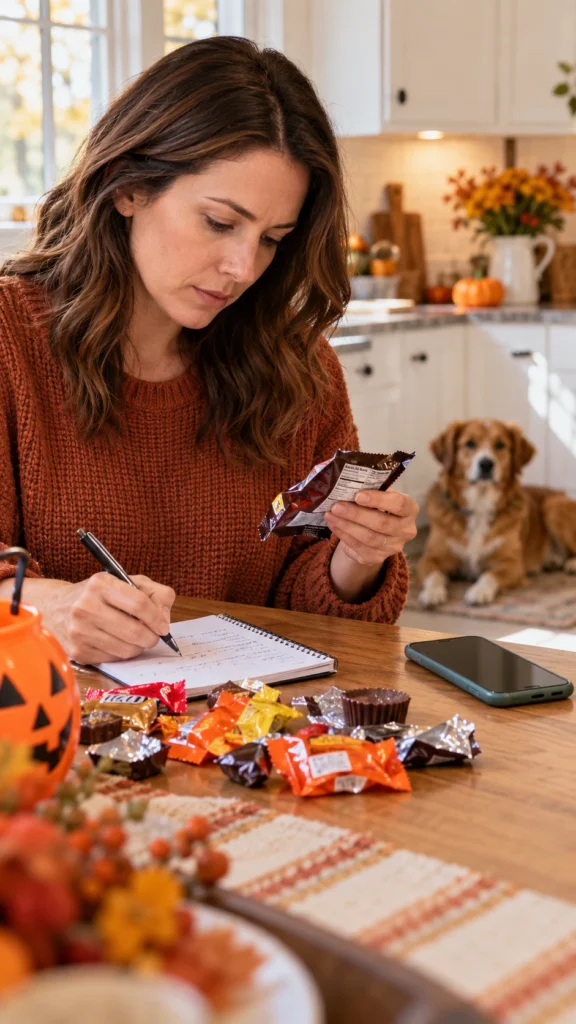
3. Save the Candy Package and Count What Is Missing
Keep the wrapper, box, brand name, ingredient list, and any remaining pieces. Take clear photos of labels if that is easier. Do not rely only on the color of a wrapper or the assumption that a miniature candy bar contains a tiny amount of chocolate. If you are unsure of the quantity, tell the vet the best estimate and explain what you do not know.
4. Call a Veterinarian or Poison Service Immediately
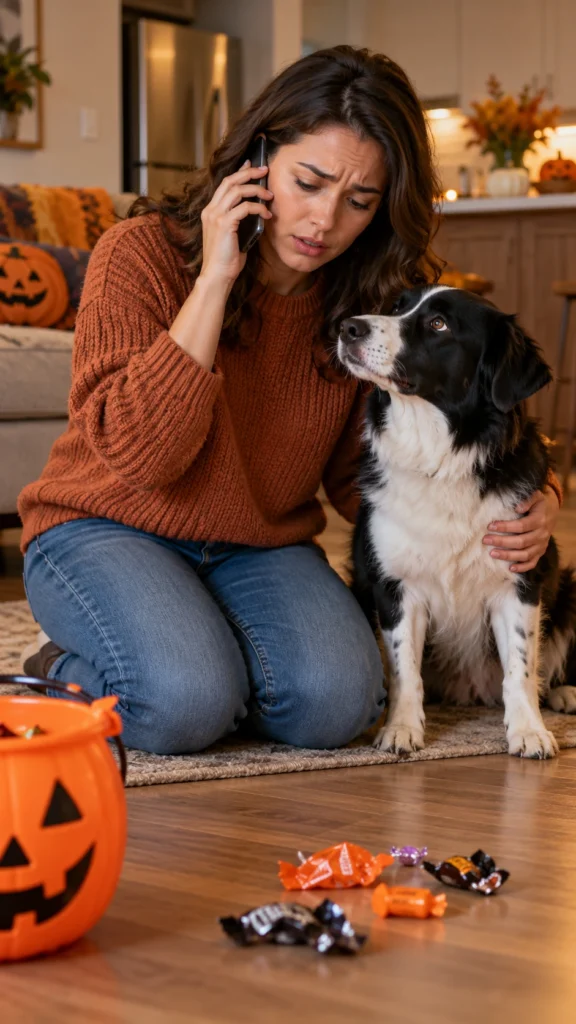
Professional guidance is especially urgent for chocolate, anything labeled sugar-free or containing xylitol, raisins or grapes, caffeine products, and edible cannabis products. Tell the professional if your dog swallowed wrappers or sticks along with the candy. Have your dog’s age, weight, health conditions, and medications ready if you know them. Do not spend time calculating a dose online before making the call.
5. Follow the Individualized Instructions
Your veterinarian or poison specialist may recommend immediate examination, monitoring, or another action depending on the candy and your dog. Some dogs need blood tests, heart monitoring, intravenous fluids, or treatment for low blood sugar. Do not feed, medicate, or attempt to make your dog vomit unless the professional directs it. If instructed to travel to a clinic, take the packaging with you.
Which Halloween Candies Are Dangerous for Dogs?
Not all candy creates the same risk. The ingredient matters, as do the dog’s size, the quantity, and the time since ingestion. The categories below help you explain an exposure to a veterinary professional—not decide on your own that your dog can safely stay home.
Chocolate: Dark, Baking, Milk, and Candy-Coated
Chocolate contains theobromine and caffeine, which dogs process differently than people. Dark and baking chocolate generally contain more of these stimulants than milk chocolate, but milk-chocolate candy can still cause trouble depending on the amount and dog. Chocolate products may also be high in fat and sugar. Call for advice after any suspected chocolate ingestion rather than treating a small-looking piece as automatically safe.
Xylitol: Sugar-Free Gum, Candy, and Some Treats
Xylitol is a sweetener that may also appear on labels as birch sugar or related names. It can cause a rapid, dangerous fall in a dog’s blood sugar and, in some cases, liver injury. Look closely at sugar-free gum, mints, low-sugar candies, and some specialty snacks. Suspected xylitol ingestion is an immediate veterinary emergency, even without symptoms.
Raisins, Grapes, and Chocolate-Covered Raisins
Raisins and grapes can cause acute kidney injury in some dogs. Sensitivity is unpredictable, and there is no reliable amount that an owner can assume is safe. Halloween snack boxes, trail mixes, cookies, and chocolate-coated raisins may hide this risk. Call immediately if your dog ate any.
Caffeine, Cannabis Edibles, and Mixed-Ingredient Snacks
Coffee-flavored candies, espresso beans, some energy snacks, and edible cannabis products can introduce additional toxins. Trail mixes may also contain macadamia nuts or raisins. Mixed ingredients increase uncertainty, so the full label is more useful than the candy’s general description.
Ordinary Sugar Candy and High-Fat Treats
Plain sugar candy is not the same as xylitol-containing candy, but that does not mean a big candy binge is harmless. Large amounts of sugar and fat may cause vomiting, diarrhea, dehydration, or pancreatitis. Contact a veterinarian for guidance, especially if your dog ate many pieces, is small or very young, or has a history of digestive problems.
Why the Same Candy Can Affect Two Dogs Differently
A 10-pound dog eating several chocolate bars is not the same situation as a 70-pound dog taking a small bite. For chocolate, the particular product, cocoa concentration, swallowed amount, and body weight all influence the risk. For xylitol, the amount in a piece of gum can vary by product and flavor. Raisin toxicity is especially unpredictable.
This is why an online chart or generalized answer cannot safely replace a case-specific veterinary assessment. If the wrapper is missing, the amount is uncertain, or your dog may have eaten multiple kinds of candy, explain the uncertainty directly. The clinic can decide what information or tests are needed.
Symptoms to Watch For—But Do Not Wait for Them
Depending on the substance, symptoms may develop quickly or be delayed. Some cases appear mild at first and become more serious later. Report any of the following:
- Vomiting, diarrhea, drooling, loss of appetite, or abdominal discomfort.
- Restlessness, pacing, unusual agitation, panting, or excessive thirst.
- Weakness, unsteady walking, unusual sleepiness, or collapse.
- Tremors, seizures, a racing heartbeat, or trouble breathing.
- Repeated vomiting or straining after swallowing wrappers or other objects.
For a broader explanation of symptoms unrelated to a known poisoning, see our guide to signs of illness in dogs. Our dog digestive issues guide also explains why vomiting, abdominal pain, and possible blockages need professional assessment. Neither guide should delay a poison-control call after candy ingestion.
What If Your Dog Ate Candy Wrappers or Lollipop Sticks?
Wrappers, foil, plastic film, and lollipop sticks add another problem: choking, irritation, or a possible intestinal blockage. A dog can swallow the packaging while grabbing the candy, so checking only the ingredient list is not enough. Tell the veterinarian which packaging is missing and approximately how much.
Signs of a possible obstruction can include repeated vomiting, belly pain, lack of appetite, straining to defecate, or lethargy. Do not pull visible string-like material from the mouth or rectum, and do not try to push an object through with bulky food. A professional may recommend examination or imaging.
What Not to Do After a Halloween Candy Incident
- Do not wait for symptoms: Early advice can change what treatment is possible.
- Do not induce vomiting yourself: It can be unsafe with certain exposures or when a dog is already unwell.
- Do not give home antidotes: Milk, oil, salt, or other household ingredients do not reliably neutralize toxins.
- Do not assume sugar-free is safer: Xylitol can make a product especially dangerous.
- Do not guess the dose from a candy name: Formulations and sizes change.
- Do not treat the absence of vomiting as clearance: Some effects are delayed.
If your dog appears painful, check our general signs of pain in dogs guide later, but seek veterinary care immediately for severe pain or suspected poisoning.
What Happens When You Call the Veterinarian?
Expect questions about the exact candy, potential ingredients, missing quantity, your dog’s weight, the time of exposure, current symptoms, and relevant medical history. The vet or poison specialist may use ingredient and dose information to recommend an examination, testing, or monitoring. Treatment varies considerably: a dog with xylitol exposure may need glucose monitoring and intravenous treatment, while another dog may need care for stimulant effects, gastrointestinal upset, or swallowed packaging.
Ask who you should call back if signs change, whether a follow-up visit is needed, and what to watch for during the next hours or days. Write down the recommendations. If your dog is already in serious distress, head to emergency care rather than conducting a long information search.
Prevent the Next Candy Emergency
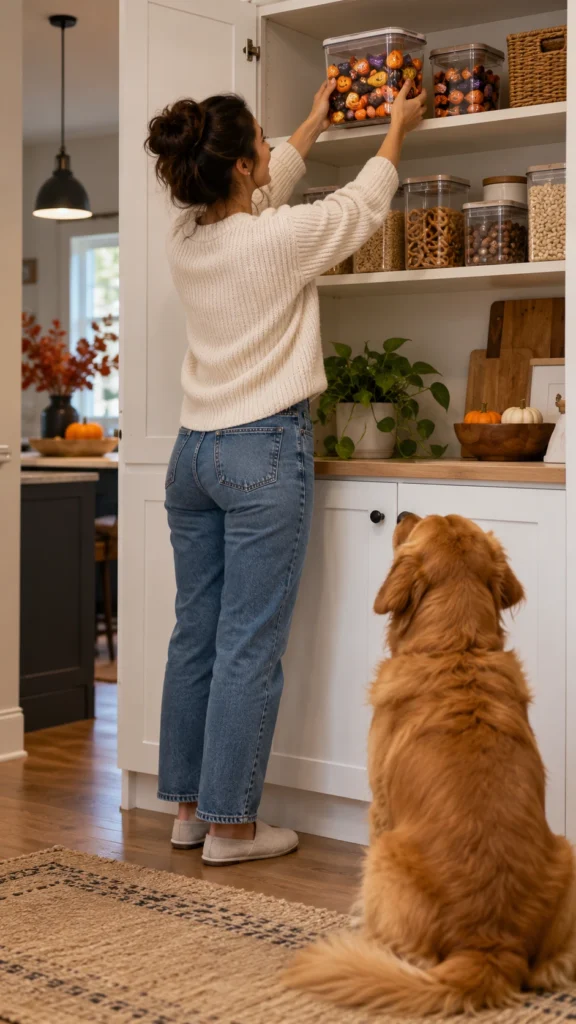
Once the current incident has been assessed and managed, make a simple family rule: all Halloween candy stays in a closed, inaccessible location. Put trick-or-treat bags away immediately, keep candy off coffee tables and nightstands, and dispose of wrappers in a trash container pets cannot access. Supervise children and guests around food, and remember that many dogs can reach countertops.
For more home-safety ideas, read our room-by-room puppy-proofing checklist and new dog owner safety checklist. If visitors and doorbells are part of the problem, our Halloween doorbell and barking guide shows how to set up a calmer, separate dog area.
Optional Supplies for Future Prevention
Affiliate disclosure: As an Amazon Associate, we may earn from qualifying purchases. These items are for future household management only. Neither is a treatment for poisoning, and neither replaces adult supervision, locked storage, or veterinary care.
- Carlson Extra Wide Walk-Through Pet Gate: An indoor barrier that may help keep some dogs out of the kitchen during candy handling. Measure the opening and check whether your dog can jump the gate or pass through its small pet door. A closed, secured room may be safer for escape-prone pets. View the Carlson pet gate on Amazon.
- Vmaisi Magnetic Cabinet Locks (20-Pack): These can add a layer of cabinet access control when correctly fitted. Do not rely on childproofing accessories as your only safeguard for toxic food; use fully inaccessible storage. View the Vmaisi cabinet locks on Amazon.
Looking for broader prevention and everyday care resources? Visit the Dogs Daily Care homepage for guides on safety, training, nutrition, and dog health.
Frequently Asked Questions
My dog ate one small chocolate candy. Should I still call?
Yes. Contact your veterinarian or pet poison control to check the specific chocolate, amount, and your dog’s size. You cannot safely judge the risk from the word “small” alone, especially when the exact product or quantity is unclear.
My dog ate sugar-free candy but seems fine. Is that an emergency?
It may be. Check for xylitol or birch sugar and call a veterinarian or poison service immediately. Dangerous effects can begin before you see obvious symptoms, so do not wait to see whether your dog develops weakness or tremors.
What if my dog ate a bunch of gummy candy or candy corn?
Even candy without chocolate or xylitol can cause significant stomach trouble when eaten in quantity. Some products also contain unexpected ingredients. Save the package, estimate the amount, and call your veterinarian for advice tailored to your dog.
Can I give my dog bread, milk, or hydrogen peroxide to fix it?
No. Do not attempt home treatments or induce vomiting unless a veterinarian or poison specialist specifically instructs you to do so. An inappropriate remedy can delay treatment or introduce a new hazard.
What if I do not know which candy my dog ate?
Gather the bags, wrappers, ingredient labels, and any remaining pieces; estimate when the candy was accessible. Explain what is unknown when you call. The veterinary team can help assess a possible mixed exposure without pretending the exact product is known.
How long after eating candy could my dog get sick?
It depends on the ingredients and your dog’s circumstances. Some poisonings can cause rapid changes, while other problems—including complications from fatty foods or swallowed packaging—may appear later. Seek professional advice as soon as you discover the ingestion, not after a set waiting period.
Final Thoughts
If your dog ate Halloween candy, the right first move is to secure the remaining candy, keep the packaging, and call a veterinarian or animal poison control immediately. Chocolate, xylitol, raisins, and certain mixed snacks are particularly concerning, and swallowed wrappers can create an additional emergency. A calm call with accurate details is far more useful than guessing or attempting a home remedy.
This article provides general educational information, not a diagnosis or individualized veterinary instructions. Veterinary review is required before publication. For urgent poisoning concerns, contact a veterinary professional right away.