
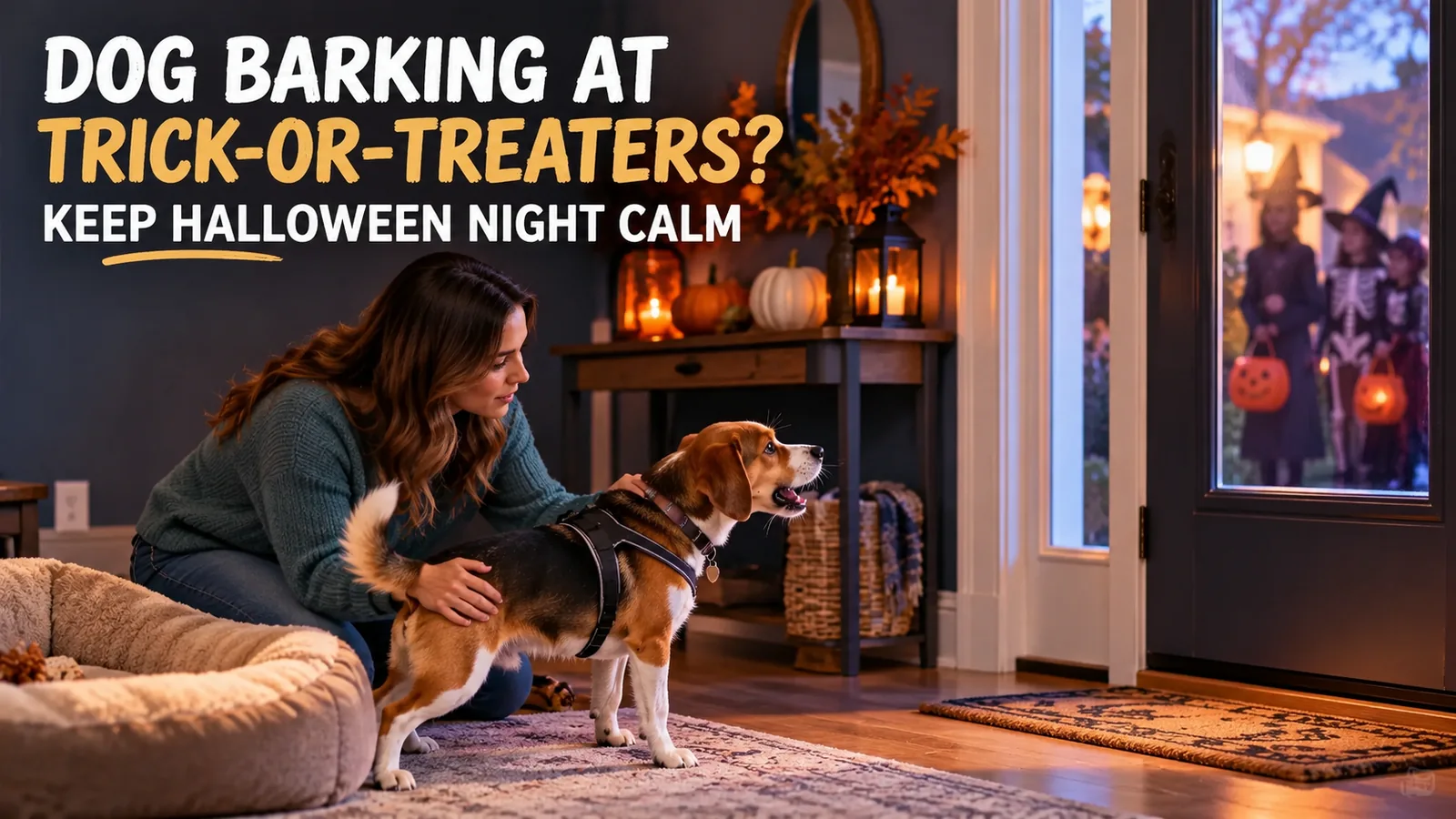
The doorbell rings for the third time in five minutes. Your dog rushes to the entrance, barks at the children outside, and has barely settled before another group arrives. If your dog is barking at trick-or-treaters, Halloween can feel like a nonstop training challenge.
There is a gentler way to handle it. You do not have to make your dog greet costumed strangers, and you do not have to eliminate every bark. This guide gives you a realistic plan for October 31: reduce the commotion, prevent an accidental escape, and give your dog a comfortable place to spend the evening. It also explains what to practice after Halloween if doorbell barking is a year-round problem.
Table of Contents
Quick Answer: How Do I Stop My Dog Barking at Trick-or-Treaters?
For tonight, focus on management rather than instant obedience. Settle your dog in a familiar, quiet room before trick-or-treating begins, offer water and comfortable bedding, soften doorbell noise, and keep them safely separated from the front entrance. If you can, hand out candy from the porch or use a contact-free arrangement so the bell rings less. Reward relaxed behavior without forcing interactions. For long-term change, train a calm response to the doorbell gradually on quiet days.
The ASPCA’s Halloween guidance recommends a separate comfortable room away from the busy entrance for most pets during peak trick-or-treating hours.
Why Dogs Bark More on Halloween
Barking is communication, not proof that a dog is being stubborn. Dogs may be alerting, frightened, or excited. Halloween adds unusual triggers:
- Repeated ringing and knocking: There may be no time for a dog to recover before the next sound.
- Unfamiliar silhouettes: Masks, capes, oversized hats, and face paint change how visitors look.
- Excited voices and movement: Children may shout, laugh, or reach toward the doorway unexpectedly.
- An opening door: The chance to run forward can increase arousal and create an escape risk.
- Outside sights and noise: Flashing decorations and groups passing windows can keep some dogs on alert.
Watch your dog’s entire body. Loose movement and a brief bark followed by an easy return to normal may reflect excitement or alerting. A tucked tail, lowered posture, trembling, repeated retreat, or difficulty settling suggests fear. Dogs can also feel both excited and uneasy. For everyday causes, our guide to excessive dog barking covers the wider picture.
The Halloween-Night Plan: Seven Steps That Really Help
1. Choose a Quiet Room Before the First Visitor
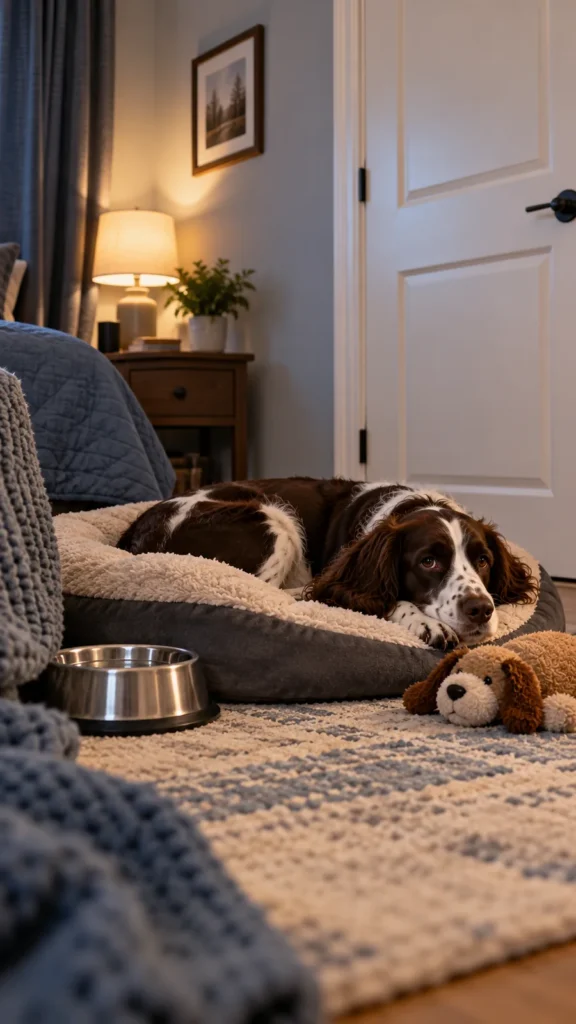
Pick a room your dog already knows, ideally away from street-facing windows and the front door. Add a familiar bed or blanket, fresh water, and a comfortable temperature. Close curtains if passing costumes trigger barking. Low background music or a fan may help mask occasional knocks, as long as the sound itself does not bother your dog.
Settle your dog there before the neighborhood gets busy. Let them spend time in the room with you first, especially if separation is difficult. Do not suddenly confine a dog in an unfamiliar crate or leave a distressed dog isolated.
2. Take a Relaxed Walk and Potty Break Earlier
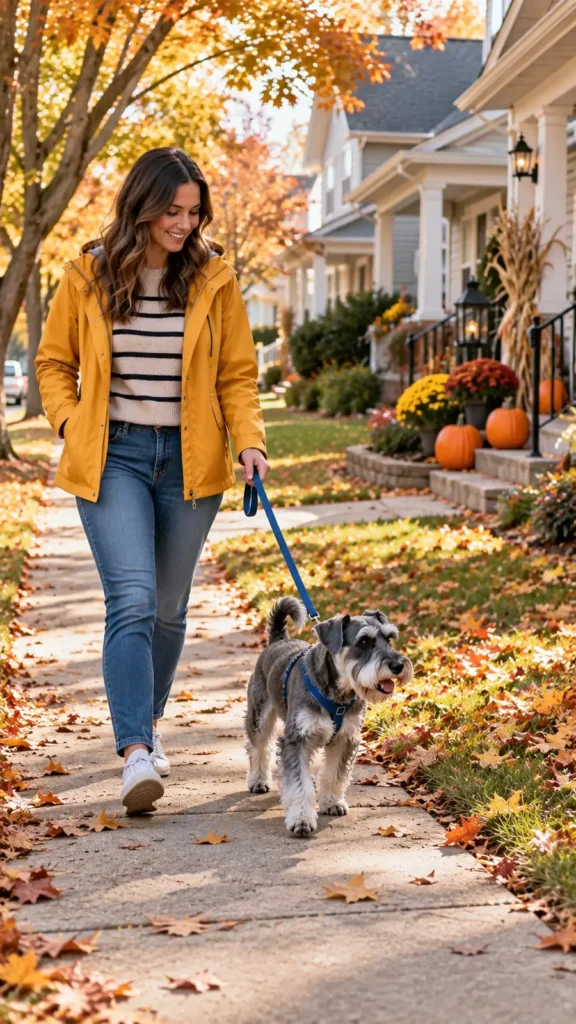
If your dog usually enjoys walks, offer a sniff-friendly outing while the neighborhood is still quiet and daylight remains. A short play session or easy training game can also provide enrichment. Keep it relaxed rather than exhausting your dog.
Plan the next bathroom break for a quieter period. Use a secure harness or collar and leash; do not send a dog into the yard alone if visitors are opening gates. Our beginner leash-training guide explains practical handling skills for everyday outings.
3. Keep the Doorbell From Becoming the Main Event
If the doorbell itself sets off barking, make fewer people ring it. A clear sign asking visitors not to knock, a bowl of candy placed in a supervised spot, or handing out treats from the porch may reduce the repeated trigger. Do not leave candy where your dog could reach it, and check local conditions before placing anything outside.
If a family member can greet visitors outside while another person stays with the dog, that can be easier still. Avoid using Halloween night as your first attempt at doorbell sound training. For some dogs, turning off a smart doorbell’s indoor chime for the evening is a simple, reversible improvement.
4. Prevent Door Dashing With Real Separation
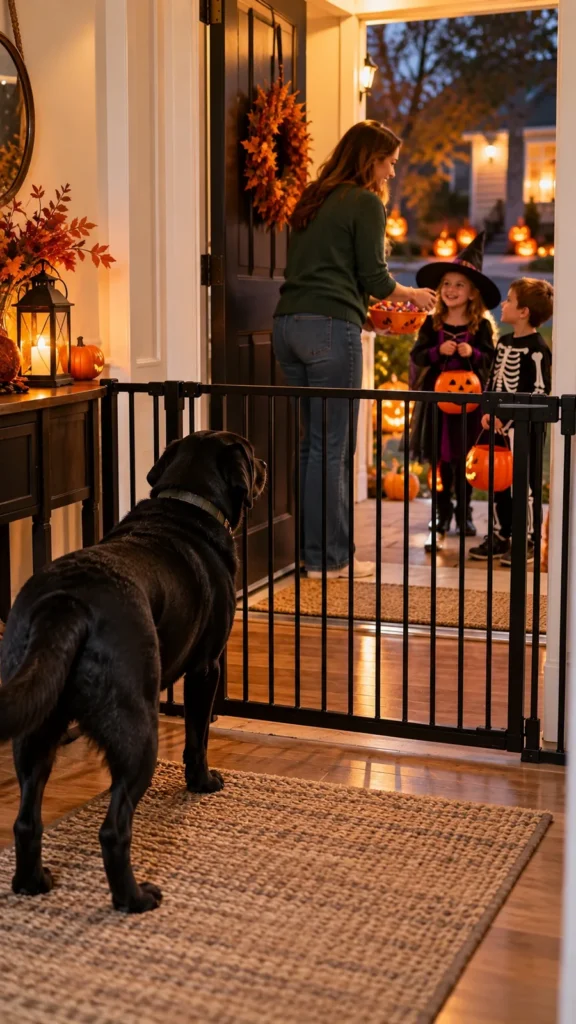
Before you open the exterior door, confirm your dog cannot reach it. A closed interior door is the clearest choice for a dog who is fearful, large, highly excited, or likely to bolt. A correctly installed pet gate may work for a calm dog if they cannot jump it, squeeze through it, or operate its small pet door. Never assume a gate is escape-proof.
Have children and visitors leave the barrier alone. Keep your dog’s collar identification and microchip registration details current. The same reliable household barriers described in our home safety checklist also help prevent access to loose candy, wrappers, cables, and decorations.
5. Offer Calm, Familiar Enrichment
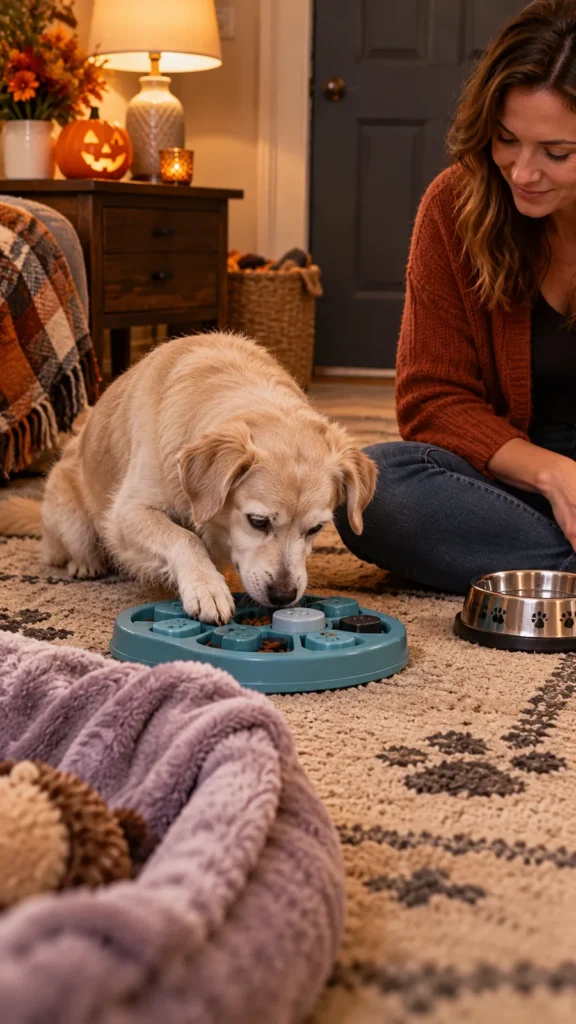
A familiar food toy may help a comfortable dog relax. If your dog is too worried to eat, make the environment easier. Use an activity your dog has already handled safely and remain nearby to supervise toys with movable parts.
Account for treats in your dog’s normal food intake and choose foods already known to be safe for them. Do not introduce a brand-new chew or difficult puzzle during a stressful evening. If your dog simply wants to rest, rest is enough.
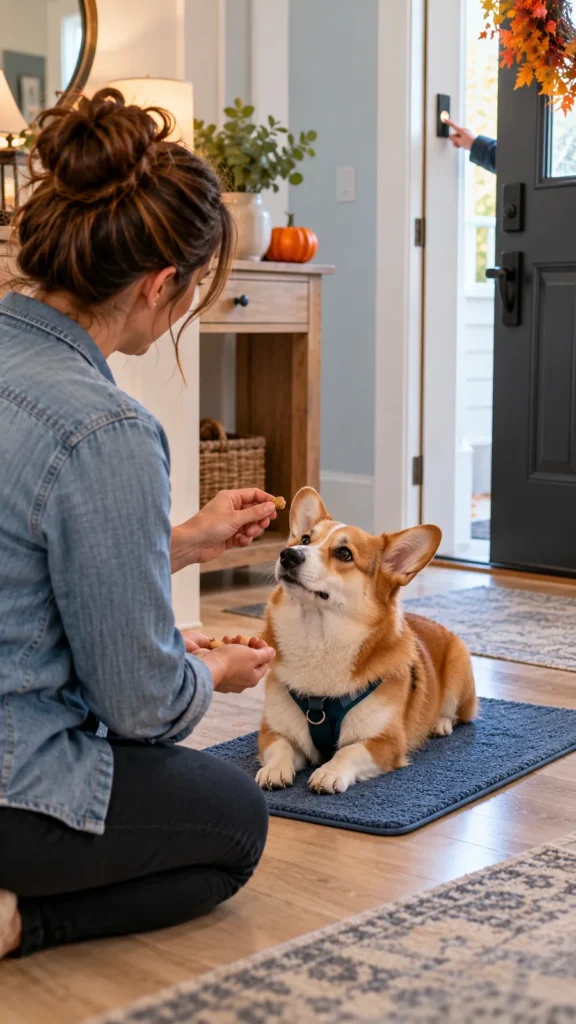
6. Do Not Ask Your Dog to Greet Trick-or-Treaters
Even a friendly dog can be surprised by masks, loud voices, or a child reaching through the doorway. Keep hands, candy buckets, and costumes away from your dog. If your dog growls, freezes, retreats, lunges, or repeatedly barks, increase separation rather than asking them to sit for a stranger.
General visitor manners can be useful on calm days. Our guide to stopping jumping on people teaches polite alternatives, but it does not mean a worried dog should meet Halloween visitors.
7. Respond Calmly if Barking Still Happens
If your dog barks from the back room, check whether they need you, more distance, quieter sound, or a simpler environment. Stay calm and avoid scolding. Comfort them if they seek closeness, or give space if they prefer it. If they cannot settle, stop trying to practice new cues and concentrate on safety and recovery.
If there is an accidental escape, do not chase the dog into traffic. Follow your local lost-pet plan and contact appropriate services if needed. Prevention is always safer than relying on a recall cue at an open doorway.
A Simple Schedule for October 31
- Late afternoon: Confirm ID information, close off candy and decorations, prepare the quiet room, and take a calm walk or potty break.
- Before trick-or-treating: Offer the normal meal and water; set up the resting area and arrange who will answer the door.
- During busy hours: Keep the dog separated from visitors. Use low background sound if helpful, offer supervised familiar enrichment, and check in regularly.
- After visitors leave: Wait for the street to become quieter before the next bathroom outing. Return to normal routines instead of trying an immediate doorbell training drill.
After Halloween: Teach a Calmer Response to the Doorbell
One evening is about management; long-term improvement is about practicing when the stakes are low. The American Kennel Club’s doorbell manners training outlines pairing door sounds with rewards and developing a reliable “go to place” behavior.
Practice Step 1: Teach the Mat Without a Doorbell
Place a comfortable non-slip mat in a quiet room. Toss a small reward onto it or reward your dog for choosing it, then reward again for remaining comfortably on the mat. Add a simple cue such as “mat” only after your dog understands the location. Keep sessions brief and pleasant; let them move away between repetitions.
If your dog already knows sit, stay, and come, the basic obedience commands guide can help you build a consistent reward routine.
Practice Step 2: Add a Soft, Predictable Bell Sound
Play a quiet recording of your doorbell or ask a helper for one gentle knock while your dog is comfortable and safely away from the door. Reward the sound with something good, then stop. If your dog stiffens, repeatedly barks, hides, or refuses food they normally enjoy, the sound may be too intense. Lower the volume or move farther away next time.
Do not repeat loud knocks until your dog “gets used to them.” The VCA guidance on desensitization and counterconditioning emphasizes keeping exposures at an intensity the dog can handle.
Practice Step 3: Gradually Connect the Bell With Going to the Mat
When the soft sound reliably predicts something pleasant, invite your dog toward their mat and reward them there. Practice with a helper ringing the real bell, but not entering. Later, practice opening the door only while the dog is safely separated and comfortable. Increase just one difficulty at a time: volume, visitor presence, or door movement.
For young dogs, positive puppy socialization follows the same principle: keep experiences manageable and voluntary.
Helpful Supplies for Halloween Door Management (Optional)
Affiliate disclosure: As an Amazon Associate, we may earn from qualifying purchases. This does not change the price you pay. Products are optional; separation, familiar routines, and gentle training matter more than buying equipment.
- Carlson 36-inch Extra Tall Walk-Thru Dog Gate: A possible barrier for an appropriate doorway and dog when securely fitted according to the manufacturer. Check opening width, the small pet-door latch, mounting guidance, and your dog’s jumping or escape behavior. Do not use pressure-mounted gates at the top of stairs. View this Carlson gate on Amazon.
- Paw Lifestyles Dog Treat Training Pouch: A hands-free way to keep small rewards ready during calm doorbell practice after Halloween. A regular pocket or small container works too. View the Paw Lifestyles treat pouch on Amazon.
- Outward Hound Nina Ottosson Dog Brick Puzzle: A treat puzzle for supervised enrichment with a dog who already enjoys food games. Watch for chewing or loose components; never leave an unfamiliar puzzle with an unsupervised dog. View the Dog Brick puzzle on Amazon.
Common Mistakes to Avoid on Halloween Night
- Opening the door while the dog is loose: A sudden dash can happen before anyone reacts.
- Yelling “quiet” repeatedly: Shouting adds noise and may increase distress rather than teaching a useful skill.
- Making strangers give treats: A fearful dog may feel pressured to approach people they want to avoid.
- Starting loud training on October 31: A busy night is too unpredictable for a first full practice session.
- Assuming a baby gate is foolproof: A gate only helps if it is fitted appropriately for the dog and setting.
- Ignoring candy safety: Chocolate and xylitol-containing sweets can be dangerous; keep all candy and wrappers out of reach.
For swallowed candy, contact a veterinarian or animal poison-control service promptly. Do not induce vomiting unless instructed.
When Barking Needs Veterinary or Behavior Support
Contact your veterinarian if your dog suddenly becomes unusually reactive, panics, struggles to recover after noises, tries to break through doors or windows, or shows signs of pain or illness. Growling, snapping, and lunging deserve careful management and individualized support. Ask for a qualified, reward-based behavior professional or a board-certified veterinary behaviorist when needed.
Frequently Asked Questions
Why does my dog bark at children wearing Halloween costumes?
Children in masks or bulky costumes may look, move, and sound unfamiliar. Some dogs bark to alert the household, while others feel nervous or overwhelmed. Keep a safe distance and avoid forcing greetings.
Should I let my dog see the trick-or-treaters to get used to them?
Not if they are barking intensely or showing fear. Halloween visitors arrive too quickly and unpredictably for controlled introductions. Save gradual training for quiet days and let your dog rest away from the entrance tonight.
Is it okay to give my dog treats even when they bark at the doorbell?
Food can be used to build a more positive association with a low-intensity sound, but the practice setup matters. If your dog is already overwhelmed, reduce the trigger first. Do not use food to lure a frightened dog toward visitors.
Should I crate my dog during trick-or-treating?
Only if your dog already views the crate as a comfortable resting place and can relax there safely. Do not introduce or force crate confinement as an emergency solution for a fearful dog. A separate familiar room with someone nearby may be better.
Final Thoughts
If your dog barks at trick-or-treaters, success on Halloween is not measured by how many costumed visitors they greet. A secure space away from the entrance, less doorbell noise, a normal routine, and thoughtful check-ins can make the evening safer and more comfortable.
Practice doorbell skills on ordinary days when you can keep the experience predictable. With patient, reward-based teaching, many dogs can learn a calmer response—but avoiding an overwhelming situation is a smart choice too.
Editorial note: This guide offers general behavior and safety information and does not replace advice from your veterinarian or a qualified behavior professional.