
Dental disease is one of the most common health problems veterinarians find in dogs, yet it often goes unnoticed. Dogs are good at hiding pain, so by the time many owners spot dog dental disease signs, the problem may already be well established.
This guide explains the signs to watch for, what separates a minor concern from an urgent one, what your vet can do, and how to protect your dog’s teeth day to day. It can’t diagnose your dog, but it can help you know when to book an exam.
Table of Contents
Quick Answer: What Are the Signs of Dental Disease in Dogs?
Common signs include persistent bad breath, yellow or brown tartar, red or bleeding gums, drooling, dropping food, chewing on one side, and pawing at the mouth. Loose or broken teeth and facial swelling also matter. Many dogs show few signs, so regular veterinary dental exams are important.
Why Dental Disease Is So Easy to Miss
The AVMA describes periodontal disease as the most common dental condition in dogs and cats, and notes that most pets show signs of it by about age three. Small dogs are more likely to have dental problems than larger breeds.
Much of the damage happens below the gumline, where you can’t see it. Even a dog with painful teeth may keep eating, wagging, and playing. That’s why a clean-looking mouth doesn’t always mean a healthy one.

How Dental Disease Develops
It starts with plaque, a bacterial film that forms on teeth. If it isn’t removed, plaque hardens into tartar, also called calculus. Tartar irritates the gums, causing inflammation, and over time the infection can damage the tissues and bone that hold teeth in place.
Veterinarians grade periodontal disease in stages, from mild gum inflammation to advanced loss of tooth support. Staging requires an exam and often dental X-rays, so you can’t determine it at home.
10 Signs of Dental Disease in Dogs
1. Persistent Bad Breath
Dog breath is rarely fresh, but breath that is truly foul or gets worse over time is one of the most common early signs. Treat it as a reason for an exam rather than something to mask with treats.
2. Yellow or Brown Tartar
Look along the gumline, especially on the back teeth. Hard, discolored buildup means plaque has been there a while. Brushing at home does not remove hardened tartar.
3. Red, Swollen, or Bleeding Gums
Healthy gums are generally pink and firm. Redness, puffiness, or bleeding when your dog chews a toy or when you touch the area suggests inflammation.
4. Drooling More Than Usual
Some breeds drool naturally. A new increase, or drool that is thick, bloody, or smelly, deserves attention.
5. Dropping Food or Chewing on One Side
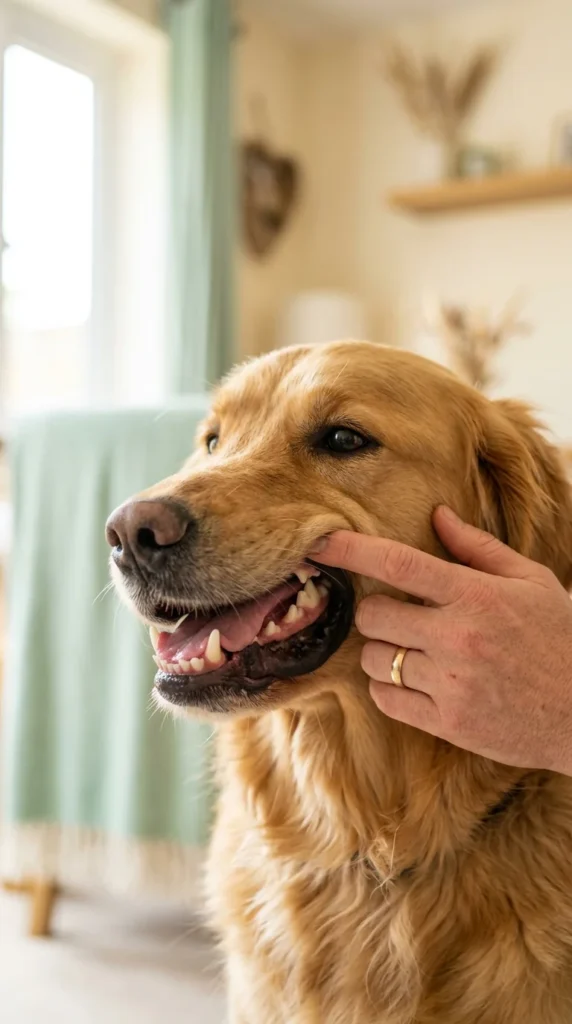
A dog who drops kibble, tilts their head while chewing, or avoids hard food may be protecting a sore mouth. Pawing at the mouth and losing interest in food are signs to report to your vet.
6. Reluctance to Eat or Play with Chew Toys
A dog who suddenly won’t chew a favorite toy or seems hesitant at mealtime may be in pain. Don’t assume it’s pickiness, especially in a dog who normally eats well.
7. Loose, Broken, or Missing Teeth
A cracked tooth or one that wobbles needs veterinary assessment. Fractures can expose sensitive tissue and become infected, even when the dog hides it.
8. Facial Swelling or Discharge
Swelling under an eye or on the cheek, pus, or a bad smell from the mouth can signal an infection. Call your vet promptly.
9. Head Shyness or Pulling Away
If your dog used to enjoy face rubs and now flinches or avoids being touched near the mouth, pain is possible.
10. Changes in Mood or Energy
Chronic pain can make a dog quieter, more irritable, or less playful. These signs are non-specific, so they don’t confirm a dental cause, but they’re worth mentioning at the exam.

Why Dental Disease Matters Beyond the Mouth
Dental disease can cause pain and tooth loss. The AVMA and AAHA also note that periodontal disease is associated with problems affecting other organs, including the kidneys, liver, and heart. Veterinary research continues to examine this relationship, so discuss your dog’s individual risk with your vet.
When to Act: Routine Concern vs. Urgent Care
Schedule a dental exam soon if you notice:
- Bad breath that persists
- Visible tartar or red gums
- Increased drooling
- Mild changes in chewing
Call your vet promptly or the same day if you see:
- Facial swelling or discharge
- A broken or loose tooth
- Bleeding from the mouth
- Refusing food for more than a day
- Obvious pain when your dog tries to eat
If your dog can’t close their mouth, has trouble breathing, or has had mouth trauma, go to an emergency clinic.
What Happens at a Veterinary Dental Exam
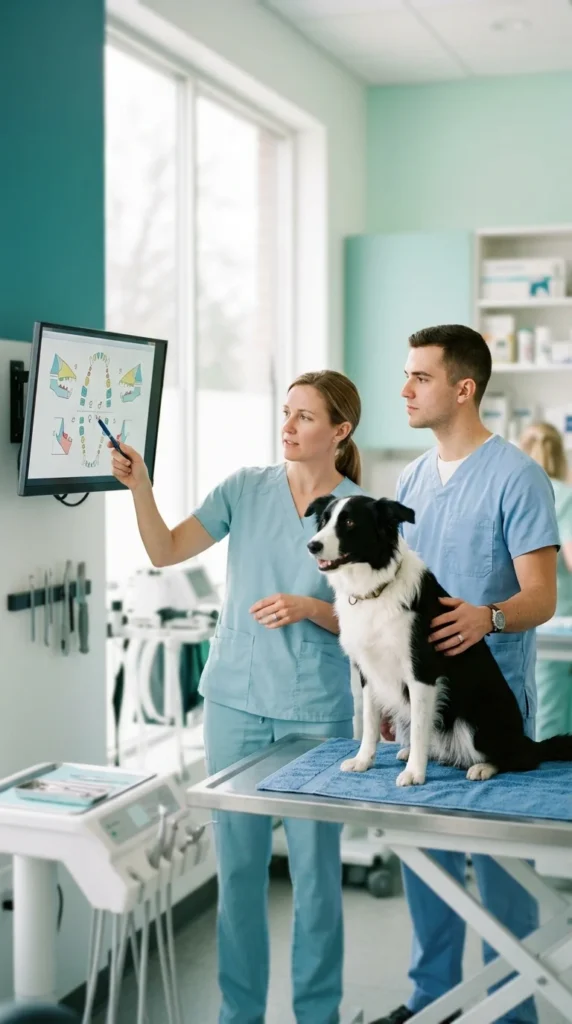
A thorough dental visit typically includes:
- An oral exam to look at teeth, gums, and soft tissues
- Probing around each tooth to check for abnormal pockets
- Dental X-rays when recommended, to see roots and bone
- A professional cleaning under anesthesia, which includes scaling above and below the gumline
- Treatment for problem teeth, which may include extractions
AAHA’s veterinary content specialist has said that without anesthesia, there is no way to fully assess and address a pet’s dental health.
Why Anesthesia-Free Cleanings Aren’t a Substitute
Some groomers and businesses offer cleanings without anesthesia. The AVMA cautions that these procedures can’t clean beneath the gumline and can’t identify problems under it, and that the scraping and restraint can be stressful for a dog.
A cleaner-looking tooth surface can create a false sense of security while disease continues below. Ask your vet about anesthesia safety for your dog, including senior dogs. They can screen for risks beforehand.

How Often Do Dogs Need Dental Checkups?
AVMA guidance cited in news coverage recommends a veterinary dental cleaning annually starting around age two, or sooner if problems appear. AAHA materials describe a similar range. Your vet may suggest a different schedule, particularly for small breeds or dogs with existing disease.
How to Protect Your Dog’s Teeth at Home
Brush Regularly
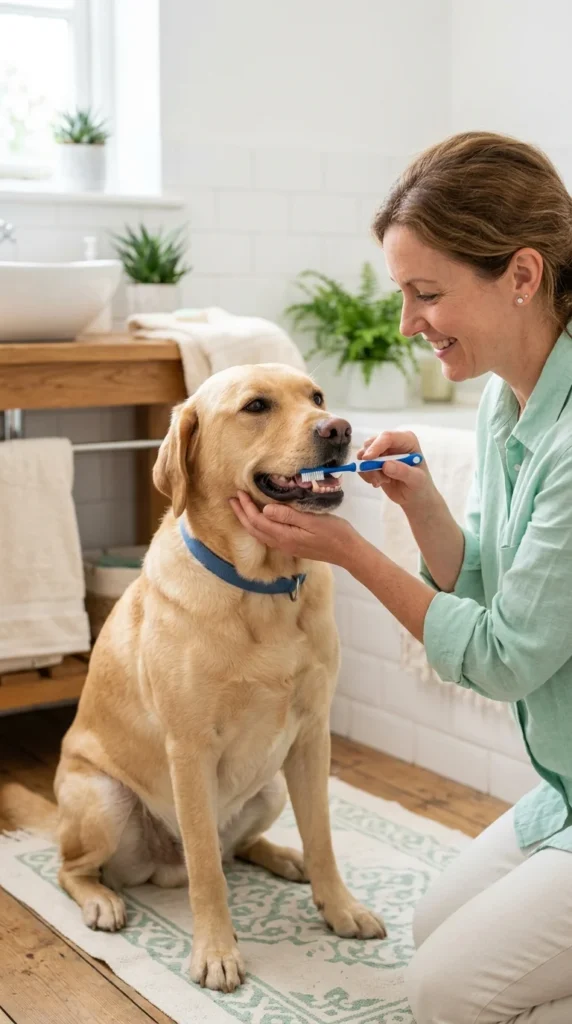
Daily brushing is the gold standard. Use a dog-specific toothpaste and a soft brush made for dogs. Human toothpaste isn’t meant to be swallowed and is not appropriate for dogs. Start slowly, with short, positive sessions and plenty of praise.
Choose Dental Products Carefully
Look for products accepted by the Veterinary Oral Health Council (VOHC). Dental chews and diets can help slow plaque, but they won’t cure existing disease. Because hard chews can damage teeth, ask your vet what’s safe for your dog.
Check the Mouth Weekly
Lift your dog’s lips gently and look at the gums and teeth. Note the color, any tartar, and any odor, so you can spot changes early.
Common Mistakes to Avoid
- Waiting for obvious pain. Dogs often hide it.
- Masking bad breath. Breath fresheners don’t treat the cause.
- Giving human pain relievers. Many are dangerous to dogs.
- Skipping vet visits because the teeth look fine. Disease happens below the gumline.
- Using hard bones or antlers without asking. They can fracture teeth in some dogs.
AAHA, “Dog & cat dental disease: Signs, professional cleanings, anesthesia, and home care“: https://www.aaha.org/your-pet
Frequently Asked Questions
Is bad breath normal in dogs?
Mild “doggy” breath is common, but persistent or worsening foul breath is one of the most common signs of dental disease and warrants an exam.
Can dental disease go away on its own?
No. Tartar doesn’t dissolve, and established periodontal disease needs veterinary treatment.
At what age do dogs get dental disease?
It can begin early. The AVMA notes that most pets show signs by about age three, and small breeds are more prone.
Are dental chews enough?
They can help slow plaque but won’t replace brushing or professional care.
Is anesthesia safe for dental cleanings?
Your vet will assess your dog’s health before anesthesia. Discuss any concerns, especially for senior dogs or those with other conditions.
Final Thoughts
Dog dental disease signs can be subtle, but small changes in breath, chewing, and gum color are worth acting on. Brush regularly, check your dog’s mouth, and keep up with veterinary dental exams.
Your next step is simple: lift your dog’s lips this week, note what you see, and ask your vet to include a dental evaluation at the next visit.
This article is for general education and is not a substitute for veterinary advice. If you’re concerned about your dog’s mouth, contact your veterinarian.