By Emma Vensley · Editorially checked November 10, 2026 · Educational information; not veterinary diagnosis.
Affiliate disclosure: This article may contain affiliate links. If you purchase through them, Dogs Daily Care may earn a commission at no additional cost to you.
Table of Contents
Quick answer
Poison emergency (U.S.): Contact your veterinarian promptly, ASPCA Animal Poison Control at (888) 426-4435, or Pet Poison Helpline at (855) 764-7661 (consultation fees may apply). Do not induce vomiting or give home antidotes unless a veterinary professional tells you to.
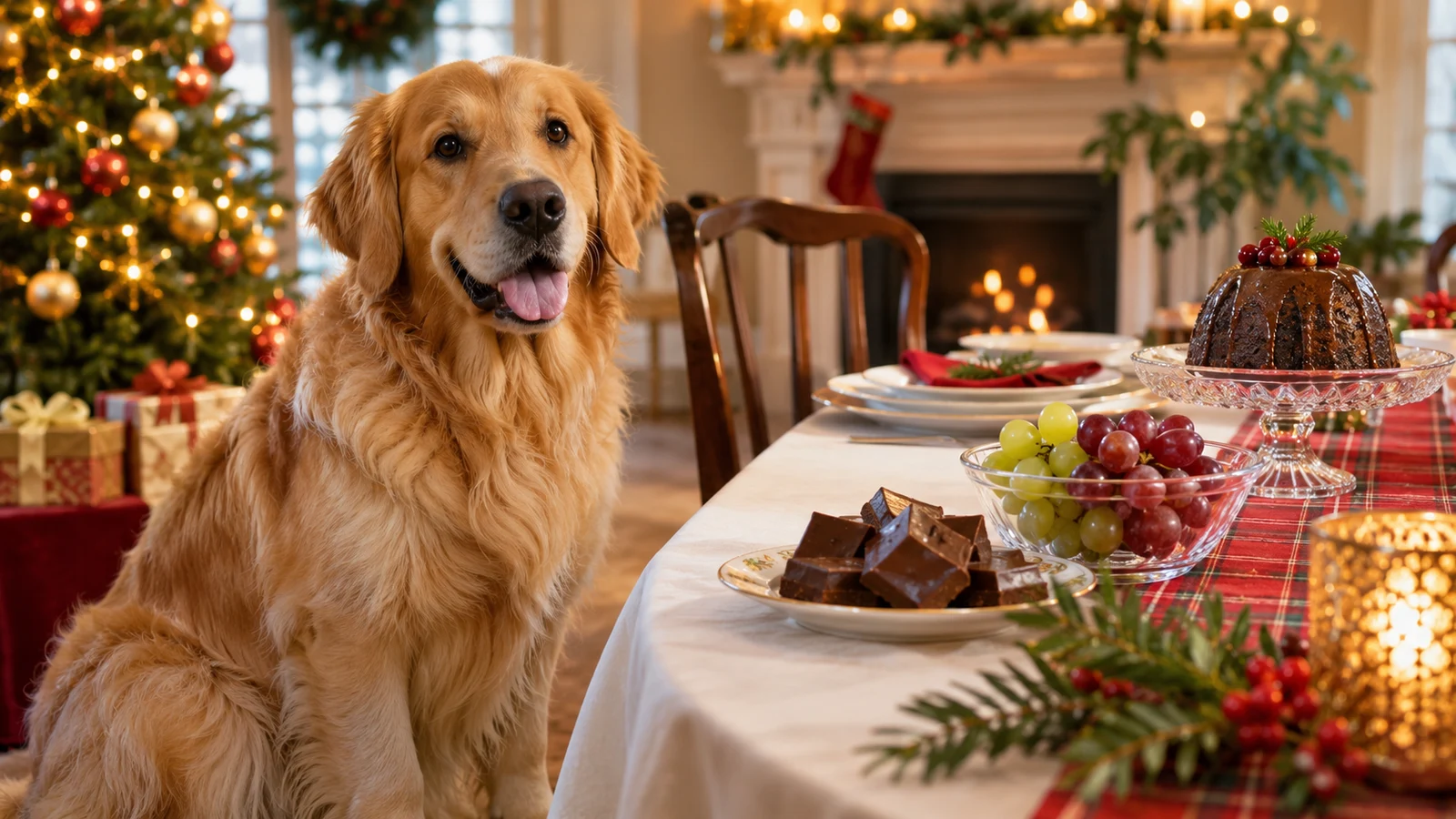
Chocolate, grapes and raisins, foods containing xylitol, onions, garlic, alcohol and raw yeast dough can be dangerous for dogs. Cooked bones and rich fatty leftovers can also cause serious problems. If your dog has swallowed a potentially toxic food, contact your veterinarian or an animal poison service promptly rather than waiting for symptoms.
Why Christmas dinner creates extra risks
Holiday meals bring unfamiliar smells, visitors, overflowing trash and unattended plates. A dog may steal a dessert while guests are distracted or find scraps in a garbage bag. Food can also contain hidden ingredients: onion powder in gravy, raisins in fruitcake, or xylitol in sugar-free sweets. Check ingredient lists instead of judging food by its appearance.
Chocolate, cocoa and holiday desserts
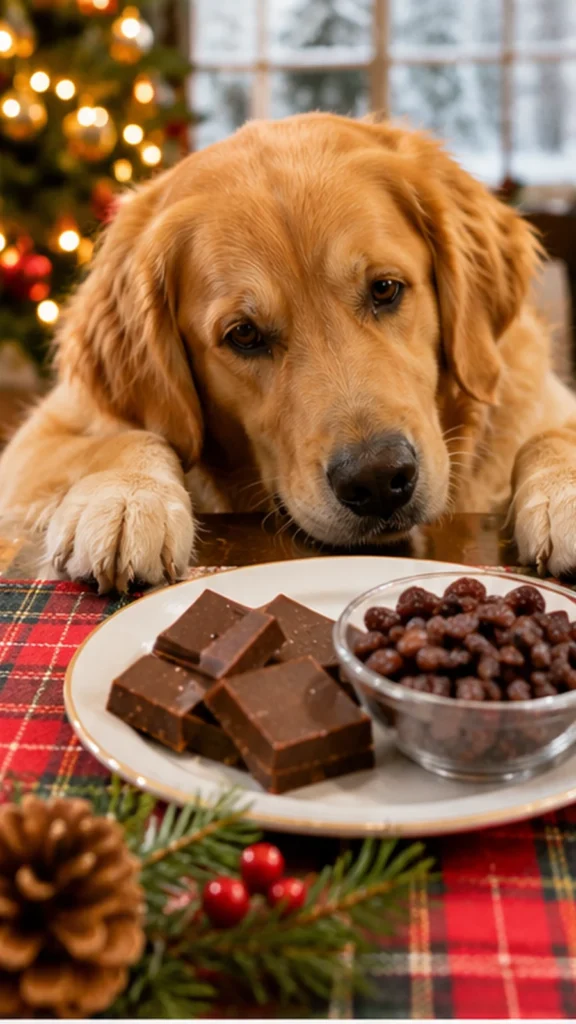
Chocolate contains theobromine and caffeine, which dogs process differently from people. Dark chocolate and baking chocolate are especially concerning because they are concentrated. The risk depends on the type and amount eaten and the dog’s weight. Do not estimate a safe amount from internet anecdotes. Save the packaging and call a veterinarian with the details. Brownies, chocolate-covered raisins and mixed desserts can contain more than one hazardous ingredient.
Grapes, raisins and Christmas fruitcake
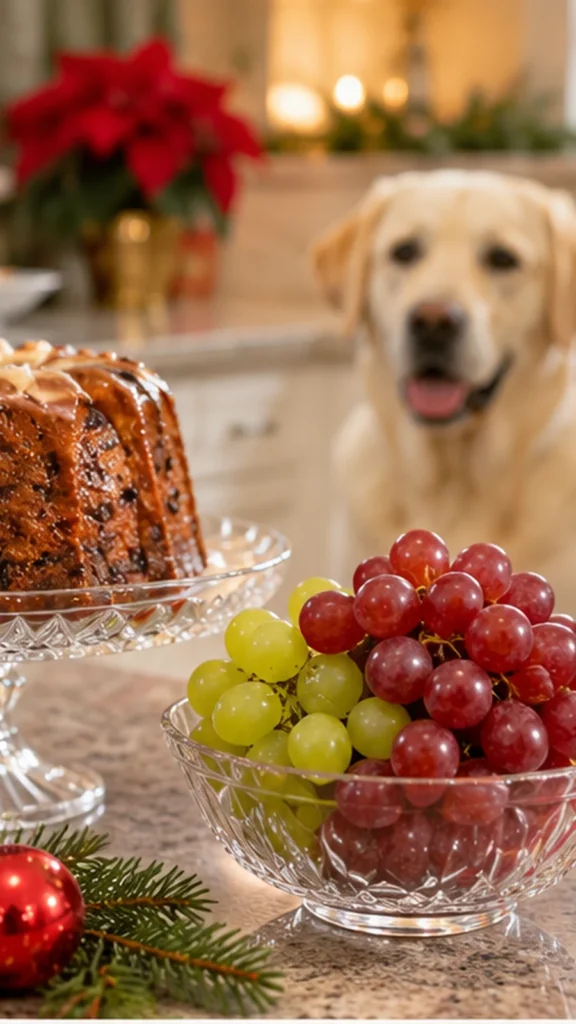
Grapes, raisins, currants and sultanas can cause acute kidney injury in dogs. Christmas cake, mince pies, fruit bread and pudding may contain dried grapes even when the pieces are hard to see. The dangerous amount is unpredictable, so any suspected ingestion deserves urgent veterinary guidance. Do not wait for vomiting, changes in thirst or reduced urination.
Sugar-free sweets and xylitol
Xylitol, sometimes listed as birch sugar, can cause a dangerous drop in blood sugar and may injure the liver. It appears in some sugar-free gum, candy, baked goods and certain nut butters. Check the complete ingredient list. If xylitol is suspected, treat it as an emergency and call your veterinarian immediately. Do not give home remedies or attempt to induce vomiting unless a veterinary professional directs you.
Onions, garlic and savory dishes
Onions, garlic, chives and leeks can damage a dog’s red blood cells. These ingredients can be present in stuffing, seasoned turkey, gravy and casseroles, including in powdered or cooked form. Signs of anemia may be delayed. A plain-looking spoonful of stuffing may not be plain at all, so keep seasoned dishes away from pets.
Alcohol, raw dough and macadamia nuts
Alcoholic drinks and desserts containing alcohol are unsafe for dogs. Unbaked yeast dough can expand in the stomach and produce alcohol as it ferments, creating an urgent medical situation. Macadamia nuts can cause weakness, vomiting and other signs. Keep rising dough in a secure location, clear drinks from low tables and ask guests not to offer mystery treats.
Cooked bones, fatty scraps and salty foods
Cooked poultry bones can splinter or become lodged and may injure the digestive tract. Turkey skin, bacon grease and rich leftovers can trigger vomiting or pancreatitis in susceptible dogs. Very salty foods are also poor choices. These hazards are different from classic poisoning, but they still warrant attention. If a dog is choking, repeatedly retching, painful or unable to keep food down, seek urgent care.
Safer Christmas treats
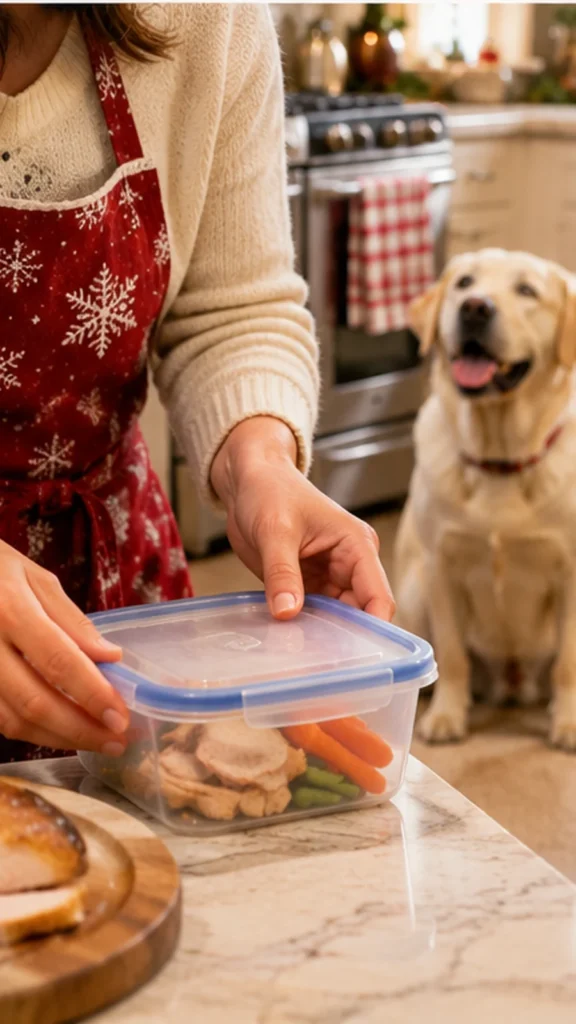
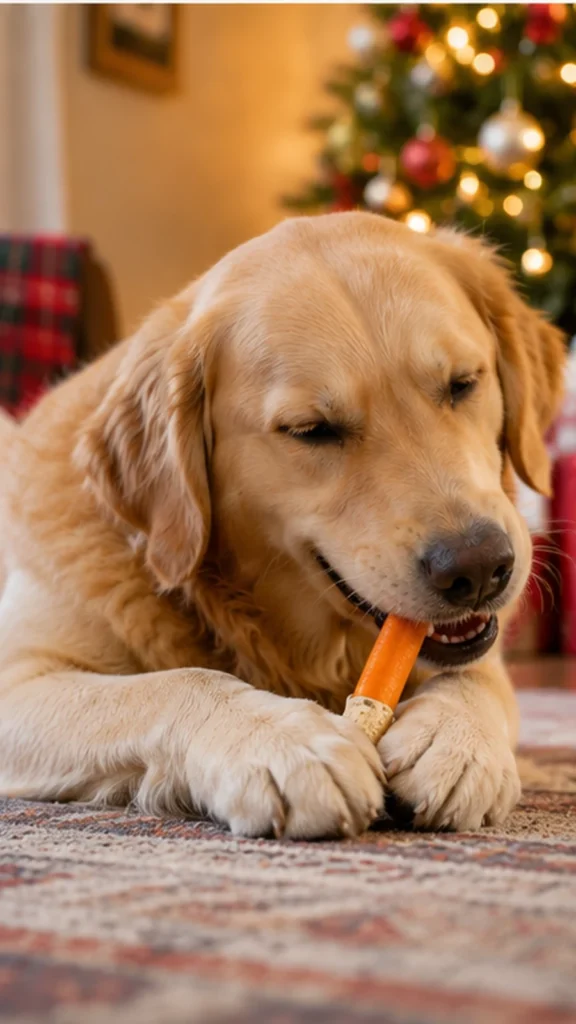
For a dog that tolerates these foods, a small amount of plain, fully cooked, boneless turkey or chicken without skin, seasoning or gravy can be an occasional treat. Plain cooked green beans or carrots may also work. Introduce unfamiliar foods cautiously and avoid extra treats if your dog is on a veterinary diet or has a medical condition. Keep the dog’s usual balanced food as the main meal.
A five-minute holiday emergency plan
Before guests arrive, save your veterinarian’s number and the nearest emergency clinic address. In the United States, ASPCA Animal Poison Control is 888-426-4435 and Pet Poison Helpline is 855-764-7661; consultation fees may apply. If ingestion occurs, remove access to the food, note the time, estimate the amount, retain the package and call for professional advice. Do not induce vomiting unless instructed.
Common mistakes to avoid
Do not assume a food is safe because a dog ate it before. Do not wait for symptoms after suspected grape, raisin or xylitol ingestion. Do not give human medicines or salt to induce vomiting. Do not let visitors feed the dog from their plates. Put leftovers and trash in secure containers immediately.
Holiday buffet rules that prevent accidents
Before guests arrive, designate one adult to manage the dog’s meals and treats. Ask visitors not to offer food, even if your dog begs politely. Put serving platters toward the center of the table and keep dessert trays off coffee tables. When guests are eating, a separate quiet room or a gated area can be safer than expecting a curious dog to ignore dropped food.
Use a covered trash can and take it out promptly. Turkey bones, foil, skewers, string from roasts and plastic wrappers can create choking or obstruction hazards. Check under the dining table after the meal, especially when children have been eating. Never assume a food is safe because it contains only a small amount of a risky ingredient; recipes and dog sensitivities vary.
How to explain the risks to holiday guests
A simple message works: “Please give the dog only the treats in this container.” Keep familiar, appropriately sized dog treats in a clearly labeled jar. For a dog on a prescription diet, ask the veterinarian before offering even plain turkey or vegetables. Do not let visitors hand over cooked bones, gravy, stuffing, fruitcake or sugar-free candy. If a guest has already fed something unknown, ask exactly what and how much, then save the package or recipe for your veterinarian.
Frequently asked questions
Can dogs eat Christmas turkey? A little plain, cooked, boneless turkey may be suitable for many dogs, but skip skin, gravy and seasoning
Is white chocolate safe? It is much lower in theobromine than dark chocolate but can still cause stomach upset, especially due to fat and sugar; avoid offering it
What if my dog ate one raisin? Contact a veterinarian or poison center immediately because sensitivity varies
Can dogs eat Christmas pudding? No; dried grapes and other ingredients make it unsafe
Should I make my dog vomit? Not without explicit veterinary direction.
Final thoughts
The safest Christmas tradition is a predictable feeding routine, a secure trash can and a designated dog-safe treat. The best response to a possible poisoning is an early professional call, not a home experiment.
More dog-care resources: Explore Dogs Daily Care for additional practical guides.