
Affiliate disclosure: This article contains affiliate links. We may earn a commission if you purchase through them, at no extra cost to you. Product suggestions are for prevention, not treatment.
Quick answer: Holly, mistletoe, amaryllis, yew, and some other holiday greenery can harm dogs if chewed or swallowed. Poinsettias usually cause mild mouth or stomach irritation rather than severe poisoning, but should still be kept away. Christmas cactus is generally considered non-toxic. If your dog eats an unidentified plant, call your veterinarian or a pet poison service promptly rather than waiting for symptoms.
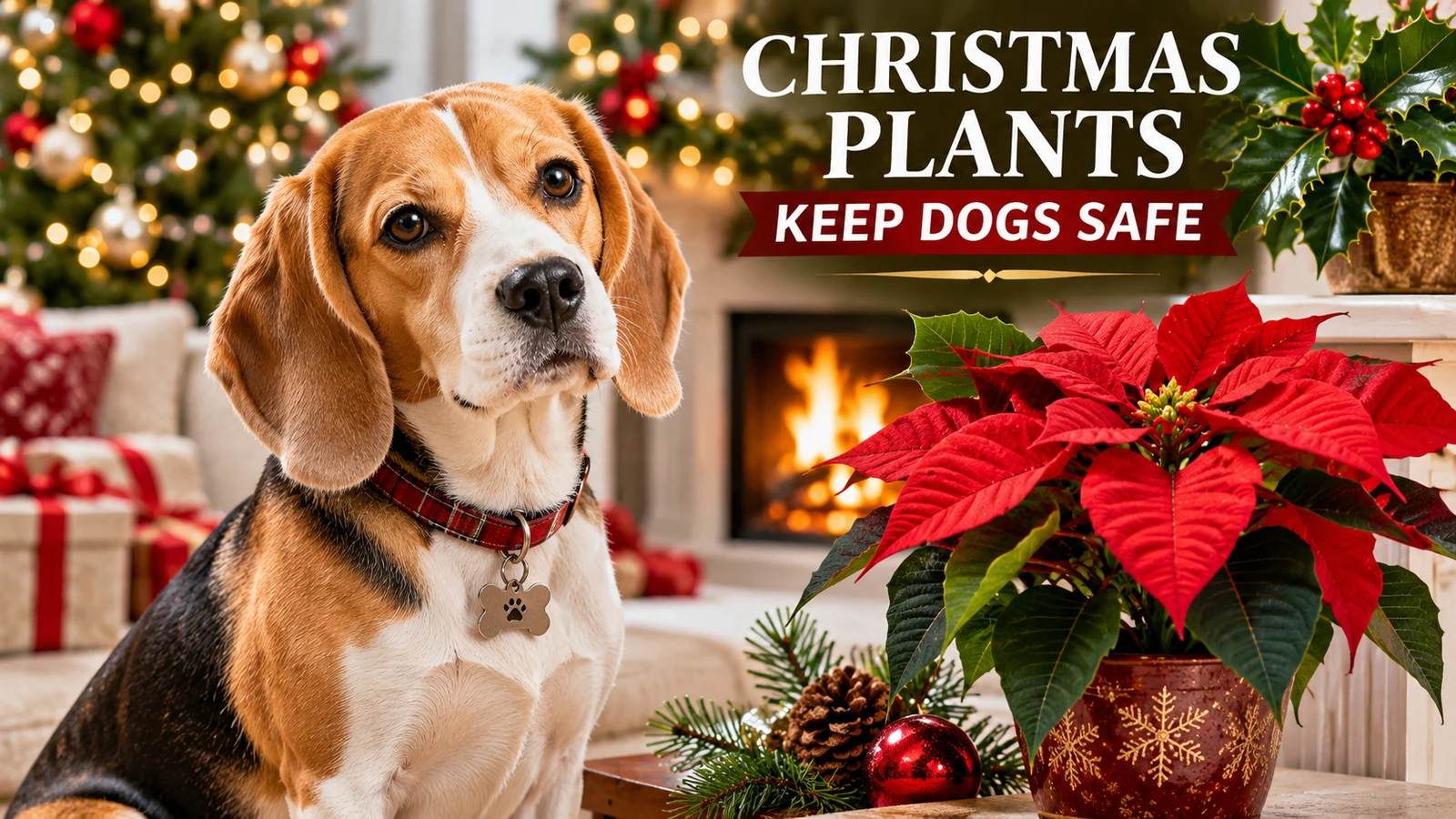
Christmas decorations make a home feel welcoming, but a curious dog may see a festive arrangement as a new chew toy. Leaves fall, berries roll beneath furniture, and a holiday bouquet can contain several species with very different risks. This guide explains which Christmas plants deserve the most caution, what symptoms to watch for, and how to decorate without creating avoidable emergencies.
Table of Contents
Which Christmas plants are dangerous for dogs?
The word “poisonous” covers a wide range of effects. Some plants irritate the mouth or stomach; others can affect the heart or nervous system. Risk also depends on the exact species, plant part, amount eaten, and your dog’s size. The following table is a triage guide, not a safe-dose chart.
| Holiday plant | Possible concern | What to do |
|---|---|---|
| Holly | Drooling, vomiting, diarrhea; sharp leaves can injure the mouth | Contact a veterinarian if swallowed |
| Mistletoe | Stomach upset; larger exposures to some species can affect blood pressure and coordination | Call promptly, especially for unknown species or amount |
| Amaryllis | Vomiting and drooling; bulbs can cause more serious signs | Seek immediate professional advice after ingestion |
| Yew | Potentially severe heart-related toxicity | Emergency veterinary advice immediately |
| Poinsettia | Usually mild mouth and gastrointestinal irritation | Call if eaten, especially if symptoms persist |
| Christmas cactus | Generally non-toxic; overeating may still upset the stomach | Monitor and ask your vet if symptoms develop |
Do not assume a plant is safe based only on its common name. If possible, photograph its leaves, flowers, berries, and label for your veterinarian.
Poinsettias: less toxic than their reputation suggests
The bright red bracts of poinsettias make them a holiday favorite. Their milky sap can irritate a dog’s mouth or skin, and chewing may lead to drooling, vomiting, or diarrhea. Contrary to a common holiday myth, poinsettias are not generally considered deadly to dogs. That does not make them appropriate chew toys: the potting material, decorative wrapping, and fallen pieces can present additional problems.
Put the plant on a stable surface that your dog cannot reach, and collect dropped leaves. A dog that repeatedly chews houseplants may benefit from an enrichment routine and a supervised, plant-free room.

Holly: berries and prickly leaves both matter
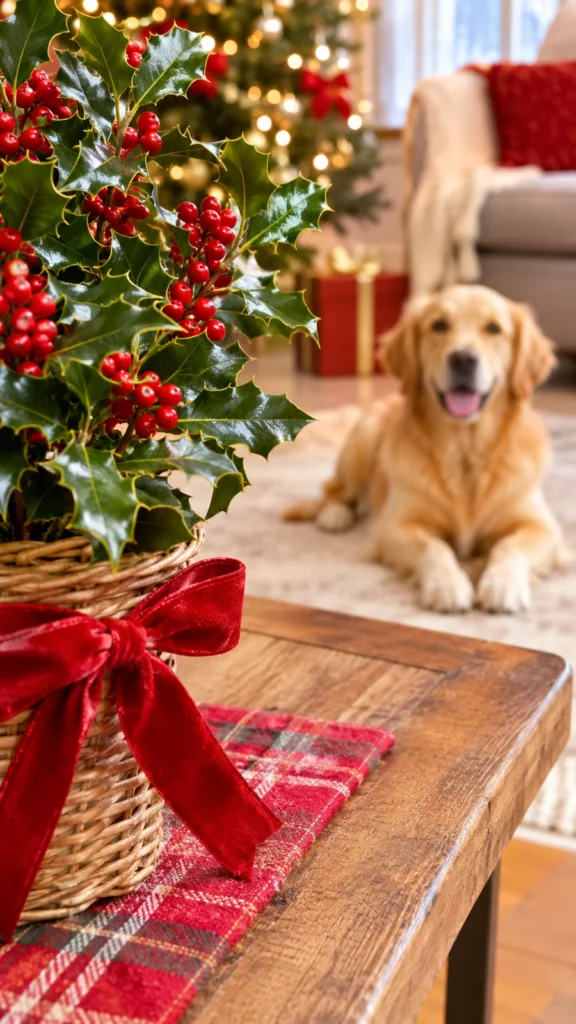
Holly arrangements can look harmless on a mantel or dining table. Yet the plant contains irritating compounds, and its stiff leaves can scratch the lips and mouth. Dogs that swallow holly may drool, smack their lips, vomit, or develop diarrhea. Berries can fall unnoticed and attract curious puppies.
Choose berry-free decorations in dog-accessible rooms, remove fallen berries promptly, and do not place holly wreaths where a dog can jump or pull them down. If you suspect ingestion, contact your veterinarian with a description of the plant and approximate amount.
Mistletoe: the species and amount change the risk
Mistletoe is often hung high above doorways, but fallen stems or berries can still reach a dog. American mistletoe commonly causes digestive upset. Large exposures and certain other mistletoe species can produce more serious effects, including low blood pressure, weakness, or trouble walking. Do not use a simple “one berry is safe” rule: species and exposure details matter.
Secure mistletoe well above jumping height, avoid hanging it over a dog’s resting area, and consider a non-plant decoration instead. Even artificial berries should be secured because swallowing them can cause choking or intestinal obstruction.

Amaryllis, yew, ivy, and holiday bouquets
Amaryllis bulbs are especially concerning
Amaryllis flowers and leaves can cause gastrointestinal signs, but the bulb contains higher concentrations of toxic compounds. A dog that digs into a gift pot or chews a bulb needs prompt veterinary guidance. More serious exposures may involve weakness, tremors, or changes in blood pressure.
Yew should be treated as an emergency
Yew greenery sometimes appears in outdoor holiday arrangements. It can contain toxins capable of causing dangerous heart effects. If you think your dog has eaten yew, contact an emergency veterinarian or animal poison service immediately. Do not wait for visible symptoms.
Ivy and mixed bouquets need identification
English ivy can irritate the mouth and digestive system. Mixed bouquets may include species that are difficult to identify by sight. The famous severe kidney-failure risk from true lilies is primarily a cat concern; dogs may still develop gastrointestinal problems from some lilies, and other lily-like plants have different toxicities. Households with both dogs and cats should take extra care with bouquets.
Are Christmas trees and Christmas cactus safe?
A Christmas cactus is generally classified as non-toxic to dogs, although eating a large amount of any unfamiliar plant can cause vomiting or diarrhea. Christmas trees are different: pine or fir needles can irritate the digestive tract, sharp needles can injure, and a fallen tree can cause physical harm. Tree-stand water may contain bacteria or added chemicals. Keep the stand covered, anchor the tree, and pick up shed needles.
For a separate seasonal hazard, read our Christmas foods dogs can’t eat guide. Holiday guests may bring chocolate, raisins, or other foods that require different emergency decisions than plant exposure.
What to do if your dog eats a Christmas plant
- Move your dog away from the plant. Prevent another bite and check whether your dog is breathing normally.
- Call a veterinarian or animal poison service immediately. Do not wait for symptoms if the plant is unidentified, yew is suspected, or a bulb has been eaten.
- Record what happened. Note the time, suspected quantity, your dog’s weight, and any symptoms. Take clear photographs of the plant and packaging.
- Follow professional instructions. Do not give home remedies, medication, activated charcoal, or food to “neutralize” the plant unless specifically directed.
- Do not induce vomiting unless a veterinarian or animal poison specialist tells you to. Some exposures require a different approach.
U.S. poison contacts: ASPCA Animal Poison Control: 888-426-4435; Pet Poison Helpline: 855-764-7661. Both offer 24/7 assistance; fees may apply. Outside the U.S., contact your local emergency veterinarian or regional animal poison service.
Go to emergency veterinary care immediately for collapse, seizures, trouble breathing, severe weakness, or suspected yew exposure. Calling ahead can help the clinic prepare.
For a broader plan for guests, doors, and household hazards, see our holiday gathering safety checklist. The same room-management principles apply at Christmas.
How to decorate a dog-friendly home for Christmas
The safest decoration is one your dog cannot access, including when you are distracted by guests or cooking. Start by inspecting the house at your dog’s eye level. Check coffee tables, windowsills, gift baskets, hanging greenery, and any places where fallen berries can collect.
- Use sturdy, high shelves for plants, but keep them away from edges and climbing furniture.
- Place a properly fitted pet gate at the entrance to a decorated room when supervision is limited.
- Skip loose berry garlands, easily broken pots, and artificial decorations with detachable small parts.
- Ask visitors not to bring unlabelled bouquets or leave gift plants on the floor.
- Keep your emergency veterinarian’s number and the plant’s name in your phone.
Helpful holiday safety supplies
Affiliate disclosure reminder: The links below are Amazon search links, not endorsements of a tested or verified individual product. Compare dimensions, mounting instructions, materials, and current listing details before purchasing.
1. Indoor dog safety gate
A pet gate can block access to a room with low-hanging decorations when you cannot supervise closely. Choose a height suitable for your dog and follow the manufacturer’s installation instructions; some dogs can jump or push through unsuitable gates. Browse indoor dog safety gates on Amazon.
2. Secure wall-mounted plant shelf
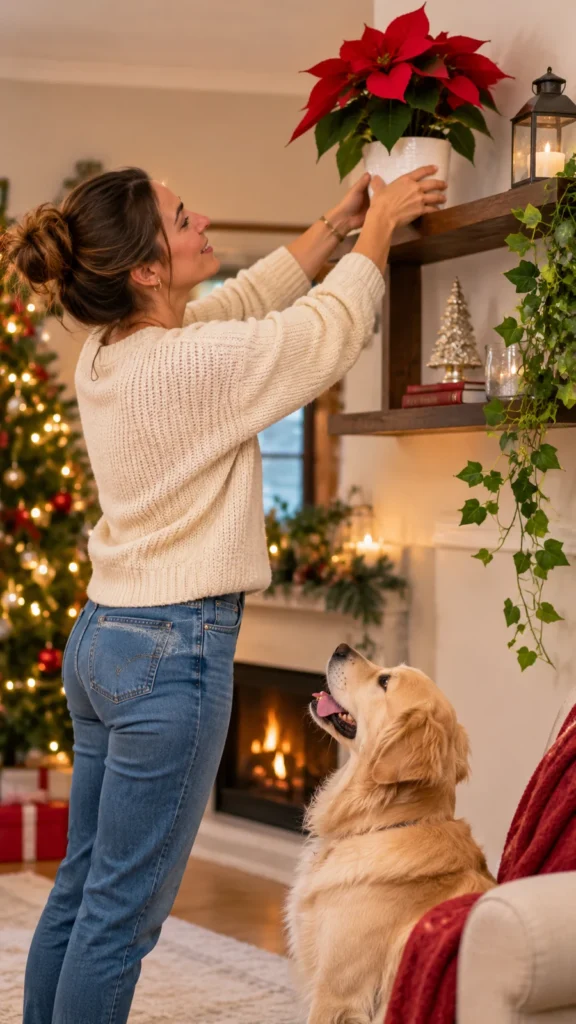
A firmly installed shelf can keep a small plant above a dog’s reach. Make sure the mounting supports the pot’s weight, the shelf is not accessible from nearby furniture, and no leaves or berries can fall into the dog’s area. Browse wall-mounted plant shelves on Amazon.
3. Shatter-resistant artificial holiday greenery
Artificial greenery avoids some plant toxins but is not edible or chew-safe. Select decorations without loose berries, wire ends, or detachable ornaments and keep them away from dogs that chew objects. Browse artificial holiday greenery on Amazon.
Printable-style holiday plant safety checklist
- Identify every real plant and bouquet before displaying it.
- Remove yew and other high-risk plants from dog-accessible areas.
- Secure mistletoe and holly so stems and berries cannot fall within reach.
- Anchor the Christmas tree and cover tree-stand water.
- Keep amaryllis bulbs, plant food, and potting materials inaccessible.
- Give guests a simple “please do not feed or offer plants to the dog” reminder.
- Save the emergency vet and poison-control numbers before the holiday.
For more everyday prevention ideas, explore the Dog Care & Health guide collection. These links lead to existing Dogs Daily Care resources, not external competitors.
Frequently asked questions
Are poinsettias deadly to dogs?
They are generally much less toxic than the common myth suggests. Their sap may irritate the mouth and stomach, causing drooling, vomiting, or diarrhea. Call your veterinarian if your dog has eaten one, especially if symptoms continue.
Can a dog eat one holly berry safely?
There is no useful universal “safe berry” rule. The exact plant, your dog’s size, and the amount eaten matter. Remove access and call your veterinarian for advice.
Is mistletoe more dangerous than poinsettia?
Potentially, yes. Poinsettia usually causes mild irritation, while some mistletoe exposures can affect blood pressure and coordination. Identify the plant and contact a professional after ingestion.
Is Christmas cactus toxic to dogs?
Christmas cactus is generally considered non-toxic. Eating it can still upset the stomach, and a dog that becomes unwell should be assessed by a veterinarian.
Should I make my dog vomit after eating a plant?
No—not without specific instructions from a veterinarian or animal poison specialist. Incorrectly inducing vomiting can create additional risks.
Final thoughts
A dog-safe Christmas does not require giving up festive décor. It means choosing arrangements carefully, knowing which plants pose more serious risks, and planning for curious noses and unexpected visitors. Keep high-risk greenery out of reach, identify unfamiliar plants, and seek professional advice quickly after a suspected ingestion. A few minutes of preparation can make the season more relaxing for everyone.
Educational information only. This article is not a substitute for veterinary diagnosis or treatment. Editorially checked November 11, 2026; not veterinarian-reviewed.