
Quick answer: Clear packed snow from paw fur gently without pulling, protect tender skin, and reduce buildup on future winter walks. Start with the simplest safe step and adapt to your dog’s size, health, experience and comfort. This guide explains what to watch, what to do next and when professional help matters.
Dog owners often look for one fast fix, but the sensible plan begins by understanding why the problem happens. Small adjustments in preparation, environment and expectations can make the experience safer and more comfortable. The goal is progress without forcing a frightened, uncomfortable or unwell dog to continue.
This guide is written for everyday U.S. dog owners. It is educational rather than a substitute for veterinary care. For more background, explore Dogs Daily Care and the trusted resources linked at the end.
Table of Contents
What to know first
Clear packed snow from paw fur gently without pulling, protect tender skin, and reduce buildup on future winter walks. Keep a simple record of what triggers the difficulty and which gentle changes help. If signs are sudden, severe or painful, contact your veterinarian rather than assuming a training or home-care issue.
1. Why ice clumps build up
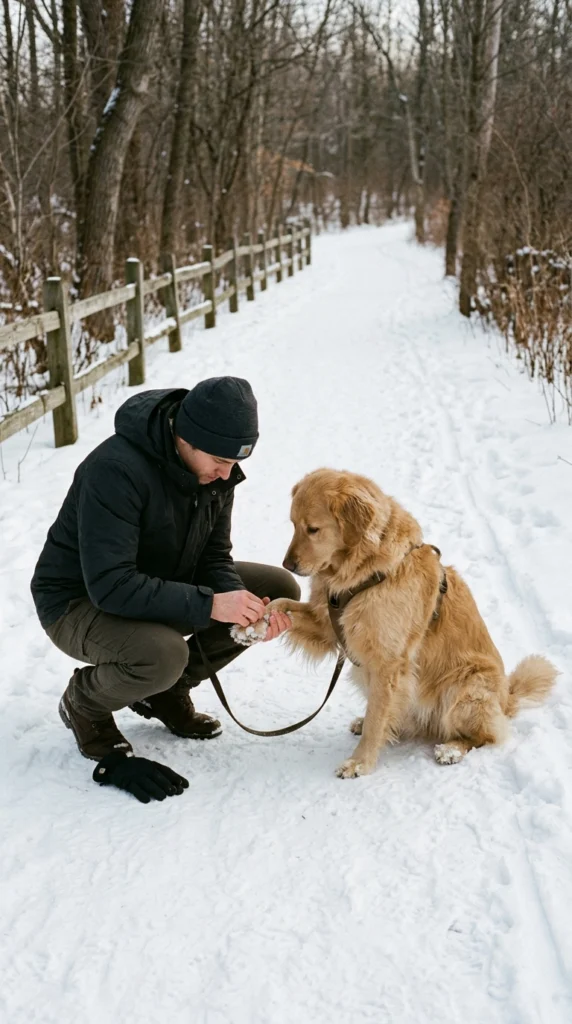
Wet snow can cling to long fur around and between paw pads. Repeated steps compress it into dense clumps that pull on the hair and make walking uncomfortable. Dogs may hop, stop suddenly or lick their feet. Check the paws rather than assuming the dog is being difficult.
Long-coated dogs and dogs walking through wet, sticky snow can be affected even on short walks. A body coat does not protect the hair between the toes.
2. Move into a warm, calm place
If your dog stops because of packed snow, head to a sheltered spot or go indoors. Keep the dog on a secure leash and avoid rough handling of sore feet. Do not keep walking a long distance while clumps are pulling at the skin.
Look for signs of injury first: bleeding, deep redness, swelling or limping that does not resolve when the snow comes off. Those signs call for veterinary advice.
3. Use lukewarm water rather than force
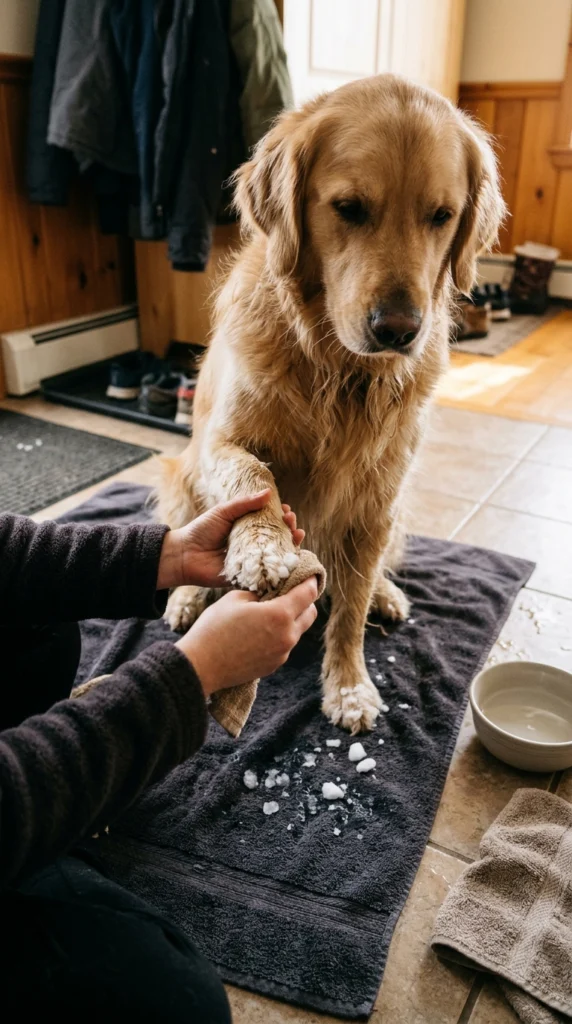
For stubborn icy clumps, gently rinse or soak the paw with lukewarm—not hot—water. Support the leg without twisting the joints. Let the ice soften, then slide the loose snow away with your fingers.
Never pull hard at clumps, break them with sharp tools, or use a hair dryer on high heat. These approaches can damage skin or burn a cold paw.
4. Check between each toe
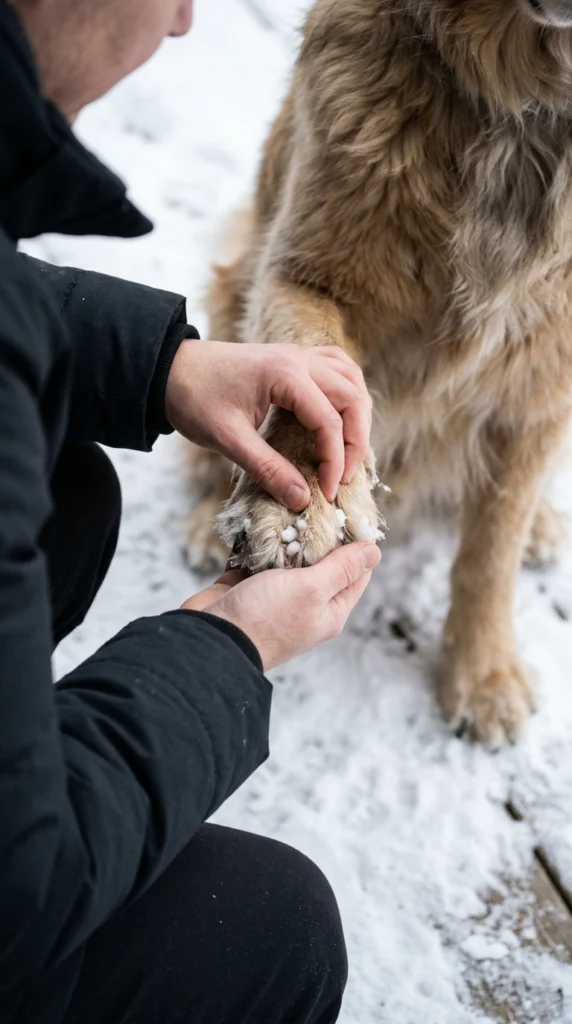
Separate the toes gently once the snow has softened and look for trapped grit, de-icing salt, redness or a small cut. Use a soft damp cloth to remove any remaining residue. Do not use scissors between moving toes.
If anything seems embedded or the dog reacts sharply to touch, stop and ask a veterinarian or groomer for help.
5. Dry thoroughly after cleaning
Pat the top and underside of the paw with an absorbent towel. Pay attention to the fur between the toes so dampness does not linger. Keep the dog in a warm room while the paws dry.
Avoid prolonged use of wet boots or damp socks indoors. Persistent moisture can irritate sensitive skin.
6. Prevent buildup with safe grooming
Keeping paw fur tidy can reduce snow accumulation. Ask a qualified groomer about trimming excess hair level with the pads without nicking skin. Long nails may also alter paw contact with the ground; keep nails at a comfortable length.
Do not shave deep between the pads at home if your dog squirms or you cannot clearly see the skin. Safety matters more than a perfectly neat foot.
7. Consider appropriate boots when tolerated
Well-fitted boots can create a barrier against snow and some de-icers, but only if your dog accepts them and the fit stays comfortable. Check the brand’s measurement instructions, start with indoor introductions and inspect for rubbing.
A boot is not suitable if it slips off, pinches the ankle or traps water. Always carry a backup plan for shorter, cleared routes.
8. Choose a safer walking route
On heavy snow days, favor shoveled paths and short bathroom trips. Avoid frozen ponds and treated roads where possible. Keep track of how long your dog tolerates the conditions rather than using a fixed outdoor time for every dog.
Lifting paws, shivering, slow movement or trying to turn home are signals to shorten the outing. Dogs differ in size, health and cold tolerance.
9. Know when a vet should assess the paw
A paw that remains swollen, bleeding, discolored or painful after warming needs veterinary attention. Suspected frostbite or hypothermia is urgent and should not be treated with home heat or vigorous rubbing.
Take a photo of the area and note the exposure time for the clinic. Never apply human pain medication without veterinary instructions.
Common mistakes to avoid
- Continuing an outing when the dog is uncomfortable or injured.
- Using hot water, sharp tools or harsh products on tender tissue.
- Skipping careful drying and follow-up checks.
- Treating persistent pain or unusual symptoms as ordinary winter discomfort.
Helpful resources and optional supplies
For a broader selection of owner-approved gear, visit our Recommended Dog Products page. Readers who prefer detailed learning can browse our Dog Books library. Explore the Dog Care Tools hub for the live breed-matching and age resources. These links are optional and do not replace the steps above.
Winter care is not one-size-fits-all. See senior dog care advice for age-related adjustments, particularly when movement or comfort has changed.
No product-specific Amazon affiliate recommendations are included in this guide because a suitable exact product listing was not sufficiently verified for the topic. The related product and book resource pages above remain available.
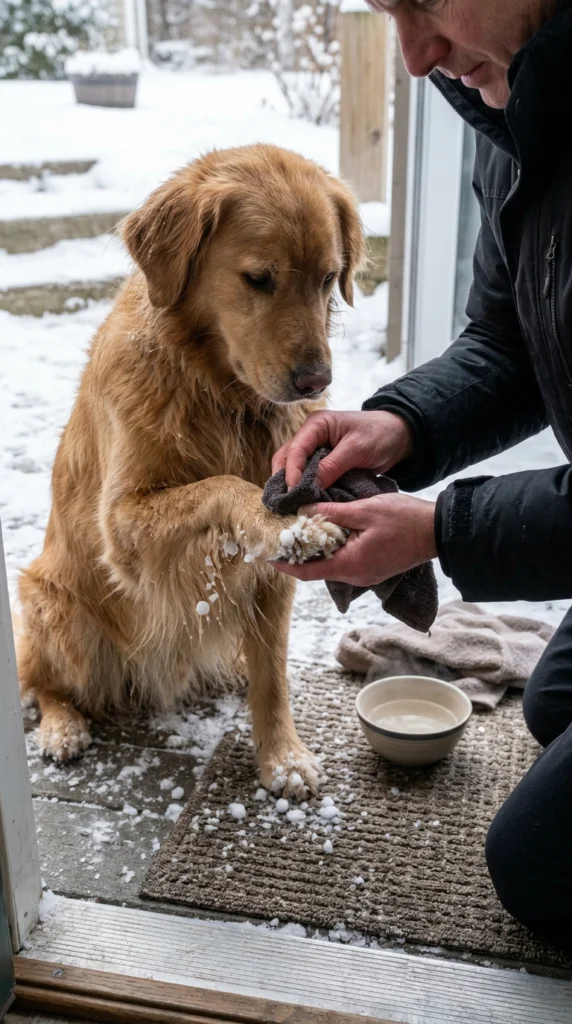
A door-side winter paw station
This practical reference turns the advice above into manageable actions:
- Lukewarm water: Keep a small bowl ready for gently softening packed snow rather than pulling on fur.
- Absorbent towels: Use one for melting and another dry towel to finish between toes.
- Nonslip floor mat: Provide firm footing so the dog can stand without struggling while you inspect its feet.
- Good lighting: Look for cuts, swollen skin or debris hidden in the fur.
- Leash and treats: Reward brief cooperative handling, but never force a painful paw into position.
- Veterinary contact: Keep the clinic number accessible if you find bleeding, persistent pain or discoloration.
Use the same calm routine after each snowy trip. Consistency helps you notice a small change early, before a painful ice clump or skin injury becomes harder to manage.
Frequently asked questions
Can I use scissors to cut ice balls out?
No. Scissors near wet, wriggling toes can injure skin. Gently soften clumps with lukewarm water instead.
Can a dog get frostbite on its toes?
Yes. Cold injury can affect paws; discolored, painful or unusually cold tissue requires veterinary evaluation.
How do I prevent ice balls on long paw hair?
Careful grooming of excess paw fur, shorter cleared routes and suitable boots can reduce buildup.
Are dog boots always necessary?
Not for every dog. They are one option if correctly fitted and comfortably tolerated.
Final thoughts
Clear packed snow from paw fur gently without pulling, protect tender skin, and reduce buildup on future winter walks. Keep the routine kind, predictable, and appropriate for your dog. A few careful, comfortable steps are usually more useful than a dramatic one-day transformation. If a problem continues or feels medically concerning, your veterinarian or a credentialed reward-based professional can provide individualized help.