
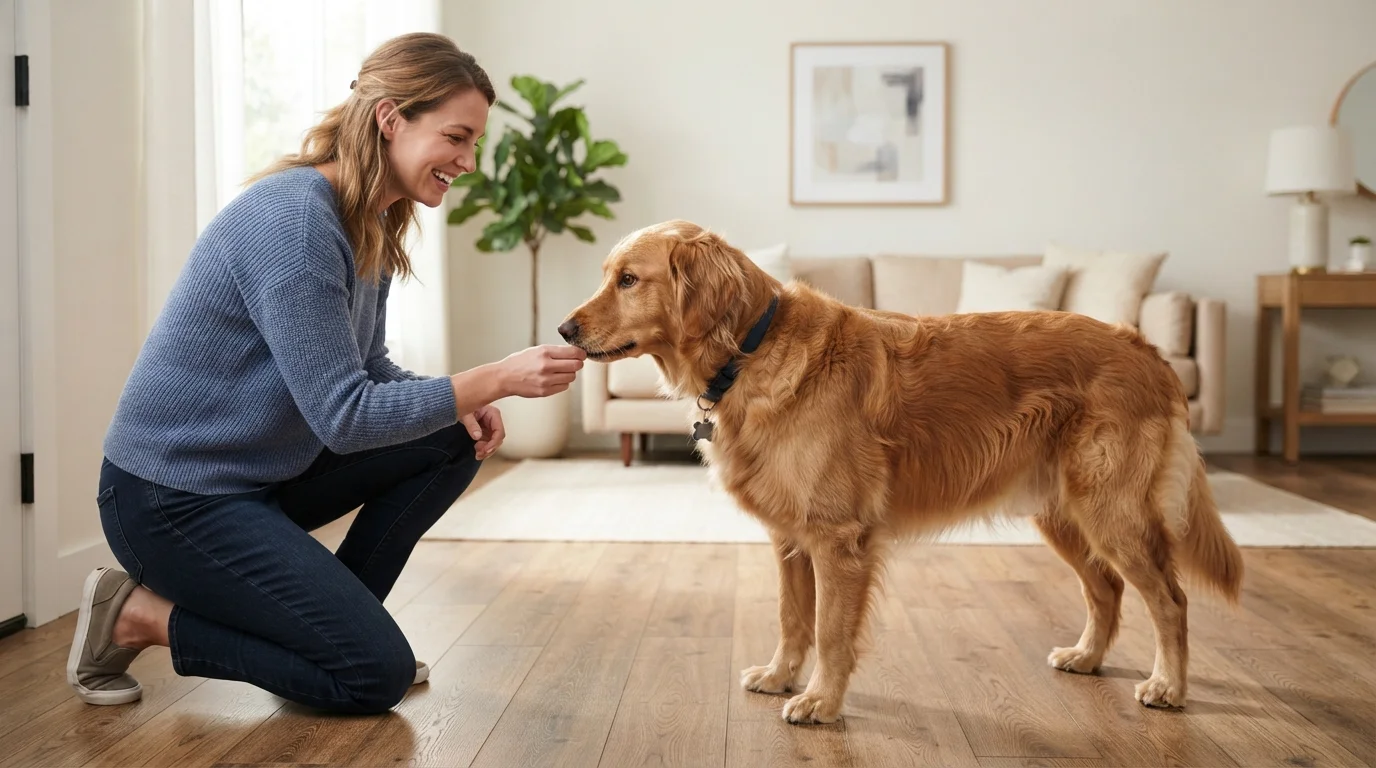
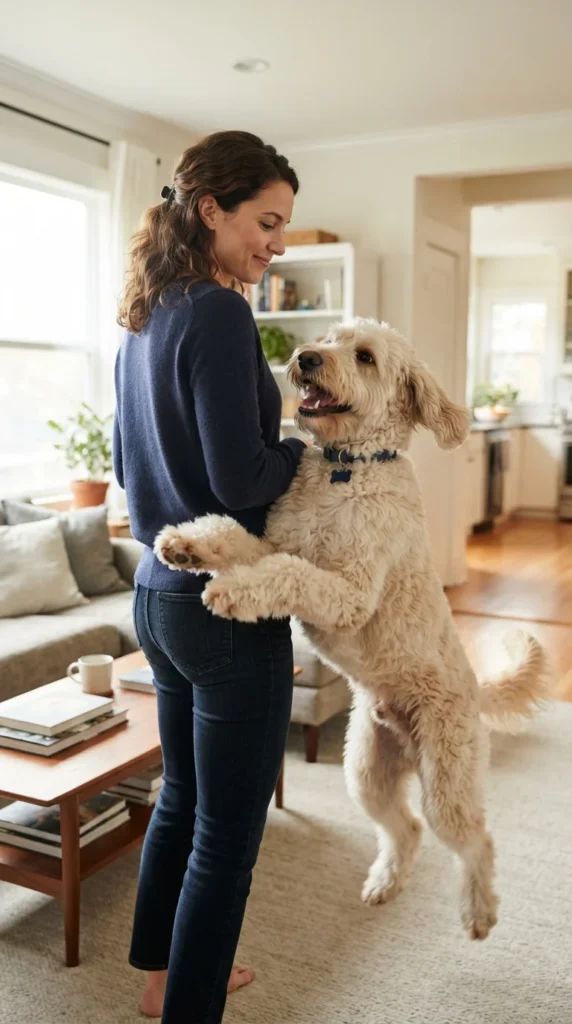
When your dog jumps on people, the behavior can be frustrating and sometimes unsafe. Muddy paws can damage clothes, excited dogs can scratch, and larger dogs may accidentally knock someone over. The good news is that jumping can be changed with consistent training and better greeting habits.
Dogs often jump because they are excited and want attention. If people talk to, touch, or push the dog when they jump, the dog may learn that jumping gets a reaction. Even negative attention can still be rewarding for some dogs.
The goal is not simply to stop your dog from jumping. You want to teach a clear alternative, such as sitting or keeping all four paws on the floor, and reward that behavior consistently.
Table of Contents
Why Does Your Dog Jump on People?
Jumping is a common greeting behavior. Dogs naturally want to get closer to a person’s face, and jumping can quickly produce attention.
Excitement is another major factor. Your dog may become especially energetic when you come home, when visitors arrive, or when someone stops to say hello during a walk.
The behavior can also become stronger when people accidentally reward it. Talking, petting, laughing, pushing, or grabbing the dog can all provide interaction. From your dog’s point of view, even an annoyed reaction may still be attention.
That means your dog’s jumping is not necessarily deliberate disobedience. Your dog may simply have learned that jumping is an effective way to start an interaction.
The solution is to change what happens after jumping and teach your dog a more appropriate way to greet people.
Teach Your Dog What to Do Instead
One of the most important parts of training is giving your dog a behavior that can replace jumping.
For example, you can teach your dog to:
- Keep all four paws on the floor
- Sit when greeting people
- Stand calmly beside you
- Go to a mat or bed when visitors arrive
A replacement behavior is easier for your dog to understand than simply hearing “no.” Your dog needs to know which behavior earns attention.
AKC recommends teaching an alternative greeting behavior while preventing the dog from repeatedly practicing jumping.
How to Stop Your Dog From Jumping on People
1. Stop Rewarding the Jumping
Start by changing your response.
When your dog jumps, calmly remove your attention. Turn your body away or step back. Avoid talking, petting, making prolonged eye contact, or pushing your dog down.
As soon as your dog’s paws return to the floor, calmly give attention or a reward if that is the greeting behavior you want.
The timing matters. Your dog should learn that keeping their feet down makes attention happen, while jumping makes attention stop.
AKC notes that pushing or grabbing can still become attention for some dogs, which can accidentally reinforce the behavior.
2. Teach “Four Paws on the Floor”
Keeping all four paws on the floor is a simple greeting rule.
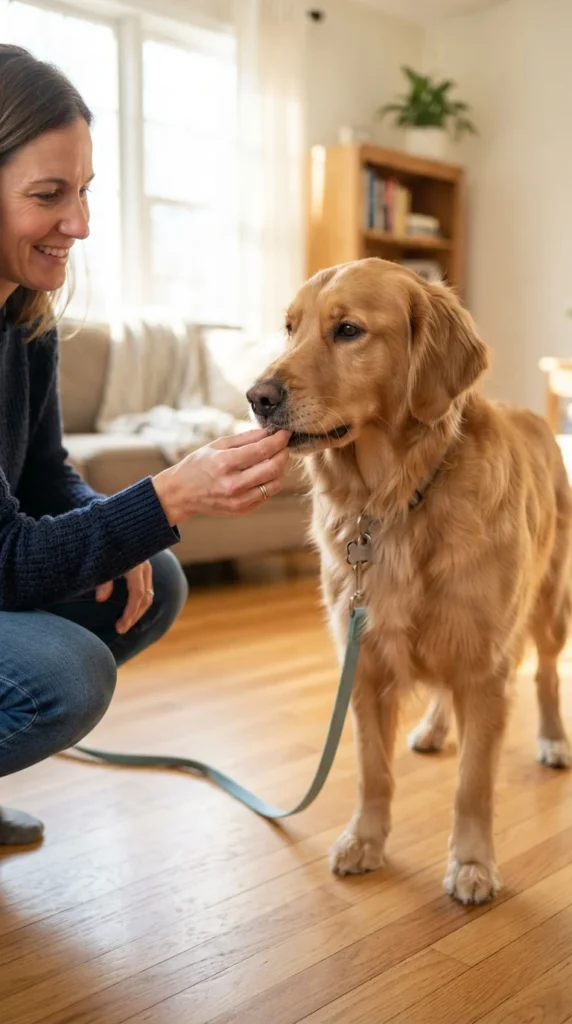
Start in a quiet environment with your dog on a leash if needed for safe management. Have a calm helper approach your dog.
- Ask the helper to approach slowly.
- Before your dog jumps, reward your dog for keeping all four paws on the floor.
- Let the person calmly greet your dog while the paws stay down.
- If your dog jumps, the person should immediately stop the interaction and step away.
- When the dog returns to four paws on the floor, calmly reward again.
- Repeat the exercise with different people and gradually increase distractions.
AKC describes a similar approach in which treats are delivered on the floor during greetings so the dog learns that keeping four paws down produces rewards and attention. :contentReference[oaicite:4]{index=4}
Work quickly enough to reward the behavior before your dog becomes too excited.
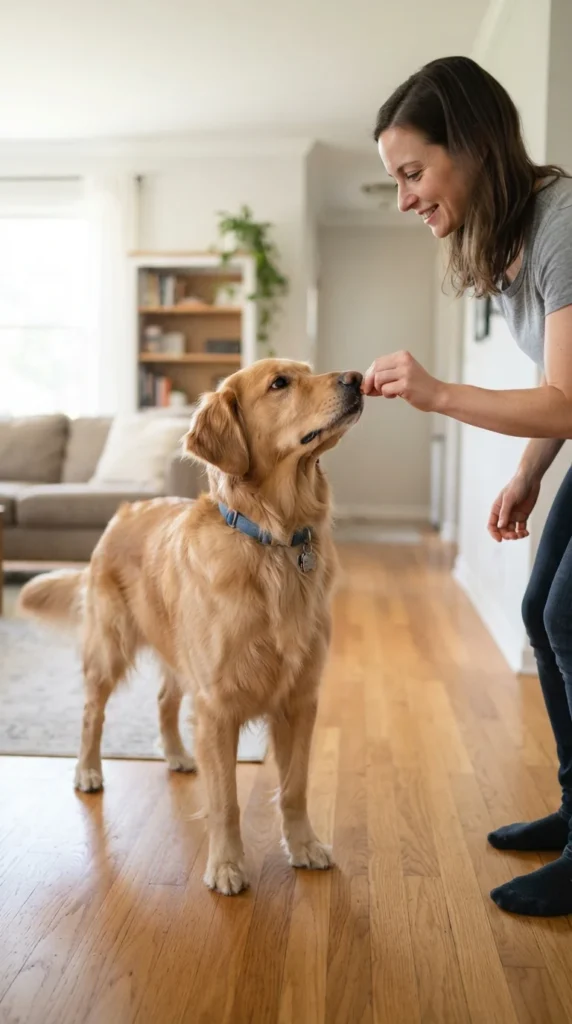
3. Teach a Sit for Greetings
Sitting can be another useful alternative to jumping.
First, make sure your dog understands the sit cue in a quiet setting. Then practice using it during calm greetings.
Ask your dog to sit before approaching. If your dog stays seated, calmly move closer and provide attention. If your dog stands and jumps, step away and try again.
Over time, your dog can learn that sitting makes greetings continue while jumping makes the interaction pause.
This works because you are giving your dog a clear behavior that is incompatible with jumping. A dog cannot sit and jump at the same time.
Keep early sessions easy. If your dog becomes too excited to sit, increase the distance from the person and make the exercise simpler.
4. Keep Greetings Calm
Excitement can make training harder.
Try to keep your voice and movements calm when you enter the house or greet your dog. Avoid turning arrivals into a high-energy event while your dog is learning better manners.
You can also pause for a few moments before greeting your dog. Wait for calmer body language, then reward the behavior you want.
As your dog becomes more reliable, you can slowly make greetings more exciting.
Training should be gradual. Dogs may need repeated practice before a new greeting habit becomes reliable, and behavior change can take weeks or longer depending on the individual dog and how strongly the behavior has been reinforced. :contentReference[oaicite:5]{index=5}
How to Stop Your Dog From Jumping on Guests
Visitors can make jumping much harder because the arrival of a person is exciting.
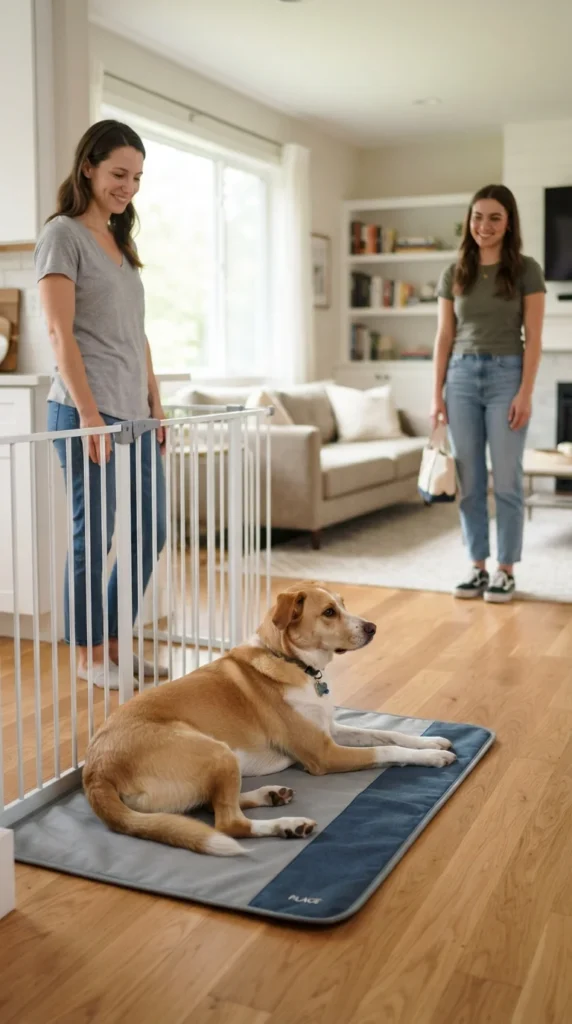
Management is especially useful during this stage of training. A baby gate, leash, crate, or designated mat can help prevent your dog from rushing toward guests while you work on the behavior.
Before opening the door, decide what you want your dog to do.
For example, you might ask your dog to:
- Stay behind a gate
- Go to a mat
- Sit near you
- Keep four paws on the floor
Once your dog is calmer, allow the guest to approach.
If your dog jumps, the guest should calmly turn away or step back. When your dog returns to the correct behavior, the guest can try again.
Everyone should follow the same rule. If one person rewards jumping while another person ignores it, your dog receives mixed information.
AKC recommends management tools such as gates, crates, or a designated place while a dog learns appropriate greeting behavior. :contentReference[oaicite:6]{index=6}
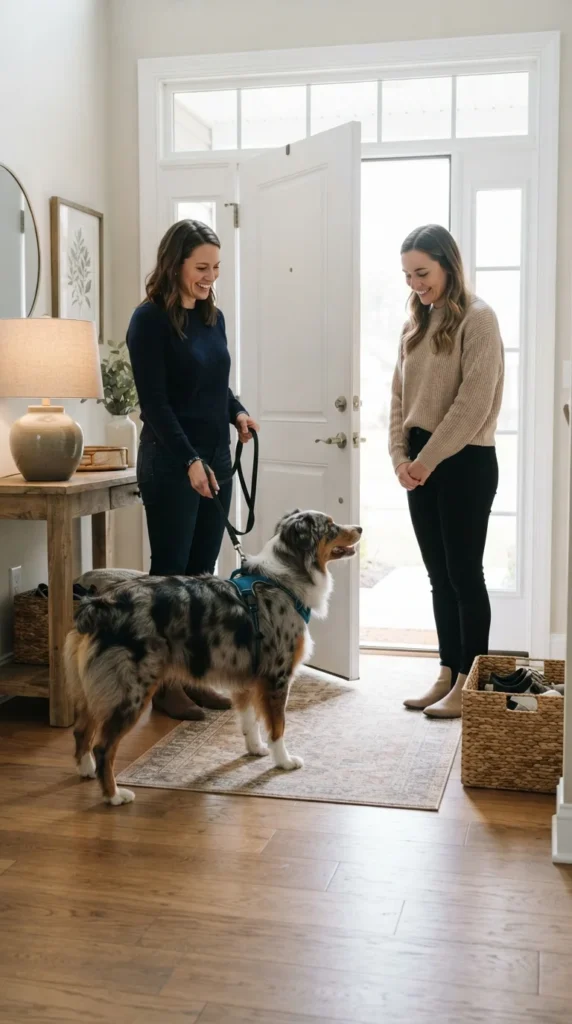
Practice With Calm Friends and Family Members
Do not expect your dog to learn perfect greetings with strangers immediately.
Start with people your dog already knows. Ask them to follow your training instructions.
Have the person approach slowly. Reward your dog when the desired greeting behavior appears.
Then repeat the exercise several times.
Once your dog becomes more reliable, practice with different people, different locations, and slightly more distracting situations.
Keep the difficulty level appropriate for your dog’s current skills. If your dog starts jumping repeatedly, the exercise may have become too difficult or exciting.
Use Treats Before Your Dog Jumps
Timing can make a major difference.
If you wait until your dog is already jumping, you have missed an opportunity to reinforce the calm behavior you actually want.
Instead, watch for the moment when your dog notices a person but still has all four paws on the floor.
Reward at that moment.
You can place small treats on the floor during practice greetings. This gives your dog a reason to keep their attention down and their paws on the ground.
As your dog improves, you can gradually reduce the frequency of treats and use praise, petting, play, or access to the greeting as rewards.
Reward-based training can use treats, toys, praise, attention, and other appropriate reinforcers. AVSAB recommends reward-based methods and advises against training techniques involving pain, intimidation, or physical punishment. :contentReference[oaicite:7]{index=7}
Practice Before Real-Life Greetings
Training becomes easier when you practice before a difficult situation occurs.
For example, do not wait until your biggest group of guests arrives to teach your dog greeting manners.
Instead, create short practice sessions at home.
- Put your dog in a calm starting position.
- Have a family member approach.
- Reward four paws on the floor or a sit.
- Have the person step away if jumping begins.
- Wait for the correct behavior.
- Repeat several times.
Short sessions are often easier for an excited dog than long training sessions.
End the exercise while your dog is still able to succeed.
What Not to Do When Your Dog Jumps
Some common reactions can accidentally make jumping stronger or create unnecessary stress.
Do Not Push Your Dog Away
Pushing may feel like a natural response, but physical contact can still be rewarding to a dog seeking attention. Some dogs may even interpret it as play.
Do Not Grab the Paws
Grabbing a dog’s paws can create frustration and may turn the interaction into a game or struggle.
Do Not Use Physical Punishment
Aversive training methods can create welfare and behavior concerns. AVSAB’s current position recommends reward-based training for dog training and behavior modification and advises against methods involving pain, intimidation, or physical punishment.
Do Not Reward Jumping Sometimes
Consistency matters.
If jumping is ignored most of the time but receives attention on other occasions, your dog may continue trying because the behavior sometimes works.
Ask everyone in the household to follow the same greeting rule.
How to Stop Jumping During Walks
Dogs may also jump on people outside the home.
Start by creating enough distance from people that your dog can still respond to you.
When someone approaches, redirect your dog’s attention toward you before the dog becomes overly excited. Reward calm behavior.
If your dog is already jumping or pulling intensely, increase your distance rather than forcing the greeting.
You can also ask friendly people to wait until your dog is calm before interacting.
Do not allow every stranger to greet your dog during training. Fewer successful greetings can be more useful than many uncontrolled ones.
Make Training Easier With Management
Training and management work together.
Training teaches your dog what behavior you want. Management helps prevent your dog from repeatedly practicing the behavior you are trying to change.
Useful management options can include:
- Baby gates
- A leash during planned greetings
- A comfortable crate when appropriate
- A designated mat or bed
- Distance from exciting visitors
- Calm entry routines
Management is not a replacement for training. It gives your dog fewer opportunities to rehearse jumping while the new behavior is developing.
AVSAB includes non-aversive management strategies as part of humane training approaches. :contentReference[oaicite:9]{index=9}
What If Your Dog Keeps Jumping?
Some dogs become extremely excited around people, and progress may take time.
Look at the situation rather than assuming your dog is refusing to learn.
Ask yourself:
- Is the person too close?
- Is the greeting too exciting?
- Are rewards being delivered quickly enough?
- Does everyone follow the same rule?
- Has the dog had enough practice in easier situations?
- Is the dog getting enough appropriate exercise and enrichment?
Exercise can support training because an appropriately exercised dog may be better able to focus, although exercise needs vary by age, health, fitness, and individual dog. :contentReference[oaicite:10]{index=10}
If the behavior is difficult to manage, especially if jumping is accompanied by fear, aggression, biting, or other concerning behavior, speak with your veterinarian or a qualified behavior professional.
How Long Does It Take to Stop a Dog From Jumping?
There is no single timeline for every dog.
A dog that occasionally jumps during greetings may improve quickly with consistent practice. A dog that has practiced jumping for a long time may need much more repetition.
Your goal should be steady improvement rather than perfection after one or two sessions.
Reward the behavior you want every time you can. Prevent unnecessary jumping opportunities. Keep practice short and repeat the same greeting rules consistently.
Over time, your dog can learn that calm greetings produce the attention they want.
Frequently Asked Questions
Why does my dog jump on people?
Dogs commonly jump because they are excited and want attention. If jumping has previously resulted in talking, touching, petting, or other interaction, the behavior may become reinforced.
Should I ignore my dog when they jump?
Calmly removing attention can help. Turn away or step back when your dog jumps, then reward the desired greeting behavior as soon as your dog’s paws return to the floor.
Is sitting a good alternative to jumping?
Yes. Sitting gives your dog a clear greeting behavior and makes jumping physically incompatible with the sit. You can reward the sit with calm attention and gradually practice around different people.
How do I stop my dog from jumping on guests?
Use management such as a leash, gate, crate, or designated mat while training. Ask guests to ignore jumping and provide attention only when your dog follows the greeting rule.
Should I push my dog down when they jump?
No. Pushing or grabbing can still provide attention and may accidentally reinforce the behavior. It is better to calmly remove attention and reward the behavior you want instead.
What if my dog becomes too excited to listen?
Make the training easier. Increase distance from the person, reduce distractions, shorten the session, and reward calm behavior before your dog becomes overly excited. Gradually increase the difficulty as your dog improves.
Conclusion
Learning how to stop your dog from jumping on people is mainly about changing the greeting routine.
Stop rewarding jumping, teach a clear alternative such as sitting or keeping four paws on the floor, and reward the behavior you want immediately. Use gates, leashes, mats, or other management tools when necessary to prevent repeated jumping while your dog learns.
Most importantly, make the rules consistent. Your dog will have an easier time learning when family members and visitors respond in the same way.
With calm practice, clear expectations, and reward-based training, your dog can learn that polite greetings are the best way to get attention.