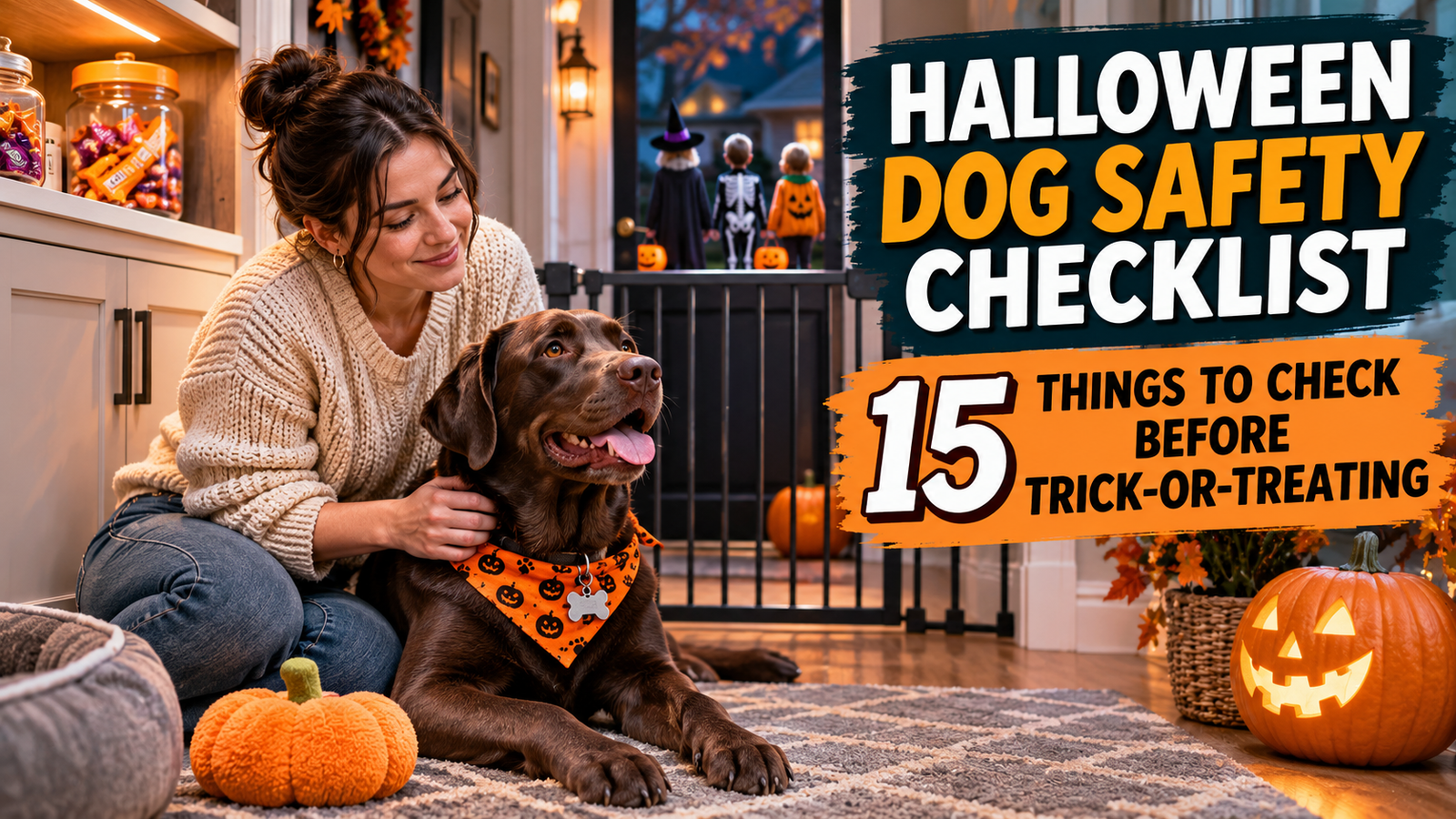
Halloween can be fun for families, but it changes a dog’s environment in a hurry. Candy bags move from room to room, the doorbell rings repeatedly, decorations flash or squeak, and people arrive wearing unfamiliar costumes. You do not need an elaborate training plan to reduce most of these risks. You need a few practical checks before the evening begins.
This Halloween safety checklist for dogs gives you 15 clear things to check before trick-or-treaters arrive. It includes a quick routine for the evening, warning signs that need veterinary attention, and a printable list you can keep near the door. For more everyday care guides, visit the Dogs Daily Care homepage.
Table of Contents
Quick Answer: What Should Dog Owners Check Before Halloween?
Start with four priorities: lock away candy and wrappers, secure the front-door area, prepare a comfortable retreat, and confirm your dog’s identification and veterinary emergency contacts. Keep decorations and costumes out of reach, choose an early walking time, and do not make a nervous dog greet visitors. A quiet, ordinary night is perfectly acceptable for a dog who finds the holiday stressful.
Veterinary safety guidance from the ASPCA and the American Animal Hospital Association (AAHA) emphasizes poisonous foods, escape risks, safe costumes, decorations, and reducing noise and stress.
The 15-Point Halloween Safety Checklist for Dogs
1. Move All Halloween Candy Into Secure Storage
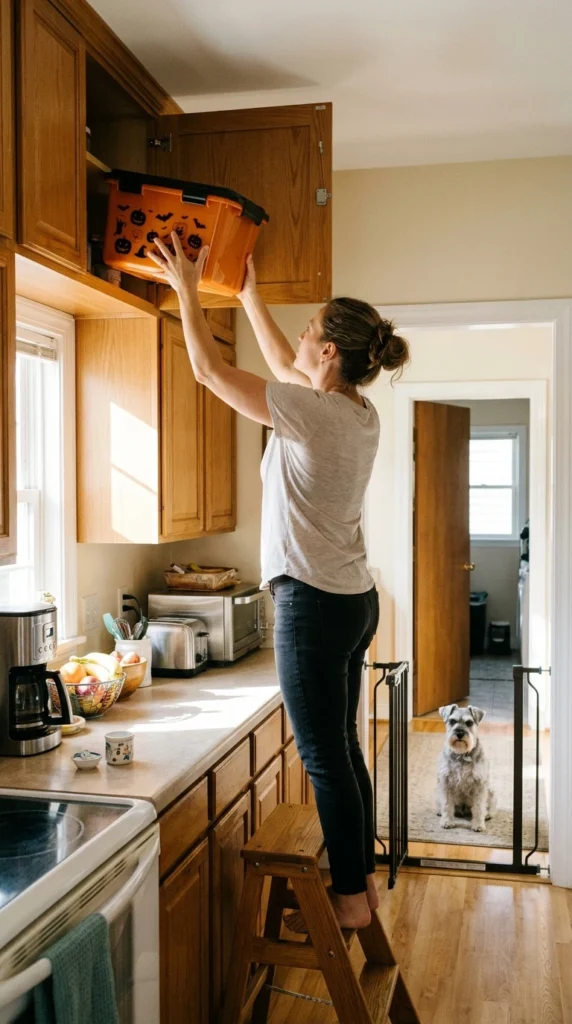
Place candy in a closed, secure cabinet or container your dog cannot reach or open. Do not leave a bowl on an entry table, a child’s bed, or a low kitchen counter. Check backpacks and tote bags, too; dogs can find treats even when the bags look neatly put away. Ask everyone in the household to return candy to storage after sorting it.
Chocolate, products containing xylitol (also called birch sugar), and raisins are important hazards. Even wrappers, lollipop sticks, and large amounts of fatty treats can cause problems. If your dog has already eaten candy, follow our dog ate Halloween candy emergency guide and contact your veterinarian or animal poison control promptly rather than waiting for symptoms.
2. Check Trash Cans and Discarded Wrappers
Use a latching trash can or store party trash behind a closed door. Check around the couch, near children’s candy-sorting spots, and beside the front door. A wrapper stuck to a dog’s mouth or swallowed with candy can make a situation more complicated. Do a quick sweep before bed and again the morning after Halloween.
3. Inspect Decorations From Your Dog’s Height
Crouch down to look for hanging strings, cobwebbing, fake spiders, exposed batteries, tiny plastic pieces, loose ribbons, and electrical cables. Place these out of reach or remove them. Switch to flameless lights instead of lit candles in pumpkins that a dog could knock over. Secure cords and keep animatronic decorations where your dog cannot chew or trip over them.
Some dogs are also frightened by moving props. If yours freezes or barks at a decoration, read our gentle Halloween decoration fear guide rather than forcing a close inspection.
4. Inspect Glow Sticks, Batteries, and Small Costume Pieces
Keep glow sticks and glow jewelry where pets cannot reach them. Their contents can cause mouth irritation and excessive drooling, while broken pieces and batteries present additional hazards. Pick up dropped costume jewelry, beads, fake teeth, and hair accessories immediately. Call a veterinarian if your dog chews or swallows a battery or other dangerous object.
5. Make a Safe Room Before Guests Arrive
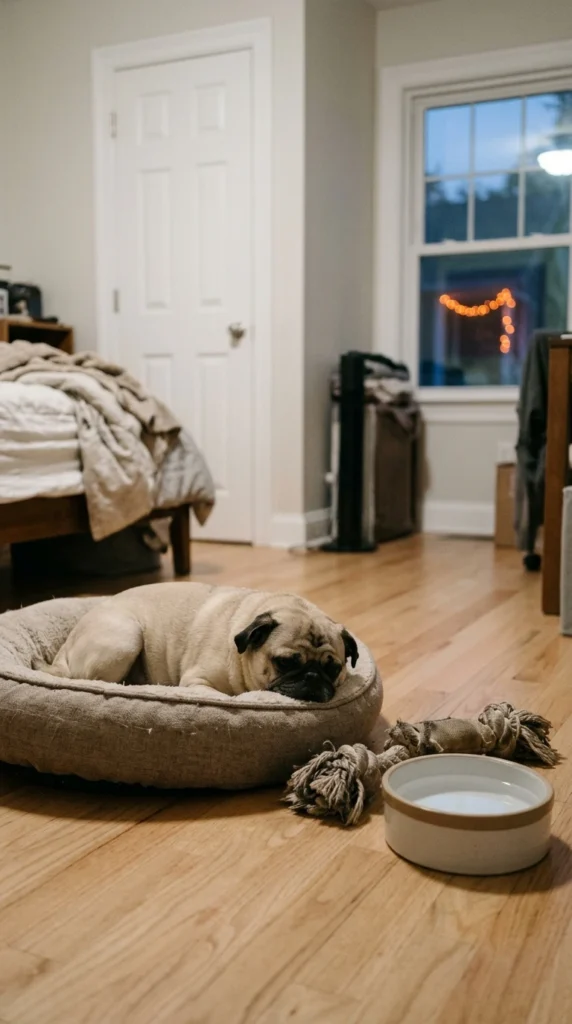
Choose a familiar, ventilated room away from the front entrance. Put in a comfortable bed, water, and a favorite safe toy or supervised enrichment item. Close the curtains if moving costumes outside the window make your dog anxious. Some dogs enjoy soft music or quiet white noise. Use a crate only if your dog already likes it and can rest comfortably inside; do not create a new confinement problem on Halloween night.
Test the space ahead of time. The dog should be comfortable there before children begin knocking. For everyday home hazards and safe-room setup, our puppy-proofing checklist offers a useful room-by-room review that can help adult dog owners as well.
6. Put a Reliable Barrier Between Your Dog and the Front Door
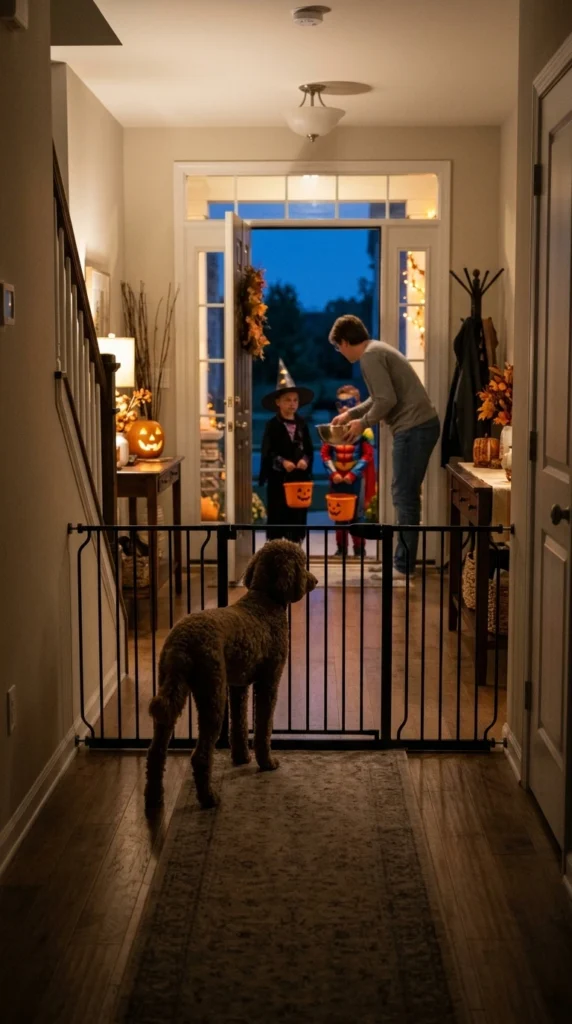
Use a securely closed interior door or an appropriately installed pet gate to create a second barrier before opening the outside door. Do not depend on a flimsy freestanding gate for a dog likely to bolt, push, or jump. Check that adults and children know how to latch it. A closed room is often the safest solution for a dog who rushes toward visitors.
7. Confirm Collar Tags and Microchip Details
Make sure your dog’s tag has a current phone number, their collar fits correctly, and their microchip registration contact information is up to date. Keep a recent, clear photo of your dog on your phone. No collar or microchip replaces a secure doorway, but up-to-date identification helps if an escape occurs.
8. Agree on a Door-Opening Routine
Decide which adult handles trick-or-treaters, who checks the dog’s location, and which door stays closed. Handing out candy outside or away from the dog can reduce repeated barking and door opening. If the doorbell triggers excitement, see our Halloween visitor barking guide for a calmer routine. Do not ask children to hold back a stressed or strong dog.
9. Do Not Force Greetings With Costumed Visitors
Masks, capes, hats, and unfamiliar movements can make known people look strange to dogs. Guests should not reach into the dog’s safe space, hug them, stare, or insist on a photo. If your dog moves away, let them. Body language such as freezing, trembling, a tucked tail, repeated lip licking, or retreating is a good reason to end the interaction.
10. Walk Your Dog Earlier and Check the Route
Plan a bathroom break and short walk before peak trick-or-treating hours, when possible. Use a secure harness and leash and check sidewalks for candy, wrappers, broken decorations, and glow sticks. Avoid crowded routes for dogs who react to costumes or loud displays. Even a fenced yard is not a good place to leave a dog unattended during a busy Halloween evening.
11. Choose Dog Clothing Only If Your Dog Is Comfortable
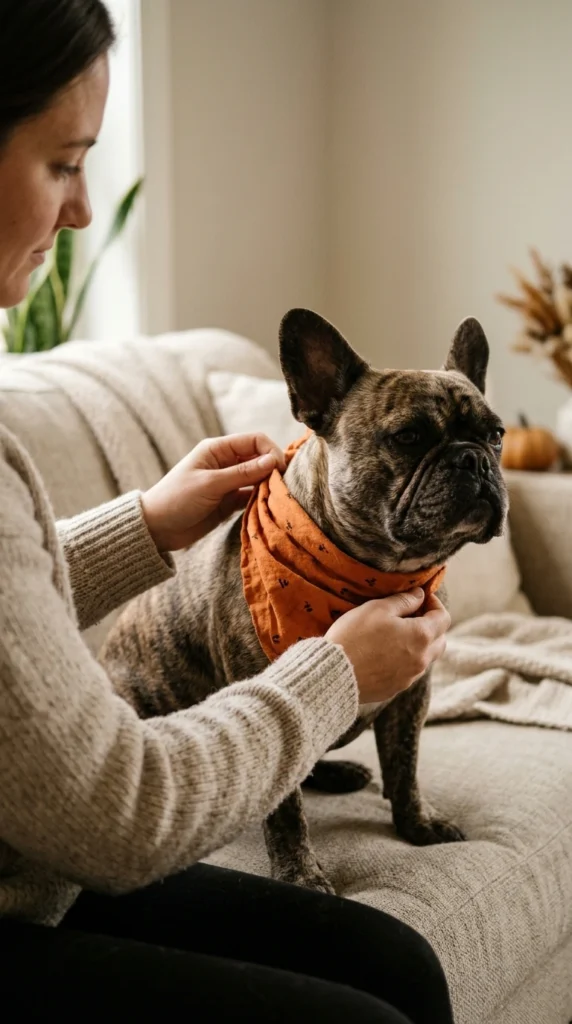
A simple festive bandana may be plenty. If your dog enjoys clothing, test the costume on a different day and watch for panting, freezing, pawing, or reluctance to move. Remove any outfit that restricts breathing, eyesight, hearing, movement, or bathroom breaks. Avoid dangling parts that could be chewed off. Never leave a costumed dog unattended.
12. Keep Your Dog Away From Human Costume Accessories
Plastic fangs, fake hair, makeup supplies, glow jewelry, toy weapons, and small embellishments may fall from costumes as guests walk through the house. Set up a coat-and-accessory station away from the dog. If a visitor is wearing a bulky or noisy costume, ask them to keep distance rather than trying to prove the costume is harmless.
13. Prepare a Dog-Safe Activity Before the Doorbell Starts
Have an age-appropriate food puzzle, familiar chew, or favorite toy ready if your dog enjoys it. Supervise any chew or toy that could splinter or break apart, and do not use enrichment to entice a frightened dog toward the entrance. Some dogs are too stressed to play or eat. In that case, reducing noise and letting them rest is the priority.
14. Save Your Vet and Emergency Numbers Now
Save your regular veterinarian’s number and the nearest 24-hour emergency hospital. In the United States, the ASPCA Animal Poison Control Center is 888-426-4435; the Pet Poison Helpline is 855-764-7661. Both services may charge a consultation fee. A suspected ingestion of chocolate, xylitol, raisins, a battery, or a dangerous object should prompt a timely call. Do not induce vomiting or give home remedies unless a veterinary professional instructs you to do so.
15. Make a Final Sweep After Trick-or-Treating
Before bed, clear discarded candy, wrappers, decorations that have fallen, guest accessories, and open bags. Check latches, outdoor gates, and the dog’s water and resting area. Pay special attention to any dog who has had an unusually stressful evening. Return to the normal routine and allow them time to settle.
Printable One-Page Halloween Dog Safety Checklist
Copy this list into a note, print the page, or check items on your phone before visitors arrive:
- ☐ Candy and chocolate locked away
- ☐ Trash, wrappers, and candy bags secured
- ☐ Candles, cords, and decorations beyond reach
- ☐ Glow sticks, batteries, and small pieces cleared
- ☐ Quiet room ready with bed and water
- ☐ Closed door or strong pet gate in place
- ☐ Collar tag and microchip details current
- ☐ Adult door-opening plan agreed
- ☐ No forced greetings or Halloween photos
- ☐ Earlier walk and bathroom break planned
- ☐ Dog outfit checked—or skipped
- ☐ Guests’ costume accessories stored safely
- ☐ Safe enrichment available if dog enjoys it
- ☐ Vet and emergency numbers saved
- ☐ End-of-night cleanup assigned
A Simple Halloween-Night Schedule for Dog Owners
Before sunset: Walk the dog, feed on the usual schedule, check identification, and secure the candy supply. Spend a few minutes checking the porch from dog height.
Before the first visitor: Settle your dog in their familiar space with fresh water. Close the inner barrier and decide who will answer the door. If the dog is highly social and accustomed to visitors, you may use a controlled greeting routine; if uncertain, skip greetings.
During peak activity: Keep doors and gates latched, monitor your dog’s comfort, and avoid surprise interactions. Give your dog quieter breaks as needed. Do not mistake silence for comfort if they are stiff or hiding.
After the last visitors: Sweep floors and the porch for discarded sweets and accessories, check the dog, and return to a regular bedtime routine.
Optional Supplies That Can Make Halloween Management Easier
Affiliate disclosure: As an Amazon Associate, we may earn from qualifying purchases at no additional cost to you. Products are optional; a secure door, supervision, and safe food storage matter more than shopping.
- Vmaisi Magnetic Cabinet Locks (20-pack, with keys): An optional way to add a latch to a compatible cabinet where sweets or potentially dangerous household items are stored. Confirm cabinet compatibility and installation instructions before use. See Vmaisi cabinet locks on Amazon.
- Carlson Extra Wide Walk-Through Pet Gate: A gate may help organize a secondary interior boundary if it is the right size and securely installed. Some Carlson designs have a small pet door; keep that opening securely closed or choose a different barrier if a dog could use it to reach the front entrance. Never substitute a gate for adult supervision of a bolting dog. See Carlson pet gate on Amazon.
When Halloween Becomes a Veterinary Emergency
Seek urgent veterinary advice if you know or suspect your dog swallowed candy containing chocolate, xylitol, raisins, another toxin, a battery, or a sharp or sizable decoration. Dogs that collapse, seize, have difficulty breathing, or show profound weakness need emergency veterinary care right away. Do not wait for obvious symptoms to call about a possible poisoning. Keep the wrapper or product packaging and tell the professional your dog’s approximate weight, what was eaten, how much, and when.
Common Halloween Safety Mistakes to Avoid
- Leaving candy “just for a minute”: A dog can find a bowl on a coffee table before anyone notices.
- Relying only on an ID tag: Identification helps recovery, but it does not prevent an escape.
- Assuming a quiet dog is fine: Hiding, freezing, or refusing treats can also signal distress.
- Forcing costume introductions: The dog should be free to withdraw rather than being trapped for a photo.
- Forgetting the morning-after check: Candy wrappers and props may remain along sidewalks and lawns.
Frequently Asked Questions
Should I let my dog answer the door with me on Halloween?
If your dog becomes excited, fearful, or tries to rush out, no. A comfortable room behind a closed door is safer. Even friendly dogs may find dozens of visitors overwhelming.
Can dogs eat ordinary Halloween candy?
Do not offer human candy as a dog treat. Some varieties contain dangerous ingredients, and even candy without those ingredients can cause digestive upset. Choose regular dog treats instead.
Is a Halloween costume safe for a dog?
Only when the dog is comfortable, the fit is safe, there are no easily swallowed parts, and someone supervises. A festive bandana or no costume at all is often a better choice.
What if my dog is scared of trick-or-treaters?
Provide distance and a quiet room, reduce noise, and skip greetings. Save reward-based practice for a quiet day when the dog is comfortable enough to learn.
What do I do if my dog escapes during Halloween?
Ask one adult to safely close doors and gates while another follows your local lost-pet plan. Contact animal services and microchip registration and share a current photo with local community groups. Avoid chasing a frightened dog into traffic.
Final Thoughts
The best Halloween for your dog may look simple: a secure home, no accessible candy, a quiet resting place, a calm evening walk, and adults who keep the doors under control. Use this checklist before the first visitor arrives, then follow your dog’s behavior rather than a party schedule. Safety and comfort are more important than a photo or a costume.
Editorial note: This article provides general dog-care and safety information and does not replace individual veterinary advice.