
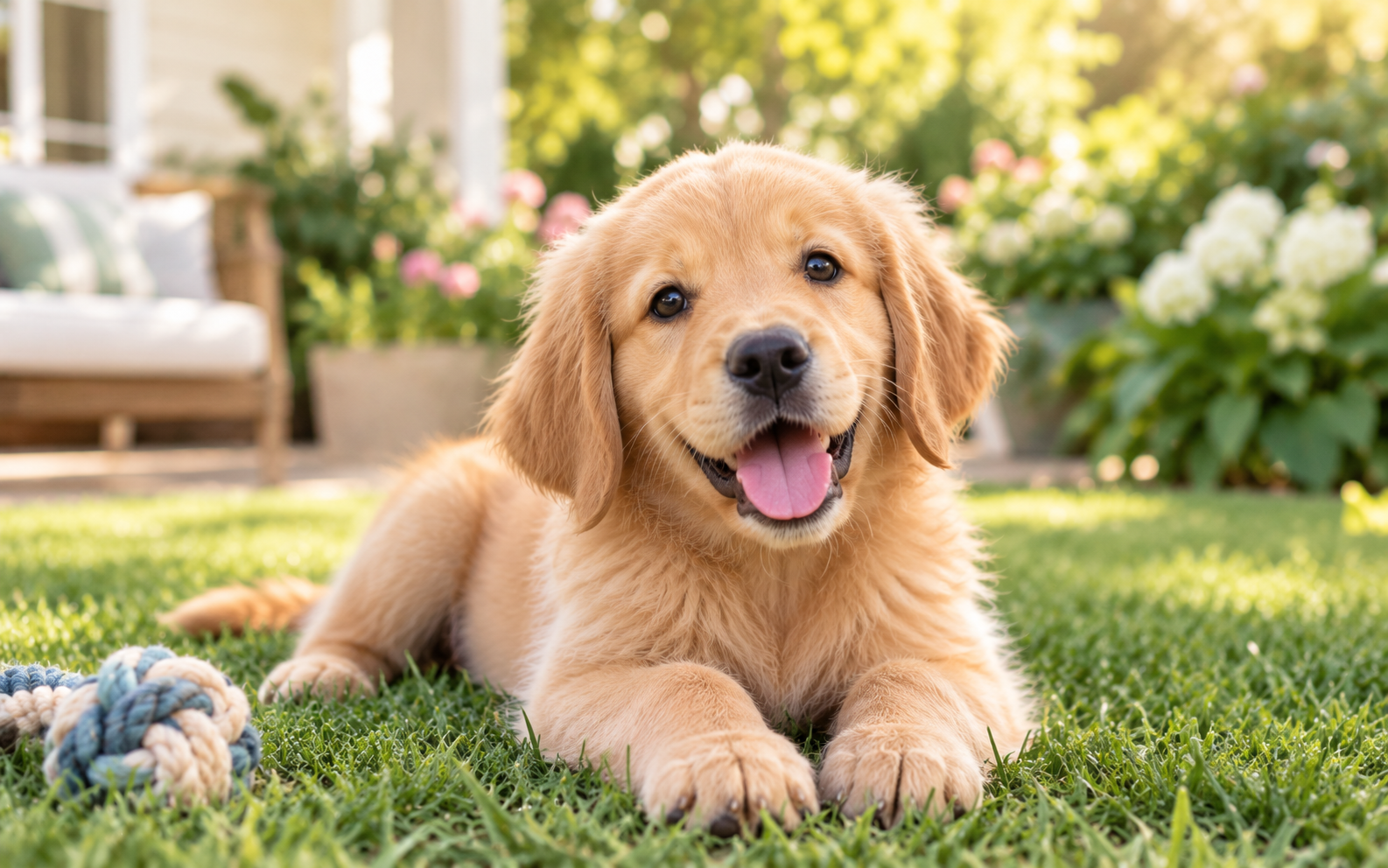
Bringing a new puppy home is exciting. You get a new little friend, lots of cuddles, and plenty of funny moments. But puppies also need guidance from their first days at home.
Training helps your puppy understand what you expect. It can make everyday life easier and help you build a stronger relationship with your dog.
You do not need to teach everything in one week. Start with simple skills, practice often, and reward good behavior.
This beginner’s guide walks you through the most important puppy training basics, from potty training and crate training to commands, biting, leash walking, and socialization.
Table of Contents
When Should You Start Training a Puppy?
You can start simple training as soon as your puppy comes home.
Young puppies have short attention spans, so keep training sessions short. A few minutes of focused practice can work better than one long session.
Start with basic skills such as:
- Responding to their name
- Coming when called
- Sitting
- Potty routines
- Getting comfortable with a crate
- Walking calmly with you
- Accepting gentle handling
Do not expect perfect behavior immediately. Your puppy is learning about a completely new environment.
Consistency matters more than speed.
1. Start With Your Puppy’s Name
Your puppy should learn that hearing their name means something positive and that they should pay attention to you.
Stand near your puppy and say their name once in a cheerful voice.
When your puppy looks toward you, immediately praise them and give a small treat.
Repeat this during short sessions throughout the day.
Avoid repeatedly saying the name when your puppy ignores you. You want the name to become a useful attention cue rather than background noise.
2. Use Positive Reinforcement
Reward-based training makes it easier to show your puppy which behaviors you want.
When your puppy does something correctly, reward them quickly.
Useful rewards include:
- Tiny puppy-safe treats
- Praise
- A favorite toy
- A short play session
- Gentle affection
The timing of the reward matters. Give it immediately after the desired behavior so your puppy can connect the action with the reward.
Avoid frightening or physically punishing your puppy. Instead, focus on rewarding the behaviors you want and managing situations that make unwanted behavior likely.
3. Keep Training Sessions Short
Puppies can become distracted quickly.
Instead of planning one long lesson, practice for a few minutes at a time throughout the day.
For example, you might practice “sit” before breakfast, recall in the afternoon, and leash skills before an evening walk.
Stop while your puppy is still interested.
Short, successful sessions can make training feel like a game rather than a chore.
4. Teach Your Puppy to Sit
“Sit” is one of the easiest basic commands to teach.
Hold a small treat near your puppy’s nose.
Slowly move the treat upward and slightly backward. As your puppy follows the treat, their bottom will often move toward the floor.
As soon as they sit, reward them.
After several successful repetitions, begin adding the word “sit” just before the behavior.
Never force your puppy into position. Give them time to work it out.
5. Teach Your Puppy to Come When Called
Recall is an important skill because it teaches your puppy to return to you.
Start indoors where distractions are low.
Move a short distance away and cheerfully call your puppy. When they come toward you, praise them and reward them when they reach you.
Make coming to you rewarding.
Never call your puppy to you just to punish or scold them. You want your puppy to associate returning to you with safety and good things.
Practice in secure environments before attempting recall around stronger distractions.
6. Begin Potty Training Immediately
A predictable routine makes house training easier.
Take your puppy to an appropriate toilet area regularly, especially:
- After waking up
- After eating
- After drinking
- After play
- After naps
- Before bedtime
Watch for signs that your puppy may need to go, such as sniffing the floor, circling, wandering away, or becoming restless.
When your puppy toilets in the correct place, praise and reward them right away.
Accidents will happen. Clean them thoroughly and continue the routine rather than punishing your puppy.
Very young puppies cannot hold their bladder for long periods, so frequent opportunities are important.
7. Introduce Crate Training Gradually
A crate can provide your puppy with a safe resting space when introduced properly.
Make the crate comfortable with suitable bedding and allow your puppy to explore it.
You can toss treats inside or feed meals near or inside the crate.
At first, keep the door open.
Once your puppy willingly enters, practice closing the door briefly while you remain nearby. Gradually increase the duration as your puppy becomes comfortable.
Never use the crate as punishment.
The goal is for your puppy to see the crate as a calm and secure place.
8. Teach Good Puppy Biting Habits
Puppies explore with their mouths. Biting and chewing are normal parts of puppy development, but they still need to learn what they can bite.
Keep appropriate chew toys available.
If your puppy starts biting your hands or clothing during play, calmly stop the interaction and redirect them to a suitable toy.
Reward them when they chew the toy instead.
Avoid games that encourage your puppy to attack hands.
Puppies may become more mouthy when they are tired or overstimulated, so rest can also help.
9. Start Leash Training Indoors
Your puppy does not need to master leash walking on a busy street.
Begin somewhere quiet.
Let your puppy become comfortable wearing an appropriately fitted collar or harness. Then introduce a lightweight leash under supervision.
Reward your puppy for staying close to you.
Take a few steps and encourage